
Parents often struggle to find sensory activities that actually help with emotional regulation, focus, and calm daily routines. Children with sensory processing challenges may feel overwhelmed by sights, sounds, touch, or movement, which can affect sleep, attention, learning, and social interaction.
The good news: with the right strategies, sensory play, structured routines, and simple at-home activities can make a huge difference. This guide provides practical tools, calming strategies, and evidence-based ideas that parents can implement immediately to help their child thrive.
When you're navigating autism with your child, understanding sensory processing and sensory regulation becomes essential to supporting their daily comfort, learning, and emotional well-being. Research suggests that up to 90% of autistic children experience some form of sensory processing difference, making sensory support one of the most critical aspects of everyday autism care.
What is sensory processing disorder in autism?
Sensory processing differences are common in children on the autism spectrum. A child may over-respond (hypersensitivity) or under-respond (hyposensitivity) to sensory input, sometimes both, depending on the system involved.
Common sensory overload symptoms
- Covering ears or avoiding certain sounds
- Distress with bright lights or busy environments
- Sensitivity to clothing textures or tags
- Repetitive movements or stimming to self-regulate
- Avoidance of touch, crowded spaces, or new activities
Recognizing these signs early helps parents plan supportive strategies and reduce daily stress, for the child and for the whole family.
What are the 8 sensory systems?
Most people are familiar with the five basic senses (sight, hearing, taste, smell, touch), but there are actually eight sensory systems that shape how an autistic child experiences the world.
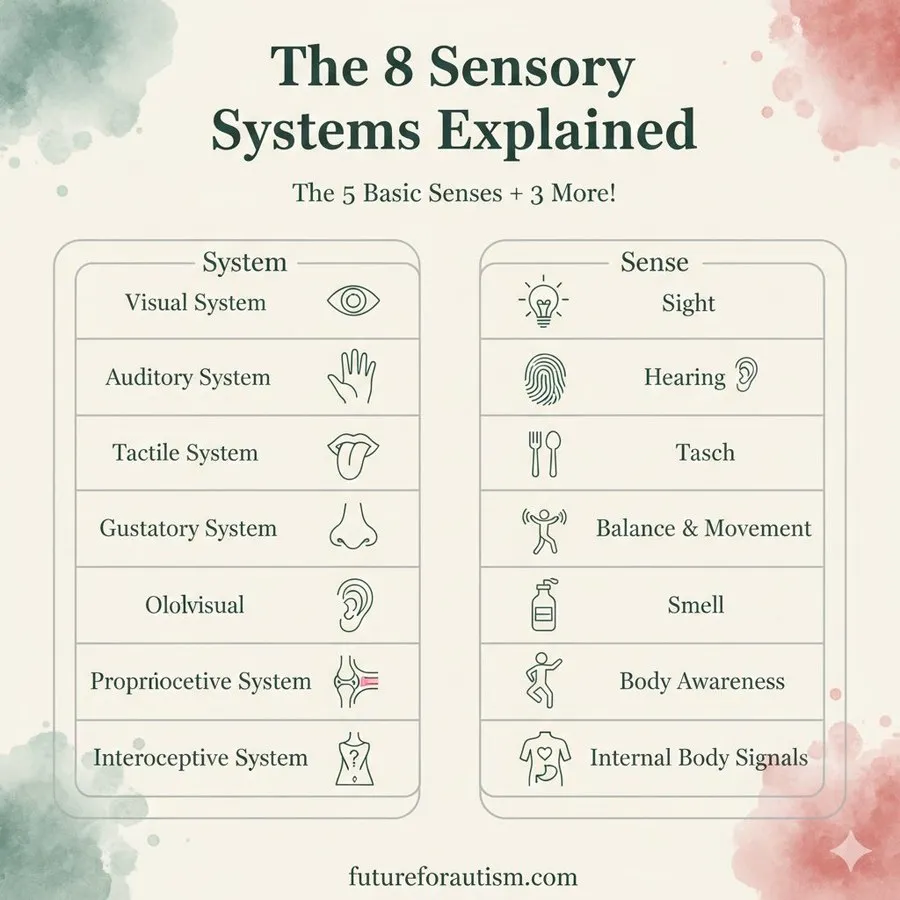
1. Visual system (sight)
Processes colors, brightness, movement, and patterns. Children with visual sensitivities may:
- Be overwhelmed by fluorescent lighting or bright colors
- Struggle with busy visual environments
- Have difficulty with eye contact
- Prefer dim lighting or specific color schemes
2. Auditory system (hearing)
Processes sounds, volume, pitch, and frequency. Auditory processing differences may show up as:
- Covering ears in noisy environments
- Difficulty filtering background noise
- Distress from unexpected sounds (vacuums, hand dryers, fire alarms)
- A strong preference for certain music or white noise
3. Tactile system (touch)
Nerves under the skin detect touch, pressure, pain, and temperature. Signs of tactile differences include:
- Refusing certain clothing textures (tags, seams, scratchy fabrics)
- Avoiding messy play (finger painting, sand, Play-Doh)
- Discomfort with hair washing, nail clipping, or tooth brushing
- Either seeking constant touch or avoiding physical contact
4. Gustatory system (taste)
Processes flavors and food textures. Children with gustatory sensitivities may:
- Have extremely limited food preferences
- Gag on certain textures
- Only eat specific brands or temperatures of food
- Prefer bland or crunchy foods
5. Olfactory system (smell)
Detects and interprets scents. Sensory differences may include:
- Overwhelming reactions to perfumes, cleaners, or cooking smells
- Seeking or avoiding certain scents
- Difficulty eating due to smell sensitivity
- Using smell to explore objects
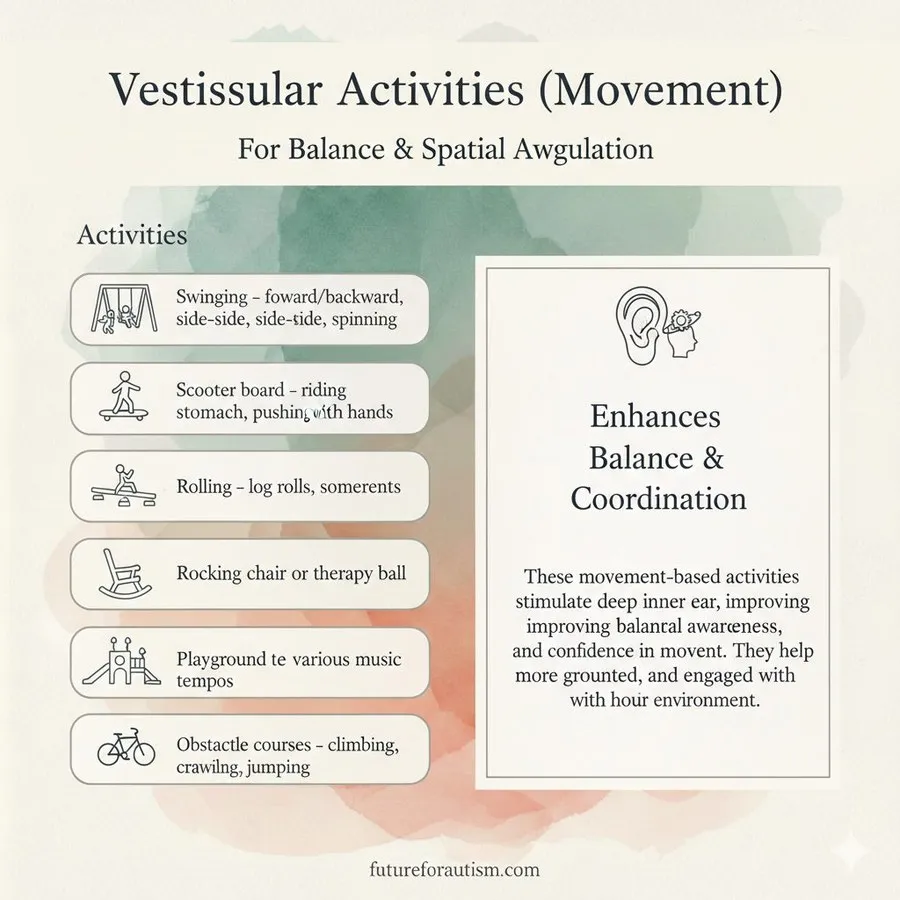
6. Vestibular system (balance & movement)
Located in the inner ear, this system detects head position and movement in space. Vestibular differences can appear as:
- Fear of playground equipment (swings, slides, climbing)
- Constantly seeking movement (spinning, jumping, rocking)
- Poor balance and coordination
- Motion sickness or gravitational insecurity
7. Proprioceptive system (body awareness)
Provides information about body position from muscles, joints, and tendons. Signs of proprioceptive challenges include:
- Difficulty with fine motor tasks (buttons, zippers, pencil grip)
- Appearing clumsy or uncoordinated
- Not knowing own strength (breaking toys, rough play)
- Seeking deep pressure (tight hugs, weighted items, crashing into things)
8. Interoceptive system (internal body signals)
Often overlooked, interoception helps a child sense internal states like hunger, thirst, pain, temperature, and the need for a bathroom. Difficulties include:
- Not recognizing hunger or fullness
- Difficulty identifying emotions physically
- Delayed response to pain or temperature extremes
- Challenges with toilet training
Sensory meltdown vs. tantrum: what's the difference?
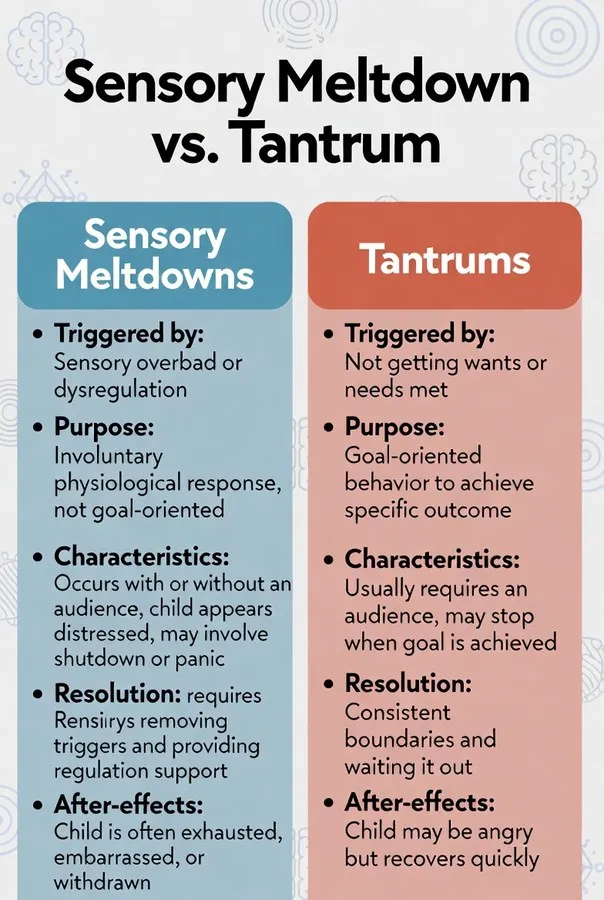
One of the most misunderstood aspects of autism is the difference between a sensory meltdown and a tantrum. Understanding this distinction changes how you respond, and how much compassion the moment calls for.
- Triggered by sensory overload or dysregulation
- Involuntary, not goal-oriented
- Happens with or without an audience
- Needs removal of triggers and regulation support
- Child is often exhausted or withdrawn after
- Triggered by not getting a want or need met
- Goal-oriented, aimed at an outcome
- Usually requires an audience
- Responds to consistent boundaries and waiting it out
- Child may be angry but recovers quickly
What does evidence-based sensory support look like?
Occupational therapy and sensory integration therapy
Occupational therapy (OT) with a sensory integration focus remains a leading approach for sensory processing challenges. Research published in the American Journal of Occupational Therapy has linked individualized, play-based sensory integration therapy to improvements in self-regulation, participation in daily activities, social interaction, and attention.
A qualified occupational therapist will typically:
- Conduct a comprehensive sensory assessment
- Create an individualized sensory diet
- Provide therapeutic activities targeting specific sensory systems
- Train families on home-based sensory strategies
- Recommend adaptive equipment and environmental modifications
Creating a sensory diet
A sensory diet is a personalized schedule of activities designed to give a child's nervous system the input it needs throughout the day. Unlike food diets, a sensory diet is proactive: it prevents dysregulation rather than reacting to it after the fact.
What are the components of an effective sensory diet?
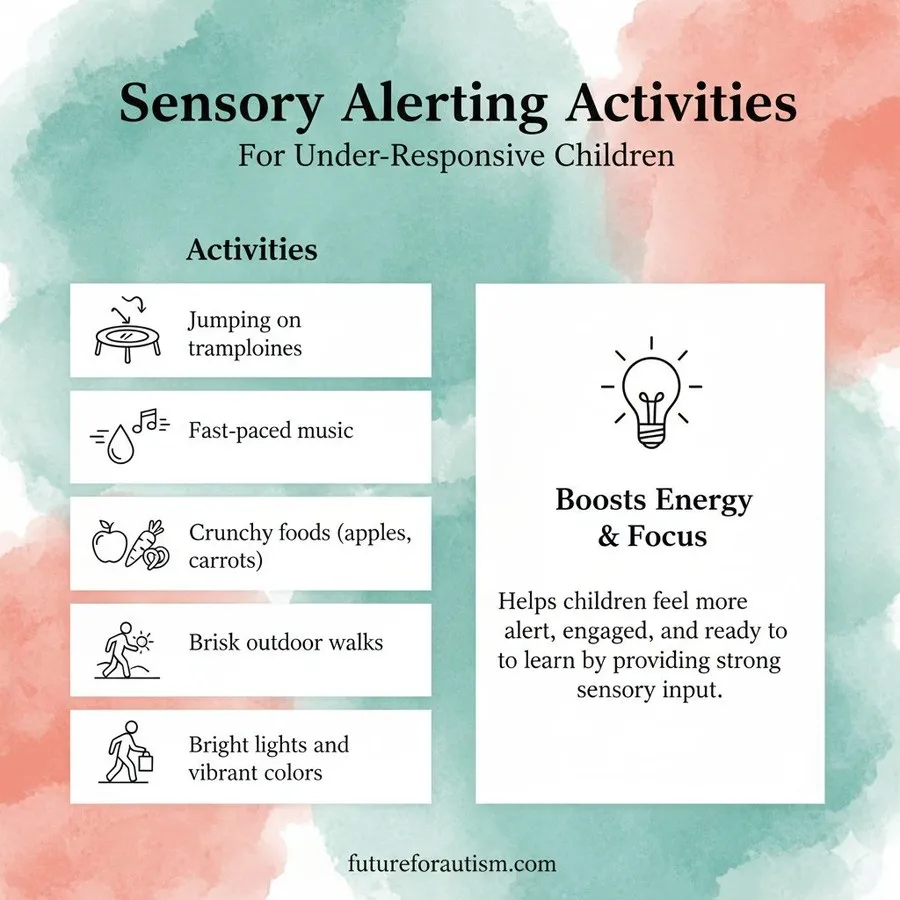
Alerting activities (for under-responsive children)
- Jumping on trampolines
- Fast-paced music
- Cold water splashing
- Crunchy foods (apples, carrots, pretzels)
- Brisk outdoor walks
- Bright lights and vibrant colors
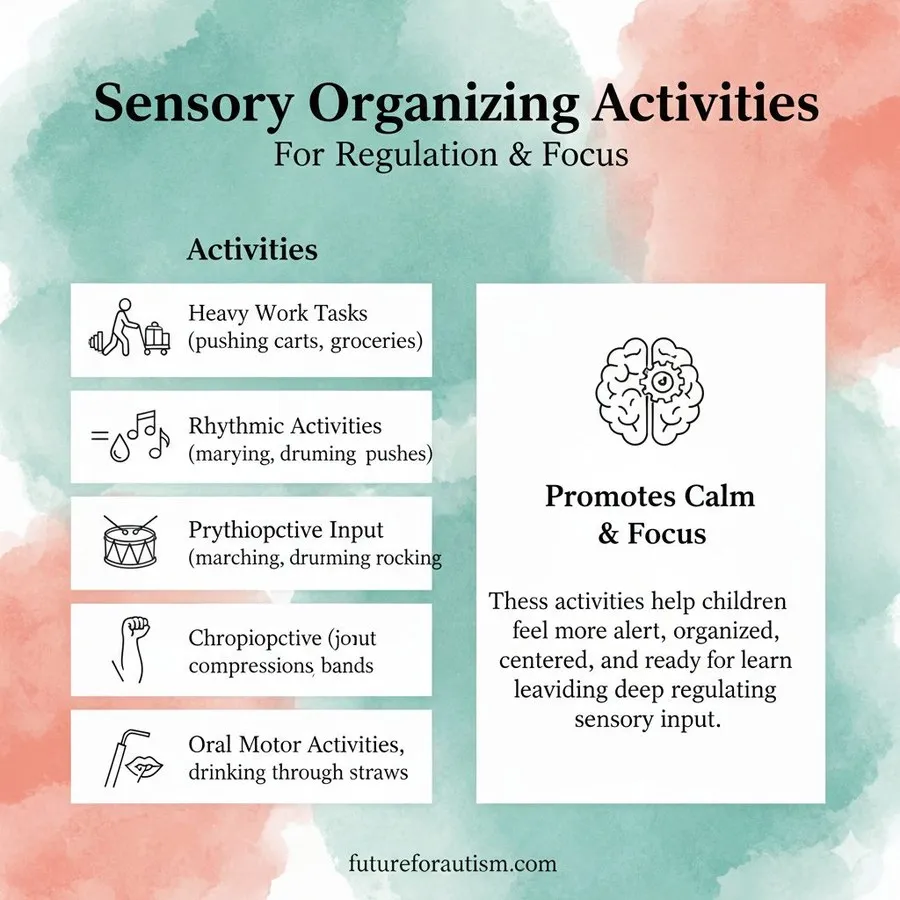
Organizing activities (for regulation and focus)
- Heavy work tasks (pushing carts, carrying groceries, wall pushes)
- Rhythmic activities (marching, drumming, rocking)
- Proprioceptive input (joint compressions, resistance bands)
- Oral motor activities (chewing gum, drinking through straws)
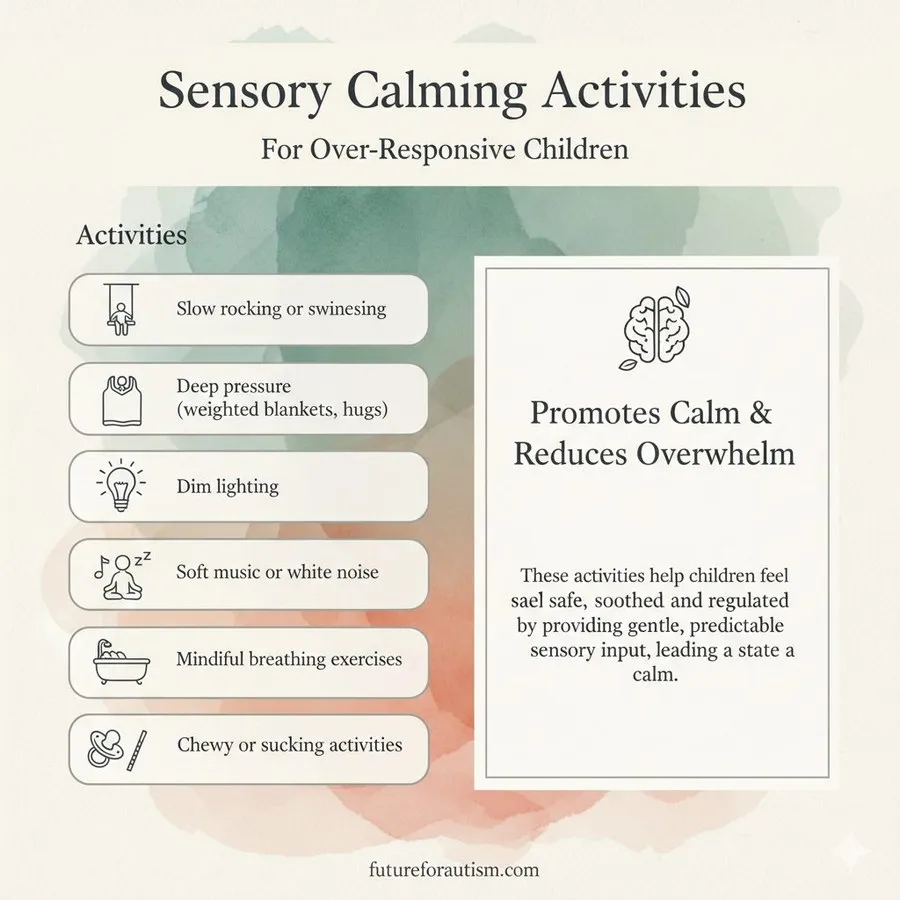
Calming activities (for over-responsive children)
- Slow rocking or swinging
- Deep pressure (weighted blankets, compression vests, bear hugs)
- Dim lighting
- Soft music or white noise
- Mindful breathing exercises
- Warm baths
- Chewy or sucking activities
Sensory activities for autistic children
Engaging your child in sensory activities can support regulation, focus, and emotional balance. Every child experiences sensory input differently, so the activities below are organized by sensory system rather than age, so you can match them to what your child actually needs.
Start small, stay consistent, and observe your child's responses. With patience, these simple activities can transform daily life for your family.
50+ sensory activities for home and school
Proprioceptive activities (heavy work)
- Wheelbarrow walking: walks on hands while adult holds legs
- Animal walks: bear crawls, crab walks, frog jumps
- Pushing/pulling wagons filled with books or toys
- Carrying heavy items: laundry baskets, grocery bags, water bottles
- Wall pushes: pretend to push the wall down for 10 seconds
- Chair push-ups: pushing up from a seated position
- Jumping activities: jump rope, hopscotch, trampoline
- Yoga poses: downward dog, plank, tree pose
- Resistance band exercises: arm pulls, leg pushes
- Digging in the garden or a sandbox
Tactile activities (touch)
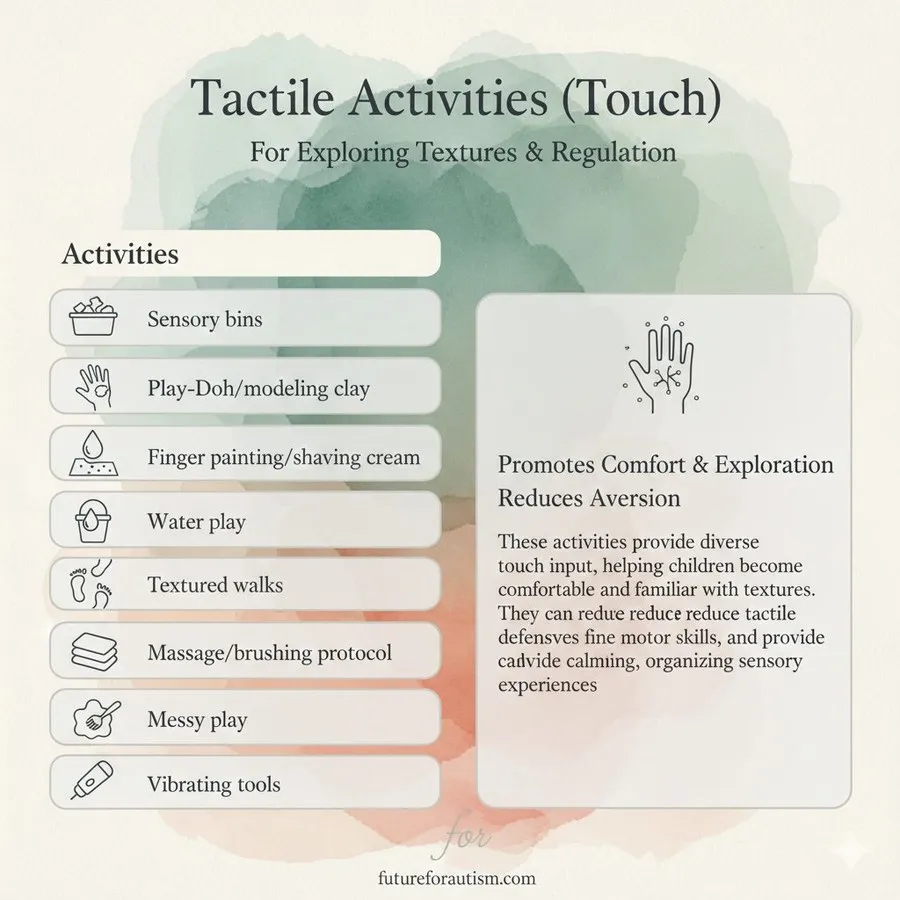
- Sensory bins: rice, beans, water beads, kinetic sand
- Play-Doh or modeling clay: squeezing, rolling, sculpting
- Finger painting or shaving cream art
- Water play: different temperatures, textures, containers
- Textured walks: barefoot on grass, sand, carpet, tile
- Massage: hands, feet, back with lotion
- Brushing protocol: Wilbarger technique, by a trained OT
- Fabric textures: sorting different materials
- Messy play: mud kitchens, slime, oobleck
- Vibrating tools: massagers, electric toothbrush
Oral motor & interoceptive activities
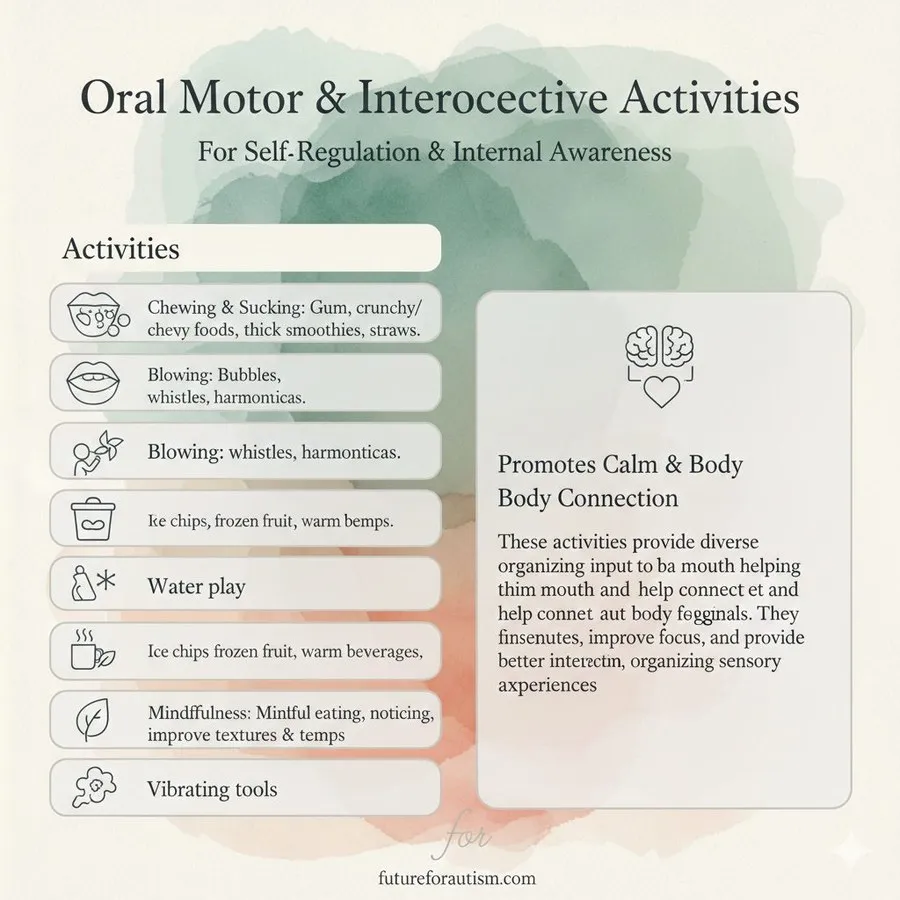
- Chewing gum (sugar-free)
- Crunchy snacks: raw vegetables, pretzels, crackers
- Chewy foods: bagels, dried fruit, gummy bears
- Drinking through straws: thick smoothies, milkshakes
- Blowing activities: bubbles, whistles, pinwheels, harmonicas
- Chewable jewelry or pencil toppers
- Ice chips or frozen fruit
- Warm beverages: herbal tea, hot chocolate
- Resistive sucking: thick yogurt through a straw
- Mindful eating exercises: noticing food textures and temperatures
Visual & auditory activities
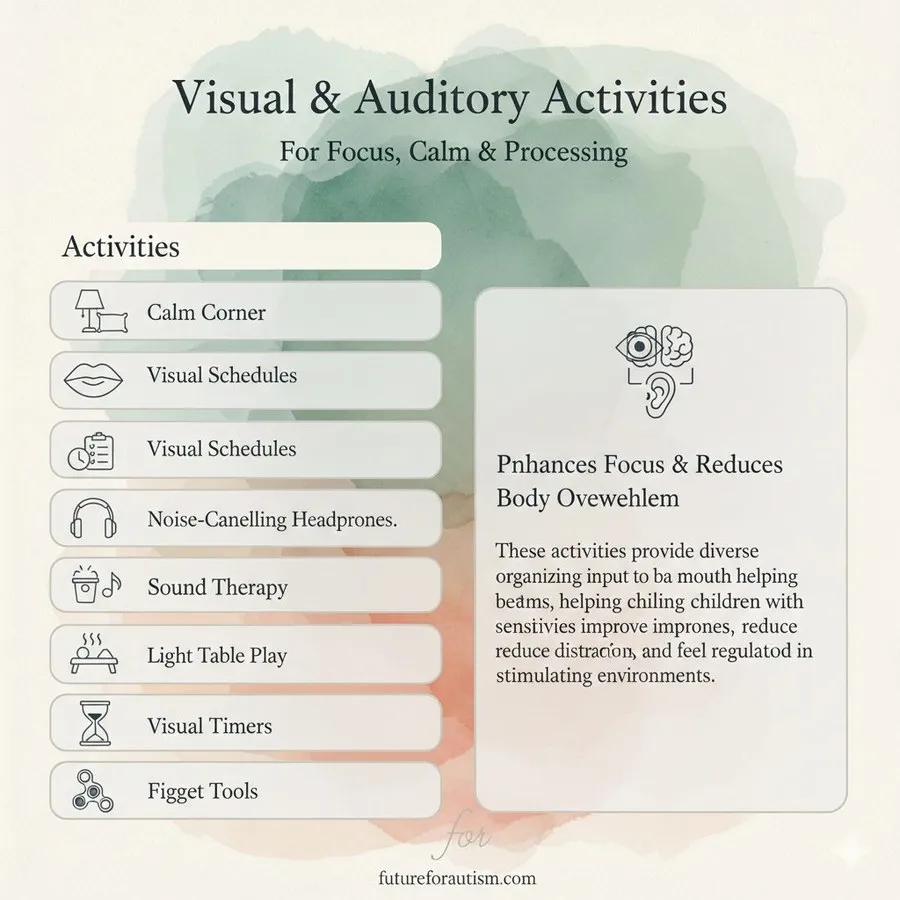
- Calm-down corner with dim lighting, soft materials
- Visual schedules: picture-based daily routines
- Noise-canceling headphones for overwhelming environments
- Therapeutic listening programs: specific music protocols
- Light table activities: tracing, pattern matching
- Visual timers: showing time passing concretely
- Nature sounds or white noise machines
- Colored overlays for reading materials
- Fidget tools: silent options for visual focus
- Mindfulness apps with guided imagery
Creating sensory-friendly environments at home and school
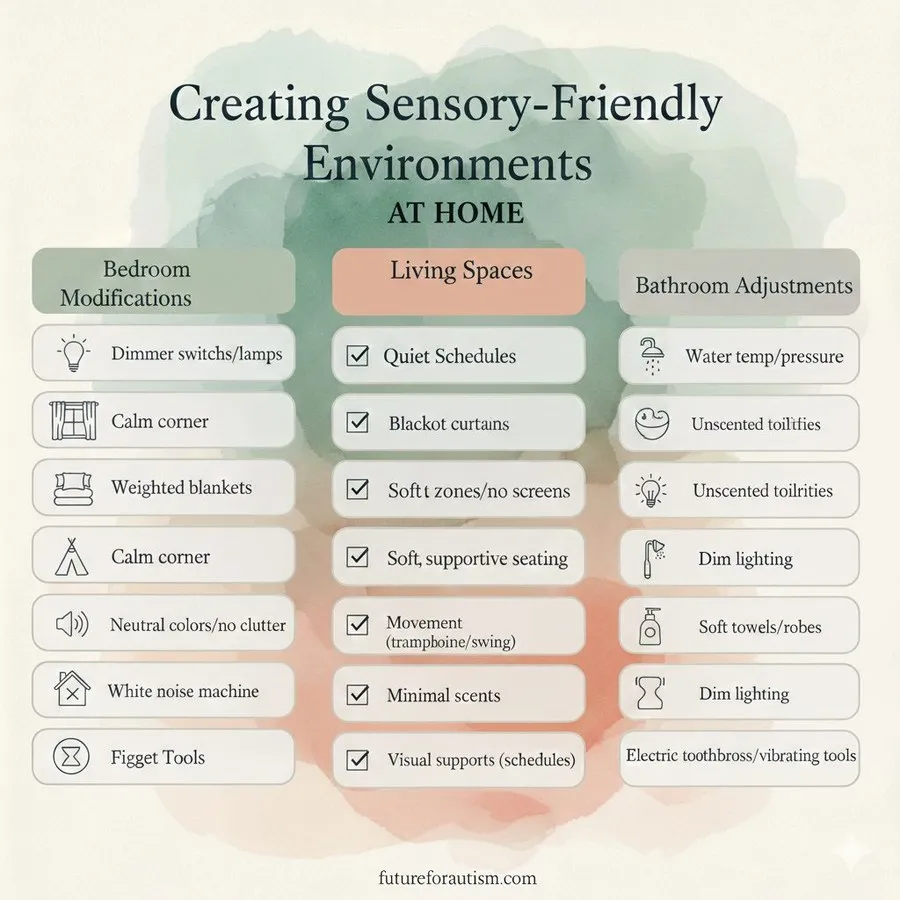
At home
Bedroom modifications:
- Install dimmer switches or use lamps instead of overhead lighting
- Use blackout curtains for better sleep
- Provide weighted blankets or compression sheets
- Create a dedicated "calm corner" with pillows and soft textures
- Remove visual clutter and use neutral colors
- Consider a white noise machine
Living spaces:
- Establish quiet zones free from TV or device noise
- Use soft, comfortable seating with body support
- Provide access to movement opportunities (mini trampoline, swing)
- Keep strong scents (candles, air fresheners) minimal
- Use visual supports (schedules, timers, choice boards)
Bathroom adjustments:
- Adjust water temperature and pressure
- Use unscented or preferred-scent toiletries
- Provide soft towels and robes
- Dim bright lighting
- Introduce electric toothbrushes or vibrating tools gradually
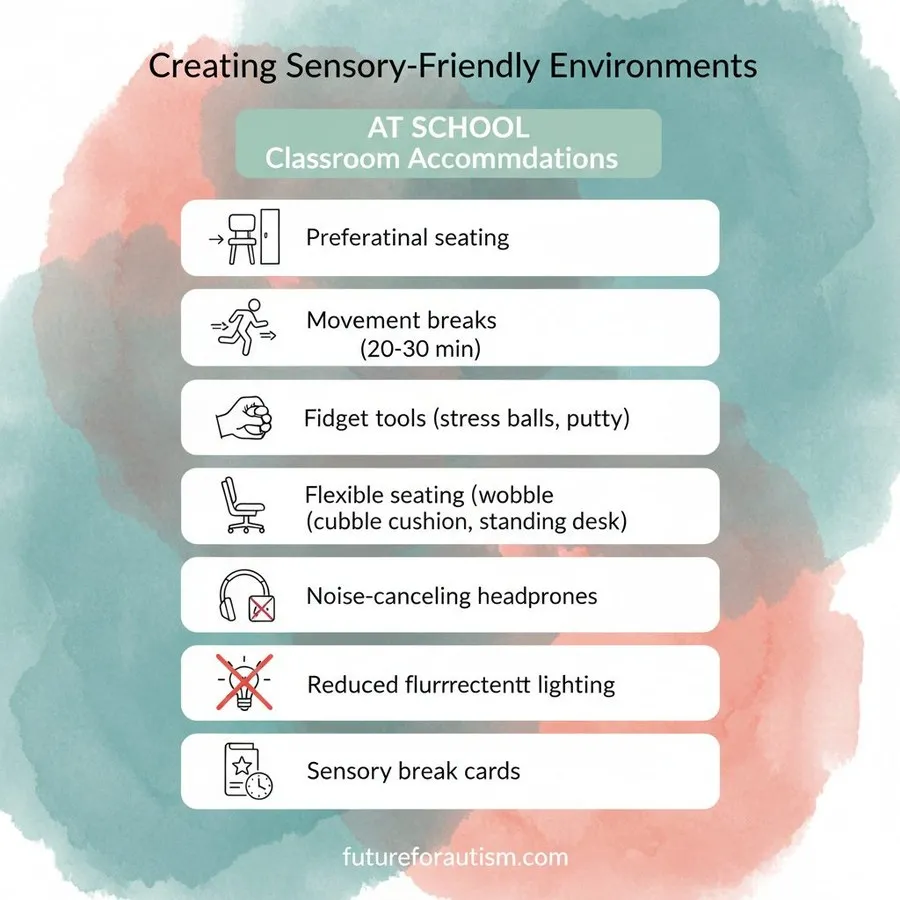
At school
Classroom accommodations:
- Preferential seating away from windows, doors, high-traffic areas
- Access to movement breaks every 20–30 minutes
- Fidget tools at the desk (stress balls, therapy putty, fidget spinners)
- Flexible seating options (wobble cushion, standing desk, bean bag)
- Noise-canceling headphones during independent work
- Visual schedules and timers
- Reduced fluorescent lighting (turned off, or lamps used instead)
- Sensory break cards to request regulation time
Simple sensory activities for home (daily, 30 minutes)
Parents often search for sensory activities that require minimal equipment. Try these easy options:
- DIY sensory bins (rice, pasta, or water beads)
- Bubble popping or fidget toys
- Soft music or nature sounds during quiet play
- Creative movement: dancing, marching, hopping
These provide regulation and enjoyment, and can be done in minutes using household items.
Sensory calming activities for overload (daily, 30 minutes)
When a child experiences sensory overload, these activities can help calm and regulate the nervous system:
- Deep pressure: hugs, weighted blankets, or lap pads
- Rocking, swinging, or gentle bouncing
- Soft lighting and a quiet space
- Breathing or grounding exercises
- Fidget toys or stress balls
How do you calm sensory overload, step by step?
Remove triggers
Reduce or remove loud sounds, bright lights, or chaotic elements from the immediate environment.
Reduce stimulation
Offer a quiet corner or dim lighting to lower the overall sensory load.
Provide sensory tools
Bring in a weighted blanket, fidget toy, or soft texture your child already finds calming.
Stay calm
Speak in soft, minimal words rather than trying to explain or reason in the moment.
Allow recovery time
Don't rush your child back into activity: let the nervous system fully settle first.
These steps teach a child that they can self-regulate safely, which reduces how often future overloads happen.
Recommended sensory tools
Some links below are affiliate links. If you buy through them, we may earn a small commission at no extra cost to you, this helps keep our guides free.
Proprioceptive tools
- Weighted blankets (roughly 10% of body weight)
- Compression vests or tight-fitting clothing
- Body socks for deep pressure
- Therapy balls for seating or exercises
- Resistance bands and therapy putty
Vestibular tools
- Platform swings or therapy swings
- Scooter boards
- Balance boards or wobble cushions
- Mini indoor or outdoor trampolines
- Rocking chairs
Tactile tools
- Sensory bins with varied textures
- A fidget toy collection
- Chewable jewelry (Chewigem-style, therapeutic brands)
- Textured balls and manipulatives
- Kinetic sand or therapy putty
Calming tools
- Noise-canceling headphones
- Weighted lap pads
- Liquid timers or glitter bottles
- Essential oil diffusers (lavender, chamomile)
- Dim night lights or salt lamps
When should you see an occupational therapist for sensory issues?
Consider consulting an occupational therapist specializing in sensory integration if your child:
- Has extreme reactions to everyday sensory experiences
- Avoids age-appropriate activities due to sensory concerns
- Experiences frequent meltdowns related to sensory triggers
- Shows developmental delays in motor skills
- Has difficulty with self-care tasks (dressing, eating, hygiene)
- Struggles with attention and regulation at school
- Shows aggressive or self-injurious behavior during sensory overload
Finding the right therapist
Look for occupational therapists with:
- Advanced training in sensory integration (SIPT certification)
- Experience working with autistic children
- Access to sensory gym equipment
- A collaborative approach with families
- An understanding of neurodiversity-affirming practices
Professional support options
- Occupational Therapy (OT): addresses sensory processing and regulation
- Applied Behavior Analysis (ABA): teaches functional emotional regulation skills
- Cognitive Behavioral Therapy (CBT): helps with anxiety and emotional coping
- Sensory Integration Therapy: addresses underlying sensory processing issues
No obligation, just a real conversation with another parent.
Sensory processing checklist for parents
Use this checklist to start identifying your child's unique sensory profile. It isn't diagnostic, but it's a useful starting point for a conversation with an OT.
Visual
- Sensitive to bright lights
- Prefers dim environments
- Difficulty with eye contact
- Overwhelmed by busy patterns
Auditory
- Covers ears frequently
- Distressed by loud or unexpected sounds
- Difficulty in noisy environments
- Seeks certain sounds or music
Tactile
- Resists certain clothing textures
- Avoids messy activities
- Dislikes hair or nail care
- Seeks or avoids touch
Oral
- Extremely picky eater
- Gags on certain textures
- Seeks oral input (chewing)
- Drools or has oral motor challenges
Vestibular
- Fears movement activities
- Constantly seeks movement
- Poor balance
- Gets dizzy easily
Proprioceptive
- Clumsy or uncoordinated
- Seeks deep pressure
- Difficulty with fine motor tasks
- Doesn't know own strength
Interoceptive
- Doesn't recognize hunger or thirst
- Difficulty identifying emotions
- Delayed pain response
- Toilet training challenges
Free Sensory Processing Guide
All 8 systems, 50+ activities, and this checklist in one printable PDF.
Download the free guideKey takeaways for sensory success
- ✅ Sensory differences are neurological, not behavioral: they need accommodation, not punishment
- ✅ Every autistic child has a unique sensory profile: what calms one may alert another
- ✅ Proactive sensory diets prevent dysregulation better than reactive strategies
- ✅ Environmental modifications at home and school make a real difference
- ✅ Occupational therapy provides professional assessment and intervention
- ✅ Parent education and advocacy empower families to support sensory needs
- ✅ Consistency and patience matter: sensory systems develop over time
Additional resources
Organizations
- STAR Institute for Sensory Processing: sensoryhealth.org
- Autism Research Institute: autism.org
- American Occupational Therapy Association: aota.org
Books
- The Out-of-Sync Child by Carol Kranowitz
- Raising a Sensory Smart Child by Lindsey Biel
- Building Bridges Through Sensory Integration by Ellen Yack
Questions parents ask about sensory processing
What is sensory processing disorder in autism?
Sensory processing disorder means the brain has difficulty receiving and responding to information from the senses. In autism, this often shows up as over-responding (hypersensitivity) or under-responding (hyposensitivity) to sound, light, touch, taste, smell, or movement.
What is the difference between a sensory meltdown and a tantrum?
A sensory meltdown is an involuntary response to sensory overload with no specific goal. A tantrum is goal-oriented behavior aimed at getting something, and the child maintains some control over it.
What is a sensory diet and how do I create one?
A personalized daily schedule of alerting, organizing, and calming activities that gives a child's nervous system the input it needs, usually planned with an occupational therapist.
What tools help most with sensory overload at home?
Weighted blankets, noise-canceling headphones, fidget toys, chewable jewelry, dim lighting, and a designated calm-down corner are common starting points.
When should I see an occupational therapist for sensory issues?
If your child has extreme reactions to everyday sensory experiences, frequent sensory-related meltdowns, or struggles with self-care tasks tied to sensory input.
Related Reading: Sensory & Stimming
Final thoughts for autism parents
If no one has told you this yet, you're doing an incredible job. From personal experience, I can say I connect with you, because we're on the same ship.
Sensory integration is possible once you actually know which inputs your child is seeking and which ones overwhelm them. Sometimes a child seeks vestibular input more and tactile less. Sometimes it's both. Plan accordingly, with patience and love.
Start small. Stay consistent. Be kind to yourself.