
Autistic Child ke Liye Routine Kaise Banaye
✨ Introduction : Routine ka Purpose
Agar aapka baccha roz-roz ke transitions se overwhelmed hota hai, schedule changes par meltdown karta hai, ya simple cheezon (jaise dress pehnna) me struggle karta hai, toh aap bilkul akela nahi ho. Ek effective routine banana initially mushkil lag sakta hai, lekin science-backed strategies se ye manageable ho jata hai. Is guide me hum aise methods cover karenge jo anxiety ko reduce karte hain aur development ko support karte hain.
Why Consistent Routines Matter (Routine kyun important hai)
- Research dikhati hai ki structured daily routines bachchon ko predictability deti hain, jo unke anxiety levels ko kam karti hai.
- Predictability se learning aur social-emotional skills bhi improve hoti hain.
- Families ke liye routines implement karna parenting stress ko kam karta hai aur confidence badhata hai.
Essential Components of Effective Routines (Routine ke key features)
🔹 Predictability + Flexibility
Routine consistent ho, par bilkul rigid na ho : 80–85% consistency acchi hoti hai aur thodi flexibility bhi.
🔹 Visual Processing
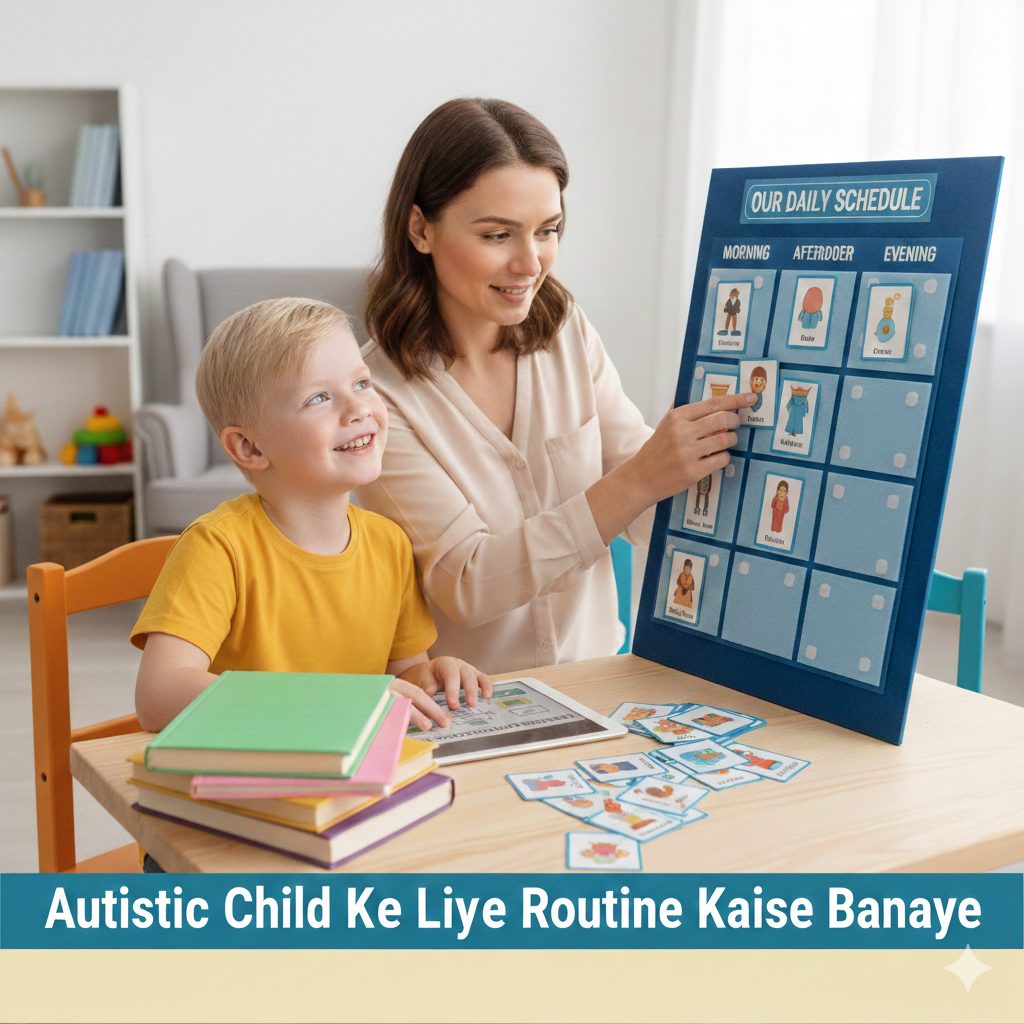
Autistic bacche often visual process better karte hain, isliye visual schedules (pictures/symbols/cards) bohot helpful hote hain.
🔹 Natural Reinforcers
Routine me natural motivators add karo : favourite food, game time, ya bedtime story jaise rewards.
🔹 Sensory Considerations
Routine me sensory preferences bhi include karo : e.g., noise cancelling headphones, calm room, etc.
Creating Your Child’s Daily Schedule (Daily Schedule kaise banaye)
Step-by-Step:
- Anchor Points : Pehle fixed mealtimes aur bedtimes set karo.
- Visual Framework : Verbal instructions ko visual schedules me convert karo.
- Task Breakdown : Complex routines (school prep) ko 4–6 steps me divide karo.
- Independence Building : Bacche ko gradually choices aur checklists dekar routine apne aap complete karna sikhayein.
Visual Support Tools That Work (Visual aids)
- Picture Schedules – Photos/symbols representing tasks help clarity.
- First/Then Boards – “First kam, phir fun” jaise boards transitions ko smoother banate hain.
- Visual Timers – Time ko visual form me dikhate hain, jo transitions ko less stressful banate hain.
- Checklists – Steps ko check karta dikhana bacche ko confidence deta hai.
- Social Stories – New situations ko simple narrative form me explain karna helpful hota hai.
Managing Transitions and Changes
- Transitions anxiety trigger karte hai, isliye “5 min before”, “2 min before” warnings use karo using visuals + simple language.
- Consistent phrases (e.g., “Ab bath ka time hai”) use karo rather than vague words like soon.
- Transition objects (fav toy) ya songs bhi help karte hain.
Building Independence Through Routines
- Choices dein within routine (brush teeth before/after breakfast?).
- Self-monitoring (checklists) se bacche ko sense of accomplishment milta hai.
- Complexity ko dheere-dheere badhayein as skills improve.
Adapting Routines for Different Ages
Early Childhood (2–5)
- Short routines, heavy use of real photos.
School Age (6–12)
- Homework/chore routines, symbolic visuals.
Adolescence (13–18)
- Digital tools, time blocks etc.
Adult
- Meal prep, work schedules but predictable structure still maintained.
Common Challenges and Solutions
- Morning rush: Raat ko clothes ready, 5-min transition songs.
- Mealtime resistance: Limited choices (preferred + new).
- Bedtime delay: Consistent 30-min sequence with visual timer.
- Weekends: Simplified routine version maintain karo.
Parent Action Plan : 30-Day Strategy
Week 1:
- Choose 1 anchor point.
- Create simple visual 4-step schedule.
- Use phone timer.
Week 2:
- Add second routine.
- Introduce choice options.
Week 3:
- Create checklists for self-monitoring.
Week 4:
- Connect routines, prep for schedule disruptions.
FAQ (Frequently Asked Questions)
Routine kab start karna chahiye?
As early as 18–24 months with pictures.
Routine kitna rigid hona chahiye?
Mostly consistent but flexible : ~80–85% repeatability.
Holidays me routine?
Keep key anchors (meals/bedtime) same; prepare with visual preview.
Obsessed routines?
If routine becomes ritualistic rather than helpful, consult specialist.
🏁 Conclusion : Routine ka Impact
Routine sirf daily tasks organise nahi karta : predictability reduce anxiety, engagement improve karta hai, aur independence build karta hai throughout child’s growth. Start with one manageable routine aur dheere-dheere expand karo as confidence increases.
Agar ap ap bhi confuse hai to ap download kr skte hai, Autism Daily routine guide.