
Emotional regulation, the ability to recognize, understand, and manage feelings in socially appropriate ways, is one of the most significant challenges in autism spectrum disorder. Unlike typical frustration, emotional dysregulation often shows up as intense outbursts, rapid mood changes, sensory-driven meltdowns, or real difficulty calming down after stress.
Watching these episodes can feel overwhelming, especially when the calming methods that work for other kids don't seem to touch it. The good news: emotional regulation skills can be learned, practiced, and strengthened with the right strategies, consistency, and understanding.
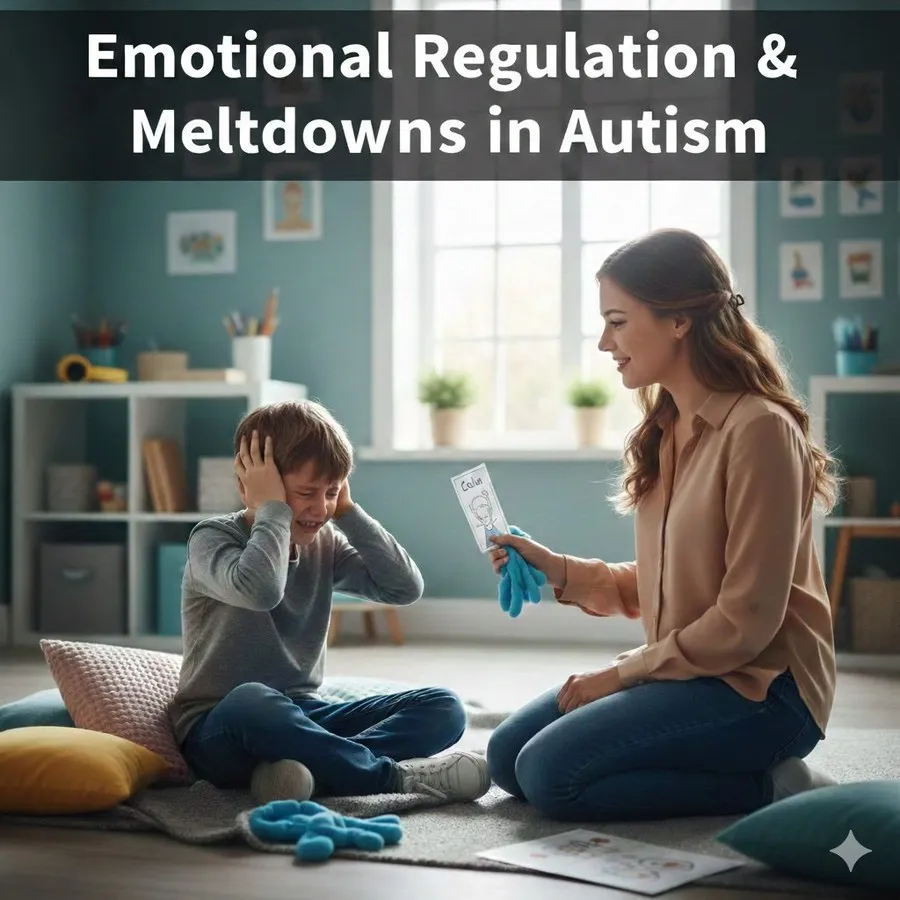
What is emotional regulation in autism?
Emotional regulation refers to the ability to recognize, understand, and manage emotional responses appropriately. For autistic individuals, this can be particularly challenging due to differences in brain function, sensory processing, and communication pathways.
Emotional dysregulation in autism isn't a behavior problem, it's a neurological difference in how the brain processes and responds to emotional and sensory information. Research shows autistic individuals may experience emotions more intensely than neurotypical people, and the regulatory mechanisms that normally help modulate those responses can function differently.
Core contributing factors for emotional regulation and meltdowns
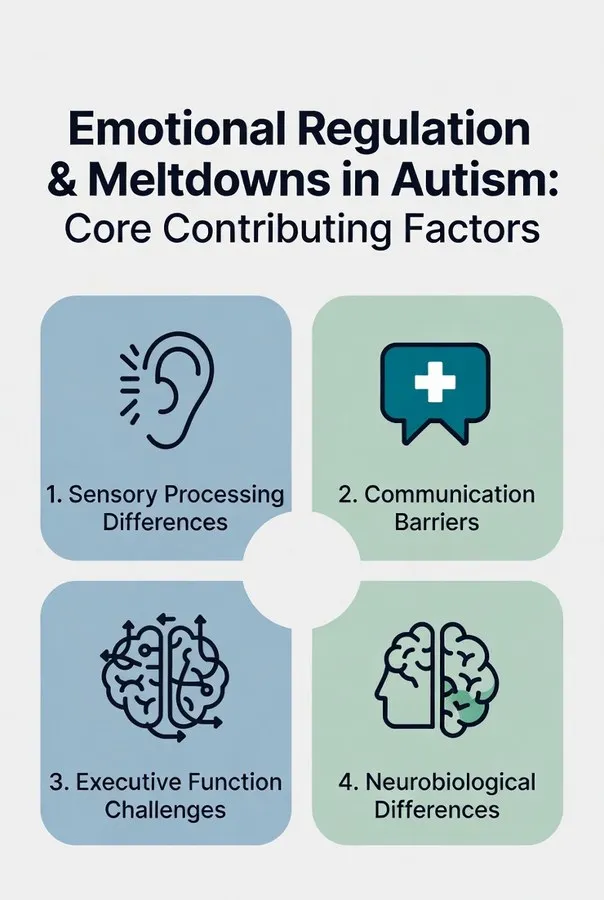
1. Sensory processing differences
Autistic individuals often experience heightened or reduced sensitivity to sound, light, texture, smell, and physical sensation. What seems like a minor noise (a vacuum, a hand dryer, classroom chatter) can feel painful or threatening, triggering the nervous system's fight-or-flight response.
2. Communication barriers
Many autistic individuals struggle to express needs, discomfort, or frustration verbally. That inability to communicate can build into frustration that eventually explodes as a meltdown, even in verbal children who struggle to articulate complex emotional states.
3. Executive function challenges
Executive functioning controls planning, impulse control, transitioning between tasks, and emotional self-monitoring. Difficulties here make it harder to anticipate emotional responses, plan coping strategies, or shift focus once overwhelmed.
4. Neurobiological differences
Autistic brains process emotions differently. The amygdala (emotion center) and prefrontal cortex (rational thinking) may have atypical connectivity, making regulation a neurological challenge rather than a behavioral one.
Other contributing factors
- Interoception challenges: difficulty recognizing internal body signals makes it harder to catch emotions before they escalate
- Masking behaviors: many autistic individuals mask distress in social situations, leading to delayed but more intense releases later
Autism meltdowns vs. tantrums: the critical difference
One of the most important distinctions parents need is the difference between meltdowns and tantrums. They can look similar on the surface, but they have completely different causes and need completely different responses.
- Purpose: none, it's a physiological response to overwhelm
- Control: complete loss of control, the child cannot "choose" to stop
- Trigger: sensory overload, emotional overwhelm, accumulated stress
- Response: cannot be reasoned with mid-episode, explanations add confusion
- Recovery: 20 minutes to several hours after the stressor is removed
- Signs: screaming, hitting, running, rocking, stimming, or shutting down
- Purpose: to achieve a specific outcome (a toy, avoiding a task, attention)
- Control: the child keeps some level of control and awareness
- Trigger: not getting a want or need met
- Response: often stops once the goal is reached or boundaries are firmly set
- Recovery: nearly instant once needs are met or the child gives up
- Signs: child may pause to check if someone's watching, then resume
Common sensory and emotional triggers
Identifying your child's specific triggers is the first step toward prevention.
Sensory Overload
- Auditory: alarms, vacuums, sudden loud noise
- Visual: fluorescent lights, flashing screens
- Tactile: clothing tags, unexpected touch
- Olfactory: perfumes, cleaning products
- Proprioceptive/vestibular: crowds, unexpected contact
Environmental & Routine
- Unexpected schedule changes or transitions
- Being rushed or hurried
- Uncertainty about what's coming next
- Too many demands or choices at once
- Social situations requiring "masking"
Internal & Physical
- Hunger, thirst, or fatigue
- Illness or pain, often hard to communicate
- Anxiety about upcoming events
- Accumulated stress ("the last straw")
- Undiagnosed medical issues
Many children show early warning signs before a meltdown, like pacing, covering ears, withdrawing, repetitive movements, or increased irritability. Catching these early lets you intervene before things escalate.
How to calm an autistic child during a meltdown
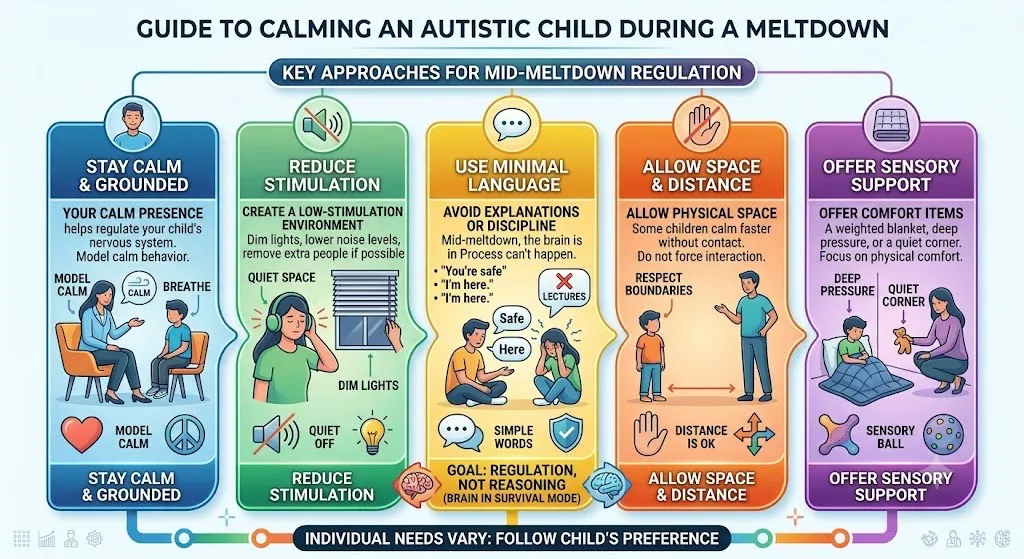
When a child is mid-meltdown, the goal is regulation, not reasoning. The brain is in survival mode and can't process explanations or discipline.
- Stay calm and grounded: your calm presence helps regulate your child's nervous system
- Reduce stimulation: dim lights, lower noise, remove extra people if possible
- Use minimal language: short phrases like "You're safe" or "I'm here"
- Allow space if needed: some children calm faster without physical contact
- Offer sensory support: weighted blanket, deep pressure, rocking, or a quiet corner
- Follow the child's preference: some need closeness, others need distance
Building regulation skills long-term
Emotional regulation is a skill that develops gradually with support and practice. These strategies build regulation skills outside of meltdown moments.
- Visual supports: emotion charts, daily schedules, first-then boards
- Predictable routines: consistency reduces anxiety and emotional overload
- Sensory breaks: planned movement, quiet time, or deep-pressure activities
- Breathing and grounding: simple breathing, squeezing a stress ball, naming senses
- Modeling emotions: calmly naming your own feelings teaches emotional language
Teaching regulation when a child is calm builds resilience and reduces the frequency and intensity of meltdowns over time.
25 evidence-based emotional regulation strategies
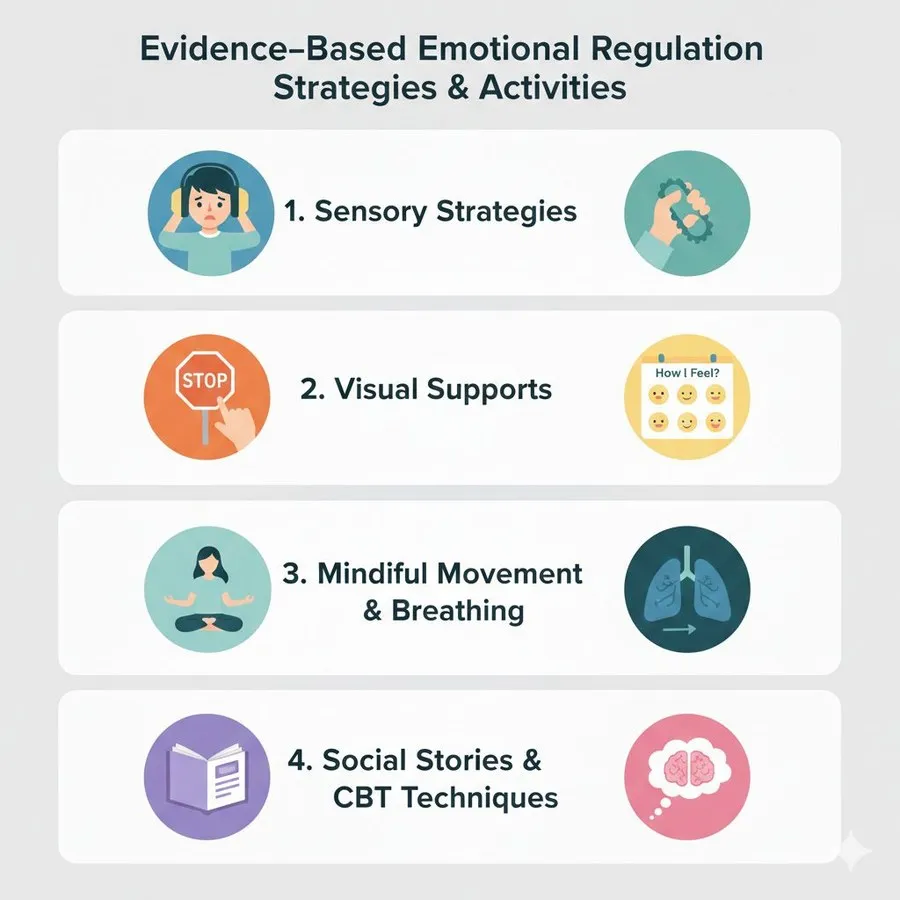
Immediate calming techniques
- Deep breathing exercises: belly breathing, in through the nose for 4 counts, hold for 4, out through the mouth for 4. Activates the parasympathetic nervous system.
- Deep pressure therapy: bear hugs (if tolerated), weighted blankets or vests, compression clothing, gentle squeezes.
- Sensory breaks: 10-minute quiet time in a calm space, noise-canceling headphones, dimmed lighting, preferred sensory activities.
- The five senses grounding technique: name 5 things you can see, 4 you can hear, 3 you can touch, 2 you can smell, 1 you can taste.
- Physical exercise: running, trampoline jumping, swimming, or other vigorous activity to discharge emotional energy.
Visual support tools
- Emotion cards and charts: visual facial expressions to help kids identify feelings and communicate when words are hard.
- Zones of regulation: a color-coded system: Blue (tired, sad, sick, bored), Green (calm, focused, ready to learn), Yellow (frustrated, anxious, excited), Red (angry, explosive, out of control).
- Visual schedules and timetables: picture-based daily activities to reduce anxiety about what's coming and support independence.
- 5-point scale with coping strategies: a visual 1-5 scale paired with a specific strategy per level, so kids catch escalation early.
- Social stories: personalized stories explaining emotional situations and appropriate responses in a concrete, visual format.
Preventive strategies
- Establish predictable routines: the same sequence for daily activities whenever possible.
- Sensory circuits: a three-part sequence: Alert (jumping jacks, running), Organize (balancing, walking a line), Calm (music, quiet stretching).
- Transition warnings: advance notice before changes, timers or visual countdowns, prep for big changes days ahead.
- First-then statements: "First we finish homework, then we play." Reduces resistance tied to task demands.
- Choice boards: controlled choices (2-3 max) to build a sense of autonomy without overwhelming options.
Calm-down kit and sensory tools
- Build a personalized calm-down kit: fidget toys, a comfort item, noise-canceling headphones, chewable jewelry or gum, calming essential oils, simple puzzles.
- Fidget tools: appropriate fidgeting during stress provides sensory input that maintains focus and calm.
- Weighted items: weighted blankets, lap pads, or stuffed animals provide proprioceptive input that calms the nervous system.
- Sensory-friendly space: a "calm corner" with soft lighting, comfortable seating, calming visuals, and sensory tools within reach.
Communication and social-emotional learning
- Teach emotion vocabulary: emotion wheels or charts, books about feelings, discussing emotions during calm moments.
- Practice "using your words": verbal expression, picture exchange systems, communication apps, sign language, whatever works for your child.
- Acknowledge and validate feelings: "I see you're feeling angry because your tower fell down. That's frustrating." Validation isn't agreement, it's recognizing the experience.
- Role-play challenging situations: during calm moments, practice what to do when overwhelmed, how to ask for a break, appropriate ways to express frustration.
Long-term regulation development
- Model appropriate emotional responses: calm communication when frustrated, using coping strategies yourself, healthy emotional expression.
- Build emotional intelligence through practice: when calm, discuss what happened before the meltdown, physical feelings, what might help next time, and celebrate successful regulation.
Handling meltdowns with confidence
Handling meltdowns can feel overwhelming, especially in public or high-stress situations. Your response matters more than the behavior itself.
- Prioritize safety for the child and others
- Stay emotionally neutral and avoid power struggles
- Do not punish or threaten consequences
- Be physically present without overwhelming
- Reassure the child once calm: "That was hard. You're safe now."
After the meltdown, skip the long discussion. Focus on reconnecting and restoring emotional safety first.
The Regulate-Relate-Reason approach
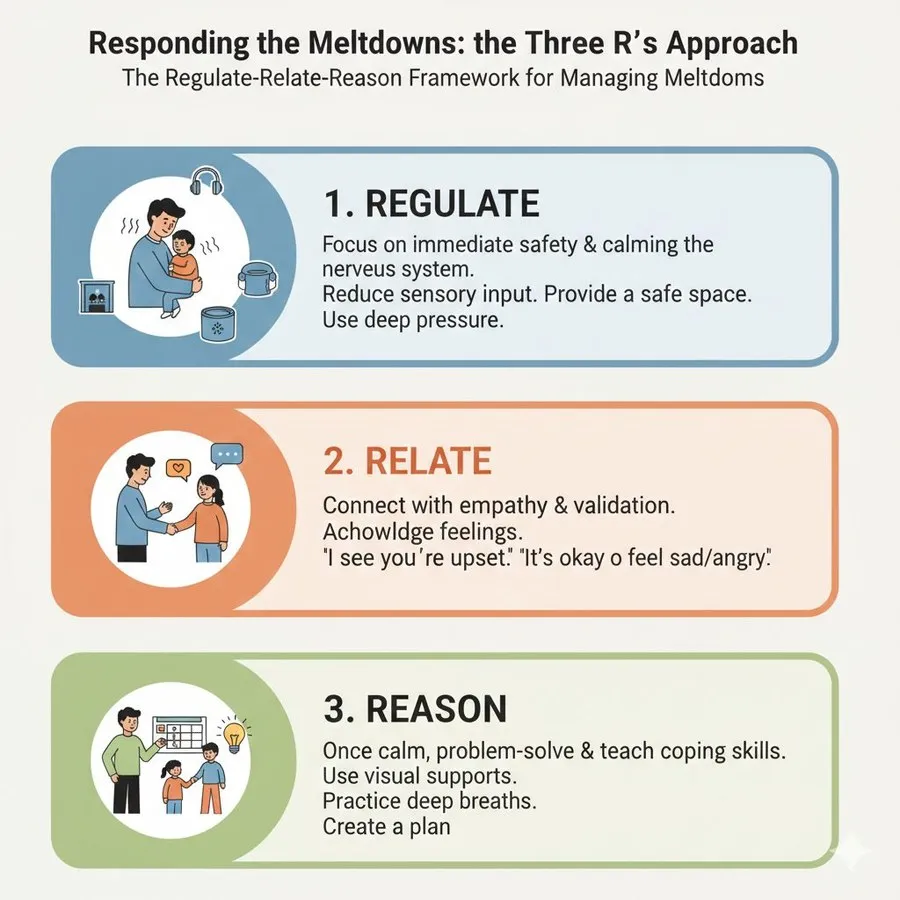
When a meltdown happens, follow this three-step approach in order.
Regulate
Your regulation first, your calm state affects your child's. Minimize verbal input (talking adds sensory overload). Prioritize safety: remove dangerous objects, create physical space. Allow self-regulation like stimming or jumping. Reduce sensory input: lower lights, reduce noise, remove crowds.
Relate
Stay present, your physical presence provides security. Validate feelings: "I see you're really upset. That's okay." Offer comfort if touch is tolerated. Use minimal words: "I'm here," "You're safe," "It will pass." Never shame or punish a meltdown.
Reason
Wait until your child is fully calm (20+ minutes). Process together: "Let's talk about what happened." Problem-solve: "What could help next time?" No lecturing, this isn't discipline, it's learning. Document patterns: triggers, warning signs, and what worked.
Creating a personalized emotional regulation toolkit
Every autistic individual has unique needs. Build a customized toolkit with:
Sensory Items
- Noise-canceling headphones
- Sunglasses for light sensitivity
- Weighted lap pad or stuffed animal
- Fidget toys
- Chewable necklace or gum
Visual Supports
- Emotion chart
- Calming strategy cards
- Visual schedule
- Timer
Comfort Items
- Favorite blanket or plush toy
- Photos of loved ones
- Calming music playlist
- Familiar scented item
Communication Tools
- "I need a break" card
- Emotion pointing board
- AAC device or communication app
Free Emotional Regulation Guide
All 25 strategies, the Regulate-Relate-Reason framework, and a printable toolkit checklist in one PDF.
Download the free guideCreating a meltdown prevention plan
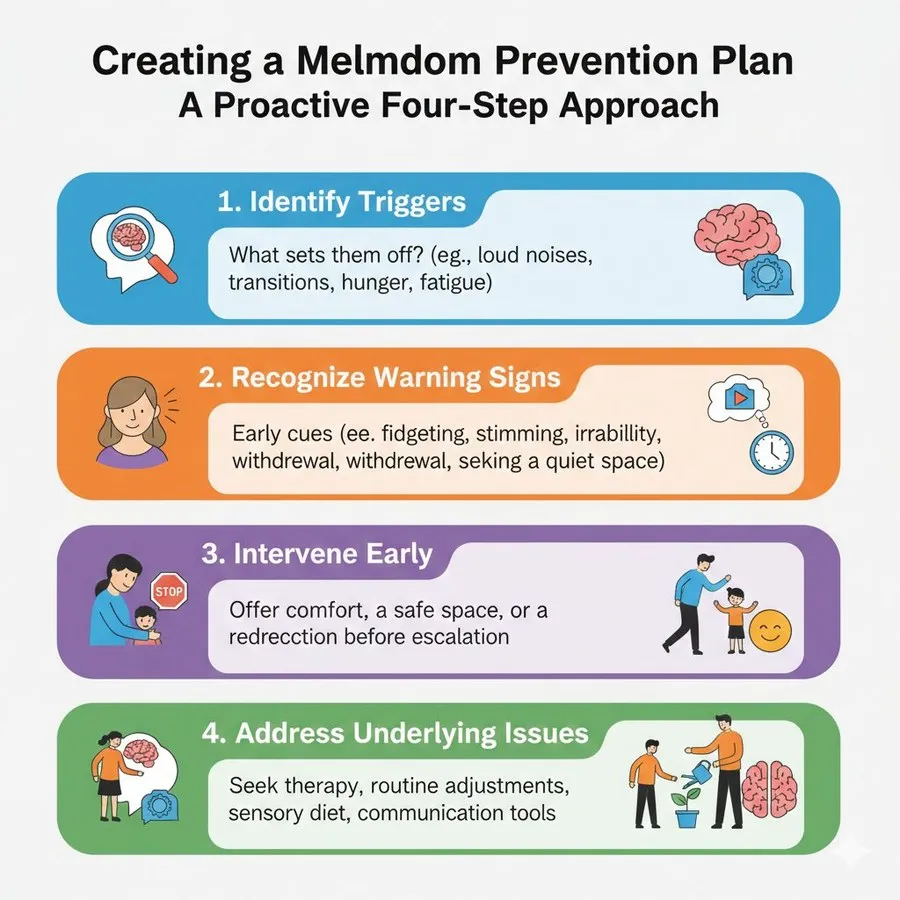
Identify triggers
Keep a behavior log tracking time of day, location, activities before the meltdown, sensory environment, physical state, and duration/intensity.
Recognize warning signs
Learn your child's specific escalation signals: increased stimming, verbal escalation, physical tension, withdrawal, or changes in breathing or facial expression.
Intervene early
At the first warning sign, implement calming strategies immediately, remove or reduce stressors, offer a sensory break, use visual supports.
Address underlying issues
Work with healthcare providers on gastrointestinal problems, sleep disorders, anxiety or depression, sensory processing disorder, or other comorbid conditions. Pain and discomfort often show up as behavioral and emotional dysregulation.
Spotting and addressing masking behaviors
Many autistic children develop sophisticated masking strategies to cope with challenging situations: staying quiet, copying others, hiding anxiety. Research shows students who lack a sense of belonging at school tend to mask more, which increases anxiety.
Signs of masking
- Appearing "fine" at school but melting down at home
- Exhaustion after social situations
- Difficulty expressing genuine emotions
- Seeming unusually compliant or withdrawn
Support strategies
- Designate one consistent adult as a point of contact
- Create safe spaces where masking isn't necessary
- Validate emotions even when not visibly expressed
- Teach that it's okay to communicate discomfort
Meltdown prevention tips for daily life
Meltdowns can't always be avoided, but many can be reduced with proactive support.
- Keep routines predictable and consistent
- Give advance warnings before transitions
- Schedule regular sensory breaks
- Ensure adequate sleep, hydration, and nutrition
- Identify personal triggers and plan ahead
- Teach early coping tools before overload occurs
Prevention isn't about control, it's about creating an environment where your child feels safe, understood, and supported.
Long-term intervention approaches
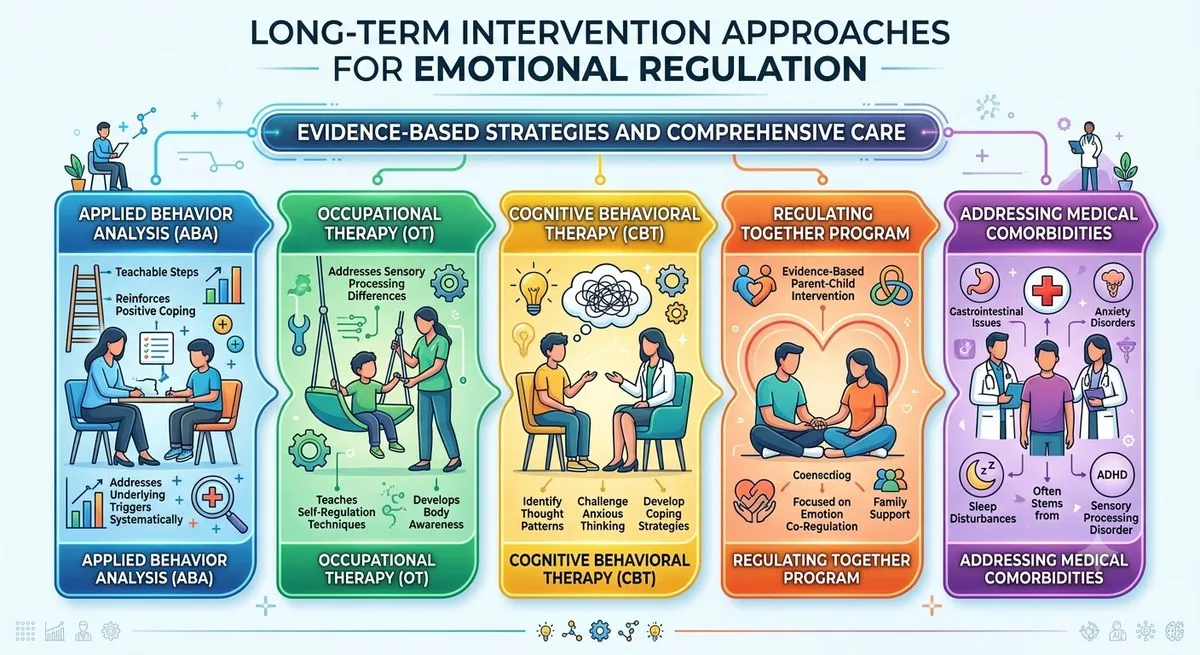
Applied Behavior Analysis (ABA)
Breaks emotional regulation into teachable steps, reinforces positive coping, and addresses underlying triggers systematically.
Occupational Therapy (OT)
Addresses sensory processing differences, teaches self-regulation techniques, and develops body awareness.
Cognitive Behavioral Therapy (CBT)
Modified CBT helps older children and adults identify thought patterns, challenge anxious thinking, and develop coping strategies.
Regulating Together Program
An evidence-based parent-child intervention focused on emotion co-regulation and family support.
Addressing Medical Comorbidities
Emotional dysregulation often stems from untreated conditions: gastrointestinal issues, anxiety disorders, sleep disturbances, ADHD, or sensory processing disorder.
Emotional regulation resources and tools
Free downloadable resources
- Emotion regulation wheel
- Zones of Regulation poster
- Social story templates
- Visual schedule templates
- Calming strategy cards
- Behavior tracking logs
Recommended apps
- Zones of Regulation app
- Breathe, Think, Do with Sesame
- Choiceworks Calendar
- Model Me Going Places 2
- Proloquo2Go (communication)
Organizations
- Autism Society of America
- Autism Research Institute (ARI)
- Autism Speaks Resource Library
- National Autism Association
Books
- The Explosive Child by Ross Greene
- No More Meltdowns by Jed Baker
- Zones of Regulation by Leah Kuypers
- The Out-of-Sync Child by Carol Kranowitz
When to seek professional help
Consider consulting specialists if:
- Meltdowns occur multiple times daily
- Self-injury or aggression occurs during meltdowns
- Emotional dysregulation significantly impacts daily functioning
- Current strategies aren't reducing frequency or intensity
- You suspect underlying medical issues
- The family system is under extreme stress
A Functional Behavior Assessment (FBA) by a qualified professional can identify specific triggers and create targeted intervention plans.
Professional support options
- Occupational Therapy (OT): addresses sensory processing and regulation
- Applied Behavior Analysis (ABA): teaches functional emotional regulation skills
- Cognitive Behavioral Therapy (CBT): helps with anxiety and emotional coping
- Sensory Integration Therapy: addresses underlying sensory processing issues
No obligation, just a real conversation with another parent.
Key takeaways for parents and caregivers
- ✅ Meltdowns are involuntary, not behavioral problems or tantrums
- ✅ Prevention is powerful: identify triggers and intervene early
- ✅ Visual supports work: emotion charts, schedules, and social stories provide concrete guidance
- ✅ Sensory awareness matters: understand your child's unique sensory profile
- ✅ Stay calm and present: your regulation supports theirs
- ✅ Practice during calm: teach strategies when emotions aren't high
- ✅ Address underlying issues: medical, sensory, and communication needs
- ✅ Celebrate progress: emotional regulation is a skill that develops over time
Questions parents ask about emotional regulation
How long does it take to see improvement in emotional regulation?
Every child is different. With consistent implementation, many families see gradual improvement over 3-6 months. Emotional regulation is a developmental skill that keeps evolving.
Can medication help with emotional dysregulation in autism?
Medication may help with co-occurring conditions like anxiety, depression, or ADHD that contribute to dysregulation. Consult a psychiatrist experienced in autism spectrum disorder.
What if strategies that worked before stop working?
Children's needs change as they develop. Reassess triggers, update visual supports, and consider whether new stressors or developmental changes need adjusted strategies.
How can schools support emotional regulation?
Collaborate with teachers to implement visual schedules, provide sensory breaks, establish calm spaces, use emotion check-ins, and create individualized crisis plans as part of an IEP or 504 plan.
Is it okay to use rewards for good emotional regulation?
Positive reinforcement works well when used appropriately. Focus on acknowledging effort and progress, not just outcome, and make sure the child has the skills needed to succeed.
Related Reading: Meltdowns & Regulation
Final thoughts for parents
Supporting emotional regulation in autism is a journey that takes patience, creativity, and unconditional love. Every child is unique, and what works for one may not work for another. By understanding the neurological basis of dysregulation, telling meltdowns apart from tantrums, and using evidence-based strategies, you help your child build lifelong coping skills.
You're not alone in this. Seek support from therapists, connect with other autism families, and celebrate every step forward, no matter how small.