
Parenting a child with autism becomes easier when daily routines are predictable, visual, and supportive. Use this guide to jump to the section you need most today.
At a glance
- Start with 3-4 fixed daily anchors (wake-up, meals, bedtime) before adding anything else
- Visual supports (picture schedules, timers, first-then boards) matter more than verbal reminders
- Most families see the first real shift within two to four weeks, not overnight
- A free printable routine chart is linked near the top and bottom of this guide
Raising a child on the autism spectrum can feel overwhelming, especially when days feel unpredictable, emotional, and exhausting. If you're a parent searching for clarity, calm, and consistency, the right autism daily routine at home can truly change everything.
A structured routine doesn't mean strict control. It means safety, predictability, reduced meltdowns, and better communication, for both your child and you.
Creating a consistent autism daily routine for children is one of the most effective ways to reduce anxiety, improve behavior, and support independence. Predictable routines help children with autism know what to expect, feel safe, and engage more successfully with their environment.
In this guide, parents will discover practical strategies for morning routines, bedtime routines, school days, and home schedules, plus easy-to-use visual supports and charts that make routines simple to follow and enjoyable for the whole family.
This complete guide will help you:
- Create a realistic autism daily routine at home
- Understand why routines work so well for autistic children
- Design morning, afternoon, and bedtime routines
- Avoid common mistakes parents make
- Download a free autism routine chart printable
Creating a structured daily routine for children with autism isn't just about organization. It's about building a foundation of safety, predictability, and independence that helps your child thrive. This comprehensive guide provides evidence-based strategies, practical activities, and resources to help you design routines that reduce anxiety, support skill development, and transform challenging moments into opportunities for growth.

Why Daily Routines Are Essential for Children with Autism
For children on the autism spectrum, the world can feel unpredictable and overwhelming. Structured ASD daily activities routines serve as a roadmap through their day, providing the consistency their brains need to process information, regulate emotions, and engage meaningfully with their environment.
Children with autism often struggle with:
- Sudden changes
- Unclear expectations
- Sensory overload
- Transitions between activities
A daily routine helps by providing structure and predictability, which reduces anxiety and emotional overload.
How Routine Helps Autism
Structured routines provide predictability, emotional stability, and skill-building opportunities. Children thrive when they know what's coming next, which reduces:
- Anxiety during transitions
- Frustration when tasks seem unpredictable
- Behavioral challenges related to uncertainty
Routines also help children develop self-regulation, independence, and confidence. For parents, a consistent routine makes daily life more manageable and predictable.
- Anxiety during transitions
- Frustration when tasks feel unpredictable
- Behavioral challenges tied to uncertainty
- Self-regulation over time
- Independence in daily tasks
- Confidence through predictability
The Science-Backed Benefits of Autism Routines
Research consistently shows that children with autism who follow predictable routines experience several measurable benefits. A 2015 study in the Journal of Autism and Developmental Disorders linked structured routines to reduced anxiety in autistic children, and clinicians such as Dr. Barry Prizant have written extensively about predictability as a foundation for emotional regulation.
- Reduced anxiety and behavioral challenges caused by uncertainty
- Improved emotional regulation through predictable sequences
- Enhanced independence as children learn what comes next
- Better communication skills through consistent cues and expectations
- Increased confidence from successful completion of known tasks
- Smoother transitions between activities throughout the day
- Stronger skill development through repetition and consistency
A meaningful share of a typical day involves transitions between activities. For children with autism who struggle with change, these moments can trigger stress. A well-designed routine transforms these challenging transitions into manageable, predictable steps.
Key Benefits of an Autism Daily Routine Parents Can Observe
- Improves emotional regulation
- Reduces tantrums and meltdowns
- Builds independence
- Encourages communication
- Improves sleep quality
- Helps parents feel more in control
For autistic children, routine = safety.
Signs Your Child Needs a More Structured Routine

If you're seeing these signs, it's time to introduce or improve a routine:
- Frequent meltdowns without clear triggers
- Difficulty transitioning between activities
- Resistance to bedtime or mornings
- Increased anxiety in new situations
- Dependency on screens
- Trouble following instructions
Understanding Your Child Before Building Structure
Before creating any schedule, invest time in understanding your child's unique patterns and needs. Every autistic child is different. What works for one may not work for another.
Observation Checklist for Parents
Spend 3-5 days documenting:
- Energy patterns: When is your child most alert? When do they need quiet time?
- Transition triggers: Which changes cause frustration or resistance?
- Preferred activities: What naturally engages and calms your child?
- Communication style: Do they respond better to pictures, words, or verbal cues?
- Sensory preferences: What sounds, textures, or environments cause overwhelm?
This baseline information becomes your foundation for creating a routine that works with your child's natural rhythms, not against them.
How to Create an Autism Daily Routine at Home (Parent-Friendly Approach)
Creating a Daily Schedule for Autistic Child
A well-planned daily schedule for autistic child organizes the day into manageable, predictable blocks. Use visual supports, timers, and step-by-step sequences to make routines easier to follow.
Golden Rules
- Same structure every day
- Same order, not same timing
- Visual cues over verbal instructions
- Allow flexibility for bad days
Building Your Autism-Friendly Daily Routine: Step-by-Step

Identify Daily Anchors
Start with predictable moments that naturally structure the day. These "anchors" provide stability:
- Morning: Wake-up time
- Meals: Breakfast, lunch, dinner, snacks
- School/Therapy: Educational activities
- Afternoon: Play or homework time
- Evening: Bath time
- Bedtime: Sleep routine
Keep these anchors consistent, even on weekends, to maintain the predictability your child depends on.
Break Each Segment Into Clear Steps
Transform broad time periods into specific, manageable sequences.
Morning Routine Example:
- Wake up (use the same alarm or song daily)
- Use bathroom
- Brush teeth
- Get dressed (lay out clothes the night before)
- Eat breakfast
- Pack backpack
- Leave for school
Evening Routine Example:
- Dinner at consistent time
- Bath time with favorite toys
- Put on pajamas
- Brush teeth
- Story time (2-3 books)
- Goodnight song
- Lights out
Incorporate Sensory Breaks
Sensory regulation is crucial for children with autism. Build in scheduled breaks throughout the day:
Morning Sensory Break (10-15 minutes):
- Jumping on trampoline
- Swinging
- Deep pressure activities with weighted blanket
- Calming music with headphones
Afternoon Sensory Break:
- Outdoor play
- Sensory bin activities (rice, water beads, kinetic sand)
- Proprioceptive activities (wall pushes, animal walks)
- Quiet corner time with fidget toys
Evening Wind-Down:
- Dim lighting
- Gentle rocking or swaying
- Soft textures
- Calming scents (lavender)
Visual Supports: Making the Invisible Visible
For many children with autism, verbal instructions aren't enough. Visual aids transform abstract concepts like "time" and "next" into concrete, understandable information.
Types of Visual Supports at a Glance
| Support | What it does | Best for |
|---|---|---|
| Picture schedule | Photos or icons in order, checked off as completed | Sequencing a whole block like "morning" |
| Visual timer | Shows time shrinking with color, not numbers | "How much longer" anxiety |
| First-Then board | Two-step visual: less-preferred, then preferred | Getting through one hard task |
| Transition object | A physical item that signals what's next | Kids who aren't yet reading pictures |
| Visual countdown | Numbered squares/strips removed one at a time | Flexible timing without exact minutes |
1. Picture Schedules
- Use photographs or icons representing each activity
- Place them in sequence from left to right or top to bottom
- Allow your child to remove or check off completed tasks
- Available tools: laminated cards, magnetic boards, digital apps
Here's what a real set of picture schedule cards looks like in practice — each card shows one step of the day, in order:





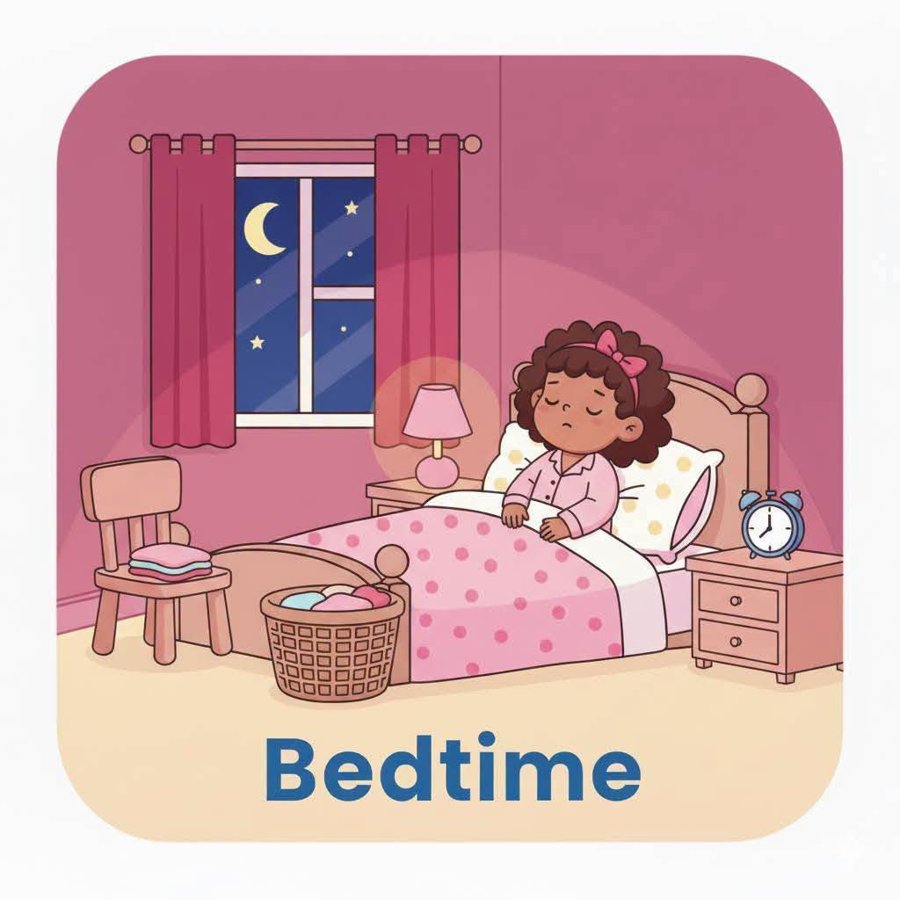
We put together a free printable set of 13 of these cards covering the full day — get the free Visual Schedule Cards here.
2. Visual Timers
- Show time passing with colors or diminishing segments
- Help children understand "how much longer"
- Recommended: Time Timer, visual countdown apps
- Reduce anxiety about activity endings

3. First-Then Boards
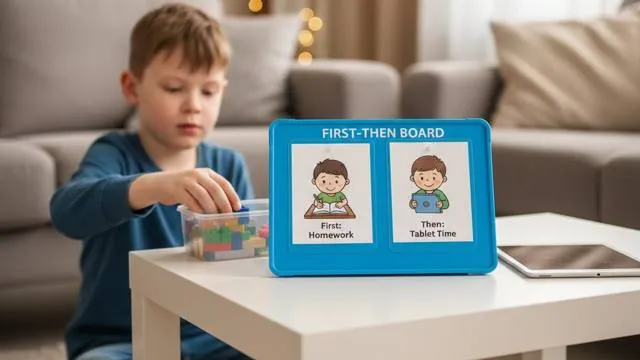
- Simple two-step visual: "First [less preferred], Then [preferred]"
- Motivates completion of challenging tasks
- Example: "First homework, Then tablet time"
4. Transition Objects
- Physical items representing the next location
- Example: Give child their toothbrush to signal bathroom time
- Provide tangible connection to upcoming activity

5. Visual Countdown
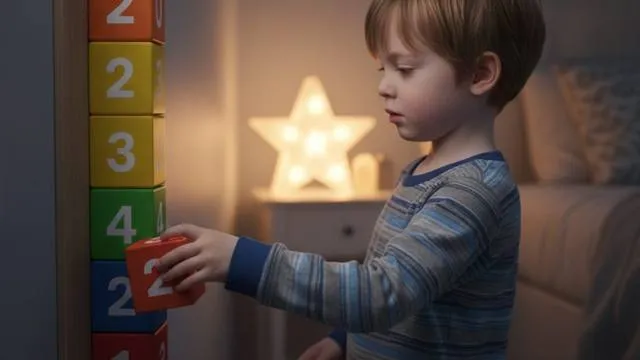
- Numbered squares or colored strips
- Remove one piece at intervals as transition approaches
- Flexible timing without specific minutes
Creating Effective Visual Schedules: Best Practices
- ✅ Keep it simple, don't overwhelm with too many pictures
- ✅ Match your child's comprehension level (objects, photos, or words)
- ✅ Place schedules at child's eye level
- ✅ Make them portable so child can carry to next location
- ✅ Update consistently when changes occur
- ✅ Teach your child how to use the schedule through modeling

Mastering Transitions: The Biggest Challenge
Transitions are where routines often break down. Children with autism may struggle with:
- Processing what's ending and what's beginning
- Interrupting a preferred activity
- Managing anxiety about the unknown
- Understanding time concepts
Proven Transition Strategies for Autism Behavior Management
1. Advanced Warning System
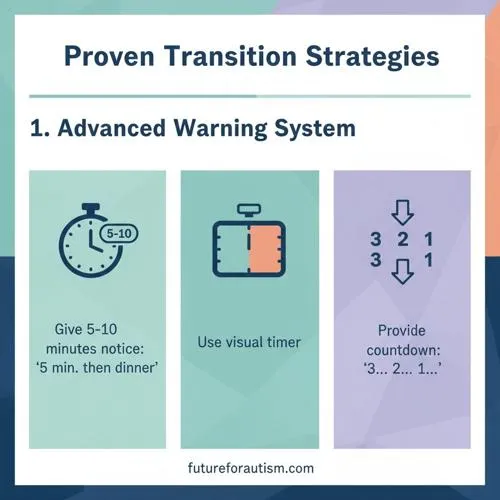
Give 5-10 minutes notice before transitions:
- "In 5 minutes, we're cleaning up for dinner"
- Use visual timer to show time remaining
- Provide countdown: "3 more minutes… 2 more minutes… 1 more minute"
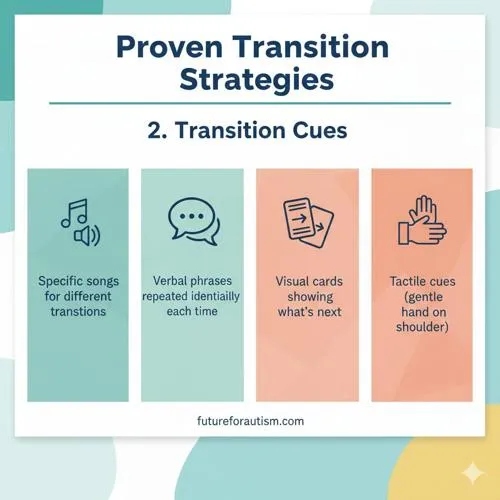
2. Transition Cues
Use consistent signals:
- Specific songs for different transitions
- Verbal phrases repeated identically each time
- Visual cards showing what's next
- Tactile cues (gentle hand on shoulder)
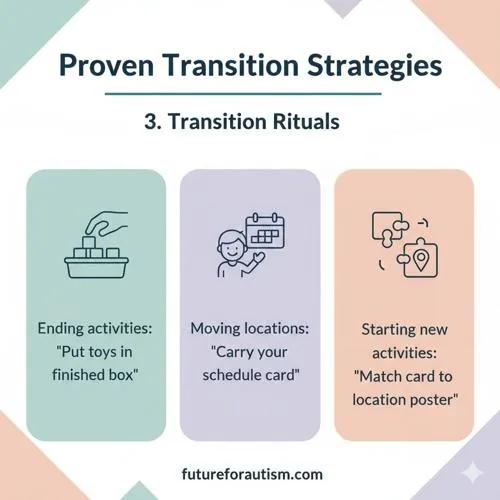
3. Transition Rituals
Create predictable mini-routines:
- Ending activities: "Put toys in finished box"
- Moving locations: "Carry your schedule card"
- Starting new activities: "Match card to location poster"
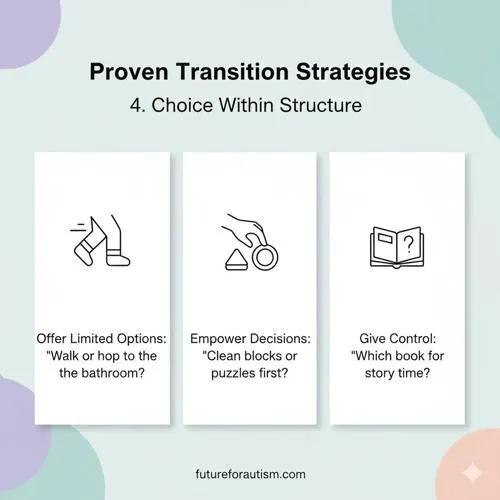
4. Choice Within Structure
Reduce resistance by offering limited options:
- "Do you want to walk or hop to the bathroom?"
- "Should we clean up blocks first or puzzles first?"
- "Which book for story time tonight?"
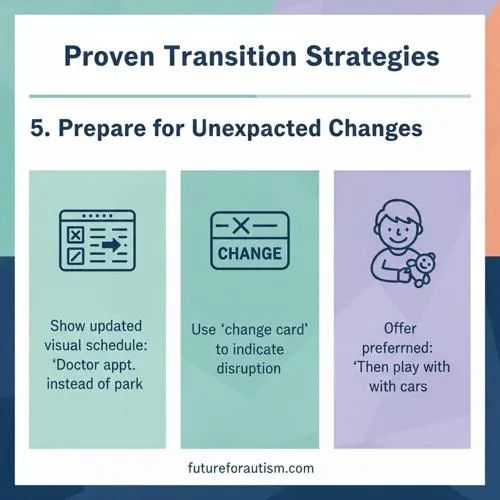
5. Prepare for Unexpected Changes
When routine must change:
- Show updated visual schedule as early as possible
- Use "change card" to indicate disruption
- Explain simply: "Today different. Doctor appointment instead of park"
- Offer preferred activity afterward as reassurance
Daily Routine for Autistic Children: Best Autism Behavior Management Plan
Creating a Daily Schedule for Autistic Child
A well-planned daily schedule for autistic child organizes the day into manageable, predictable blocks. Use visual supports, timers, and step-by-step sequences to make routines easier to follow.
Autism Morning Routine: Start the Day Calm and Predictable
A consistent autism morning routine sets the tone for the entire day. Tips include:
- Wake at the same time daily
- Use visual schedules or picture cards for each step
- Include sensory-friendly options: calm music, soft lighting
- Prepare clothes and breakfast items in advance
Autism Bedtime Routine: Ending the Day with Calm and Comfort
A consistent autism bedtime routine supports emotional regulation and better sleep:
- Sensory supports: weighted blanket, soft textures
- Fixed bedtime each night
- Calm pre-sleep activities (story, soft music)
- Visual bedtime checklist (bath → brush teeth → pajamas → story → lights out)
Autism Routine for School Days
School days may require slight adjustments to the home routine. Tips:
- Consistent after-school routine with homework, play, and sensory breaks
- Pack school bag the night before
- Visual cue or checklist for leaving home
- Snack / sensory break plan for recess or after-school
Tips for Creating a Routine at Home
- Adjust gradually, observing your child's response
- Start with key anchors: wake-up, meals, bedtime
- Break tasks into small, predictable steps
- Use visual supports: picture schedules, first-then boards
- Include sensory breaks throughout the day
Building Predictability, Confidence, and Calm
Creating a structured autism daily routine for children is a journey, not a single step. By starting small with key anchors, using visual supports, and consistently following the routine, parents can reduce anxiety, improve behavior, and help their child thrive.
Activity-Based Routines: Practical Examples
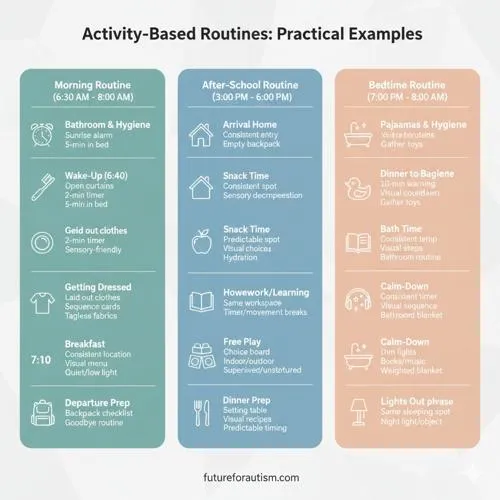
Morning Routine Activities (6:30 AM – 8:00 AM)
Wake-Up
- Sunrise alarm or consistent music
- Open curtains for natural light
- 5-minute wake-up time in bed
Bathroom & Hygiene
- Visual checklist: toilet → hands → teeth → hair
- Timer for 2-minute tooth brushing
- Sensory-friendly toothpaste and brush
Getting Dressed
- Clothes laid out night before
- Sequence cards showing order
- Limited choices (pick 1 of 2 shirts)
Breakfast
- Consistent location and seat
- Visual menu of breakfast options
- Minimal distractions
Departure Prep
- Backpack checklist with pictures
- Weather-appropriate clothing visual
- Goodbye routine (hug, wave, phrase)
After-School Routine (3:00 PM – 6:00 PM)
Arrival Home
- Consistent entry routine
- Remove shoes/coat in same spot
- 15-minute decompression time
Snack Time
- Predictable snack location
- Visual choices of healthy options
- Hydration reminder
Homework
- Same workspace daily
- Timer for 10-15 min focus periods
- Movement breaks between tasks
Free Play
- Choice board of activity options
- Indoor/outdoor based on energy
- Encourage special interests
Dinner Prep
- Simple tasks: setting table
- Visual recipe cards
- Predictable meal timing
Bedtime Routine (7:00 PM – 8:00 PM)
Dinner to Bath
- 10-minute warning before bath
- Visual countdown
- Gather pajamas and bath toys
Bath Time
- Consistent water temperature
- Visual steps: wash → rinse → dry
- Timer to show duration
Pajamas & Hygiene
- Tooth brushing with timer
- Visual sequence for pajamas
Calm-Down
- Dim lights, 2-3 books
- Weighted blanket or compression
- Avoid screens 1 hour before sleep
Lights Out
- Consistent bedtime phrase
- Night light if needed
- Comfort object available
Does This Change By Age?
A three-year-old's routine can lean almost entirely on pictures and physical transition objects. By seven or eight, many kids can follow a written checklist and start owning parts of it themselves, packing their own bag, checking their own schedule. Teenagers often do better with a private, portable version (a phone note or small card) rather than a wall chart, since visibility to peers matters more than it did at five. The anchors stay similar across ages; how much independence you hand over around them is what shifts.
Flexible Structure: When Routine Needs to Change
While consistency is crucial, rigidity can cause stress when life inevitably changes. Build flexibility into your autism routine:
1. Controlled Choices
- Fixed bedtime, but choice of which pajamas
- Consistent meal time, but choose from 2 dinner options
- Routine bath time, but select bath toys
2. "Sometimes" Activities
- Include occasional special events in schedule
- Use "sometimes card" to show variations
- Prepare with social stories about changes
3. Practice Changes
- Role-play transitions when calm
- Visit new places before actual event
- Use photos/videos to preview experiences
4. Emergency Change Protocol
- Have backup visual schedules for sick days, holidays
- "Surprise" card for unexpected events
- Extra sensory support during disruptions
Sensory Breaks Are NOT Optional
Autistic children need sensory regulation before they melt down. Examples:
- Jumping on mattress
- Swinging
- Weighted blanket
- Quiet corner
- Soft music
Add planned sensory breaks into your routine, not as punishment, but as support.
Free Autism Daily Routine Chart (Printable)
Visual schedules are one of the most powerful tools for autism routines. A routine chart helps your child:
- Understand expectations
- Feel secure
- Transition smoothly
- Gain independence
Your Free Printable Includes
- Morning routine
- Afternoon activities
- Evening routine
- Simple visuals
Implementing Your Routine: Week-by-Week Guide
Foundation
- Introduce morning and bedtime anchors only
- Create visual schedule for these two routines
- Practice with hand-over-hand guidance
- Celebrate small successes
Expansion
- Add meal times to schedule
- Introduce transition warnings
- Begin using timer for one activity
- Maintain consistency
Integration
- Add afternoon activities
- Introduce first sensory break
- Practice transition strategies
- Adjust timing based on observations
Refinement
- Complete full-day schedule
- Address remaining challenging transitions
- Increase child's independence with schedule
- Fine-tune timing and activities
Troubleshooting Common Challenges
"My child resists the schedule"
- Simplify, may be too many steps
- Increase reinforcement for following schedule
- Add more preferred activities
- Check if sensory needs are met
"Transitions are still difficult"
- Extend warning time (10-15 minutes)
- Make visual cues more prominent
- Review if activities are too short/long
- Consider sensory overload factors
"Schedule works at home but not elsewhere"
- Create portable mini-schedules
- Use consistent visuals across environments
- Share schedule with teachers/caregivers
- Practice transitions in new settings gradually
"My child has meltdowns during routine"
- Identify specific trigger points
- Build in more sensory breaks
- Reduce demands temporarily
- Ensure adequate sleep and nutrition
Measuring Success and Adjusting
Track progress weekly:
- Transition time: Are transitions quicker/smoother?
- Independence: Does child check schedule independently?
- Behavior: Fewer meltdowns or resistance?
- Communication: Better understanding of expectations?
- Sleep: Improved bedtime routine and sleep quality?
Adjust your routine every 2-4 weeks based on:
- Developmental changes
- New skills acquired
- Seasonal variations
- Feedback from teachers/therapists
- Child's changing interests
The Power of Consistency and Patience
Building effective special needs daily routines for children with autism is a journey, not a destination. Progress may be gradual, and some days will be more challenging than others. Remember:
- Consistency beats perfection: A simple routine followed daily is better than an elaborate plan used sporadically
- Small wins matter: Celebrate every successful transition
- Flexibility within structure: Allow choices while maintaining predictability
- Family involvement: Everyone using the same approach creates continuity
- Self-care: Parents who care for themselves can better support their children
Key Takeaways
- ✅ Start with daily anchors (wake-up, meals, bedtime) before adding complexity
- ✅ Use visual supports matched to your child's comprehension level
- ✅ Build in sensory breaks throughout the day for regulation
- ✅ Master transitions with advance warnings, timers, and consistent cues
- ✅ Allow flexibility through controlled choices within structure
- ✅ Track progress and adjust routines as your child develops
- ✅ Involve all caregivers for consistency across environments
- ✅ Be patient, routine implementation takes 4-6 weeks minimum
Common Mistakes Parents Make (Avoid These)
❌ Overloading the Schedule
Too many activities cause stress.
❌ Changing the Routine Too Often
Consistency matters more than perfection.
❌ Using Routine as Control
Routine is support, not punishment.
❌ No Transition Warnings
Always prepare your child before changes.
Professional support options
- Occupational Therapy (OT): addresses sensory processing and regulation
- Applied Behavior Analysis (ABA): teaches functional emotional regulation skills
- Cognitive Behavioral Therapy (CBT): helps with anxiety and emotional coping
- Sensory Integration Therapy: addresses underlying sensory processing issues
No obligation, just a real conversation with another parent.
FAQs: Autism Daily Routine at Home
How long does it take for a routine to work?
Most parents notice improvement within 2-4 weeks.
Should weekends follow the same routine?
Yes, but with lighter expectations.
What if my child resists the routine?
Start small. Introduce one part at a time.
Can routines change as my child grows?
Absolutely. Routines should evolve gradually.
Moving Forward with Confidence
Creating a structured daily autism routine chart / schedule is one of the most powerful tools parents can use to support their child with autism. By providing predictability, reducing anxiety, and building independence, you're giving your child the foundation they need to thrive.
Start small, stay consistent, and adjust as needed. Your child's progress may not be linear, but with patience and the right strategies, you'll see meaningful improvements in their daily functioning, emotional regulation, and overall quality of life.
Remember: You're not alone on this journey. Connect with other parents, work with your child's therapy team, and trust your instincts. You know your child best, and with these evidence-based strategies, you're equipped to build routines that truly work for your family.
Ready to create your child's personalized routine?
Download our free Autism Daily Routine Guide and start building custom strategies for your kid.
Download the free chartRelated Reading: Routines & Daily Life
Related Reading: Autism Activities by Age
Final Thoughts for Autism Parents ❤️
If no one has told you this yet, you're doing an incredible job. From personal experience, I can say and connect with you, as we are on the same ship.
A daily routine won't remove challenges, but it creates calm in chaos, safety in uncertainty, and confidence in both you and your child.
Start small. Stay consistent. Be kind to yourself.
This guide is written with real-life experience of parents supporting children on the autism spectrum, because you are not alone on this journey.