
Autism Haircut Preparation: A Step-by-Step Guide
The sound before the touch, the vibration before the sound, hair falling before either. A haircut stacks several intense sensory experiences on top of each other, one after another, with no real way to pause once it starts, unless you build in the pausing ahead of time.
Autism haircut preparation works best through gradual, systematic desensitization to the tools and sensations involved, started days or weeks before the actual appointment. A 2020 study found that gradually adjusting proximity and duration of contact with haircutting clippers successfully built tolerance in autistic participants without needing sedation or restraint, and the same step-by-step principle applies to scissors, water, and hair falling on the skin.
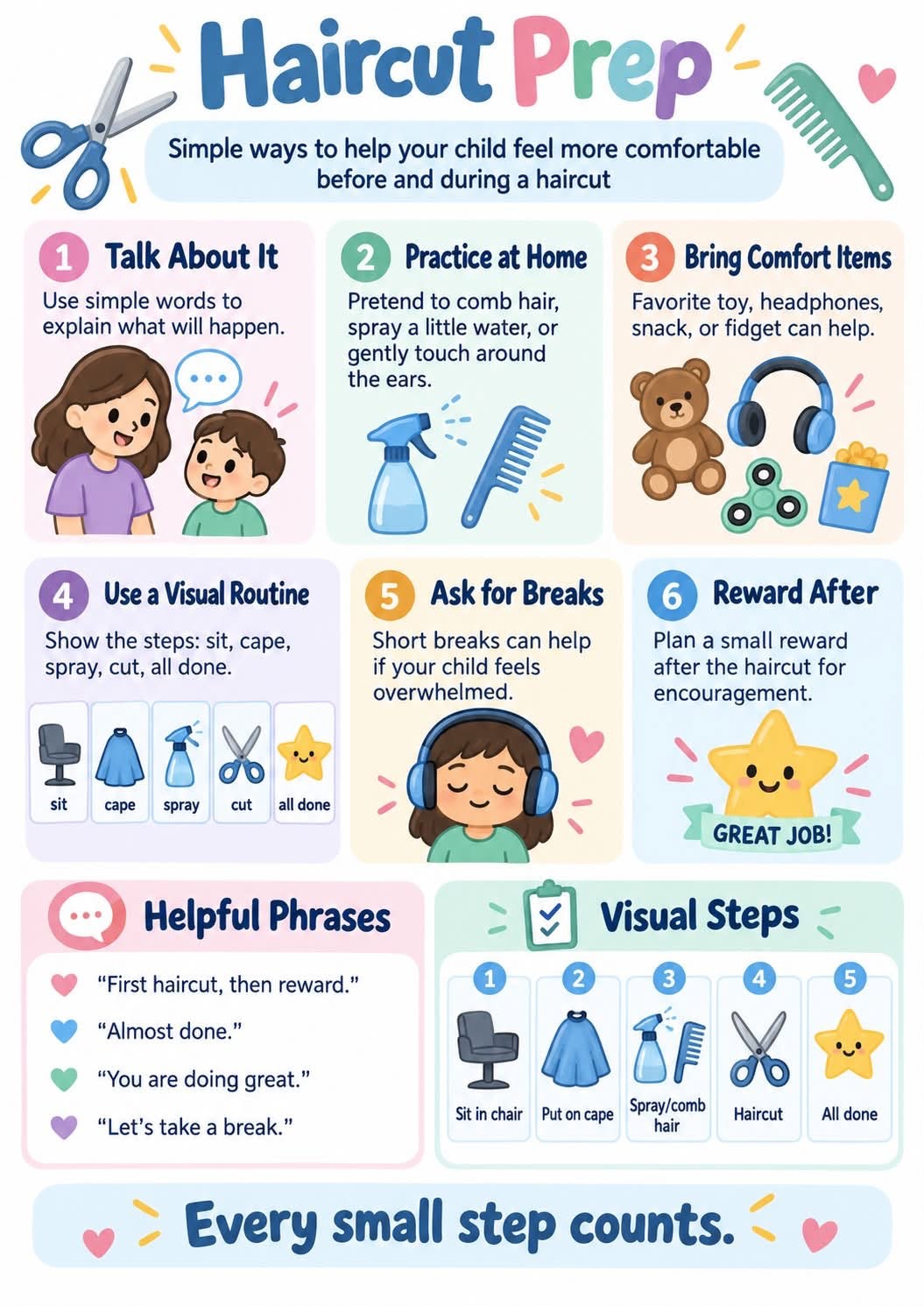
What the Research Found
A 2020 study published in the Journal of Applied Behavior Analysis examined two autistic participants who struggled to tolerate haircutting. Researchers gradually presented clippers, adjusting how close the clippers came and how long they touched the scalp before providing a reward, with pauses built in throughout based on the participant's current tolerance. The gradual, paced approach successfully built tolerance for the full procedure, offering a less invasive alternative to sedation or physical restraint.
A Step-by-Step Desensitization Sequence
Adapted from the gradual exposure principle, this sequence can be practised at home in short sessions over days or weeks before an appointment:
- Show the tool from a distance, turned off, without touching
- Let your child hold or touch the tool while it is off
- Turn the tool on briefly nearby, without it touching the head
- Bring the turned-on tool close to the head without contact
- Touch the tool briefly to the scalp for one or two seconds
- Gradually extend contact time across further sessions
- Practice with water or a spray bottle to build tolerance for wet hair
- Practice with a towel or cape around the shoulders
Reward generously at each stage, and only move to the next step once the current one feels genuinely comfortable, not just tolerated under protest.
Making the Actual Appointment Easier
Call ahead
Tell the hairdresser about specific sensitivities and preferred pacing before you arrive.
Choose a quiet time
The quietest slot of the day, away from a busy salon, reduces additional sensory load.
Bring familiar comfort items
A favourite object or device to hold or watch during the appointment.
Consider a sensory-friendly salon
Dimmed lighting, reduced noise, and extra appointment time are increasingly available in some areas.
A few short, calm phrases repeated consistently through the appointment help more than long explanations in the moment — try "First haircut, then reward," "Almost done," and "You are doing great." Pairing a small reward with the finished haircut works the same way as a First-Then board, and can be set up the same way for other tricky tasks too.
If a Full Haircut Isn't Possible in One Sitting
Splitting a haircut across two sessions, doing what your child can tolerate and finishing the rest another day, is a reasonable, commonly used accommodation. Pushing through significant distress to finish in one sitting rarely makes the next haircut easier, and often makes it harder.
Everyday Hair Care: A Combing/Brushing Task Analysis
Haircuts aren't the only hair-related task that can be tricky — everyday combing and brushing benefits from the same step-by-step, picture-led approach. This free 9-step visual task analysis breaks the routine down into small, predictable steps, and comes in both a boy and a girl illustrated version.
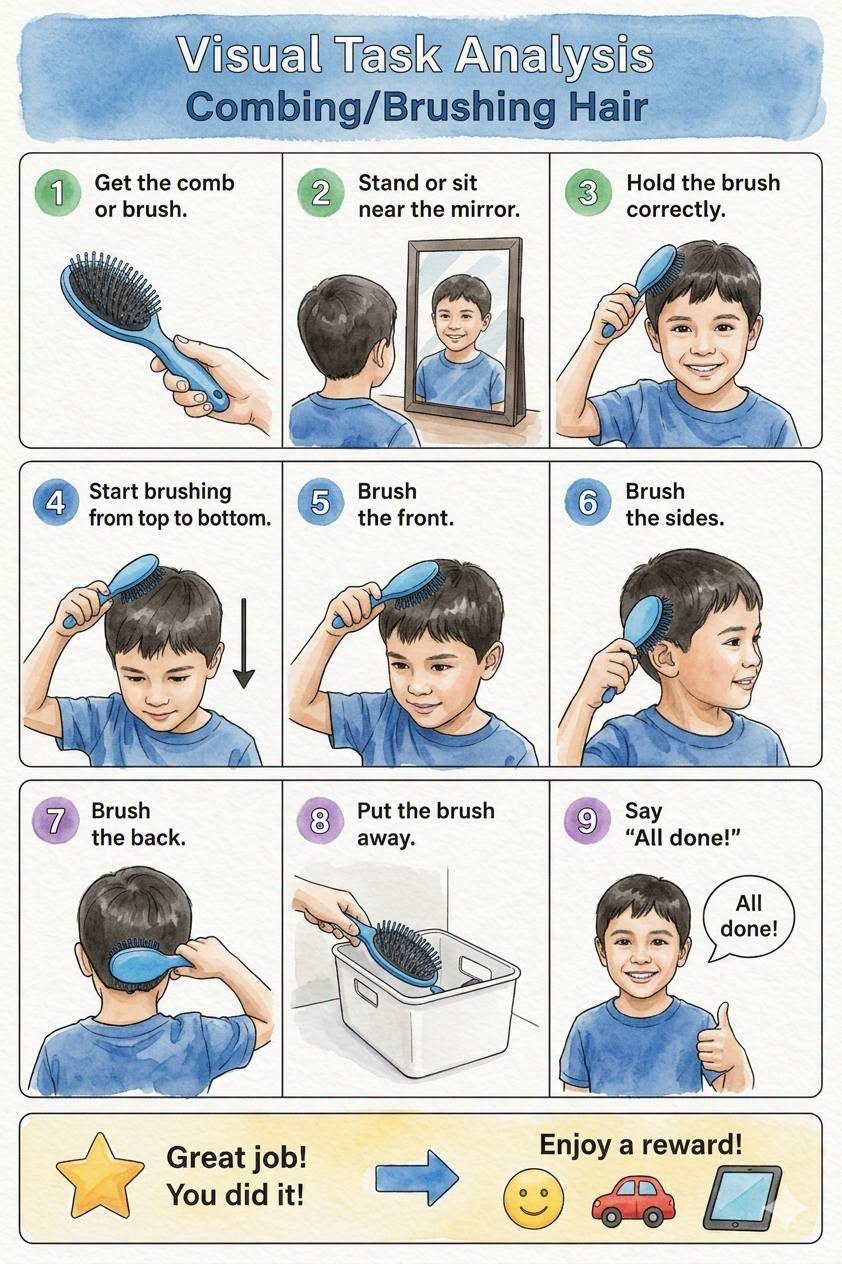
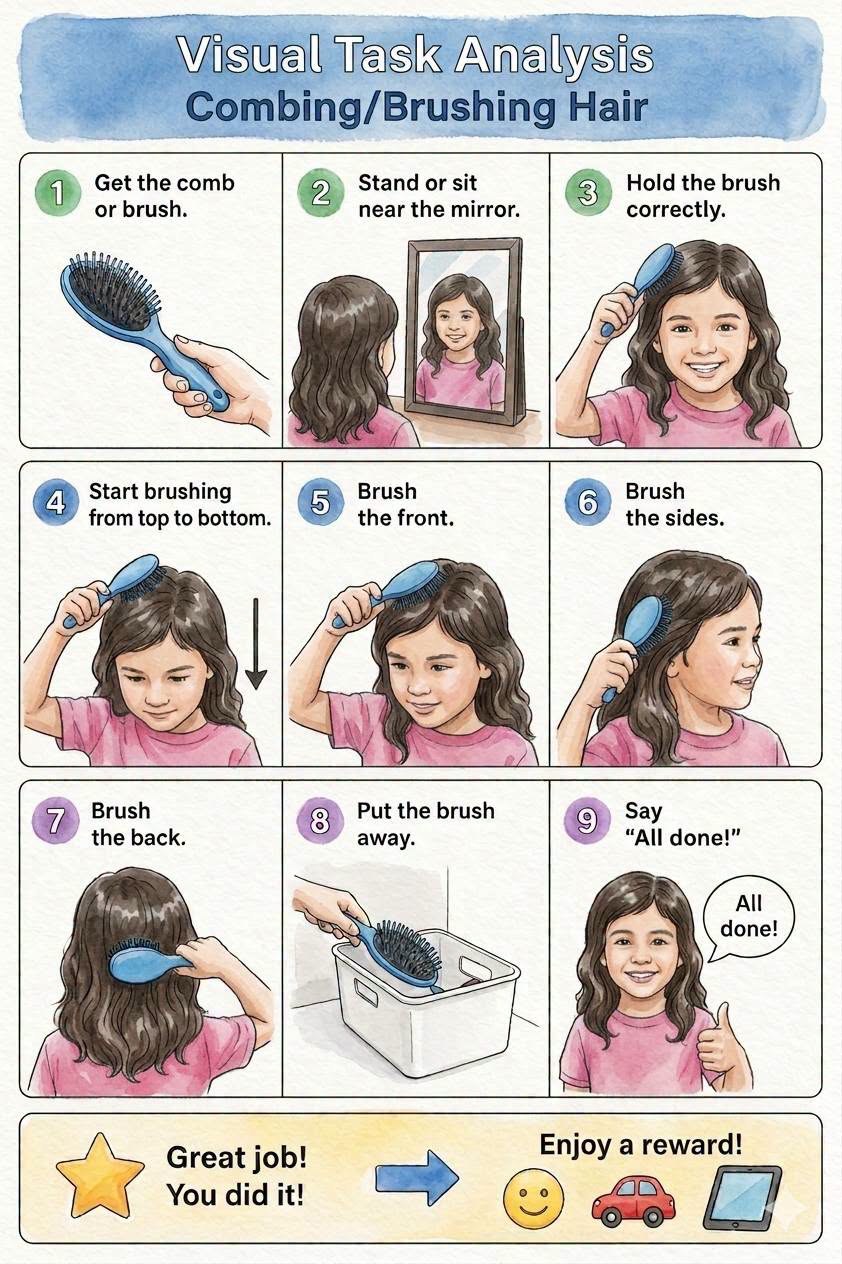
Get the free Hair Brushing / Combing Visual Schedule →
Frequently Asked Questions
What does research say about preparing an autistic child for haircuts?
A 2020 study published in the Journal of Applied Behavior Analysis found that gradually and systematically desensitizing two autistic participants to haircutting clippers, adjusting proximity and duration step by step, successfully built tolerance for the procedure without needing sedation or restraint.
How long before an actual haircut should preparation start?
Starting preparation days or even weeks ahead, rather than the same day, gives more time for gradual exposure to tools and sensations without time pressure pushing the process faster than your child can tolerate.
What if my child tolerates scissors but not clippers, or vice versa?
This is common, since the sound, vibration, and sensation of clippers differ significantly from scissors. Desensitize to each tool separately rather than assuming tolerance of one means tolerance of the other.
Should I tell the hairdresser about my child's needs in advance?
Yes, calling ahead to explain your child's specific sensitivities, preferred pacing, and any successful strategies from home practice helps the actual appointment go more smoothly and reduces surprises for everyone involved.
What if the haircut needs to be finished but my child reaches their limit partway through?
Splitting a haircut across two sessions, doing as much as your child can tolerate and finishing the rest another day, is a reasonable, commonly used accommodation rather than pushing through distress to finish in one sitting.
Do sensory-friendly hair salons actually help?
Many families report real benefit from salons offering dimmed lighting, reduced noise, and extra time per appointment, since these environmental adjustments reduce some of the sensory load before any tool ever touches the hair.
Can preparation at home really replace professional desensitization support?
For many children, consistent home practice using the same gradual principles is sufficient. For a child with very significant distress, a behavior analyst or occupational therapist can provide more structured, individualized desensitization support.
Does this same approach work for nail trimming too?
Yes, the same gradual desensitization principle, starting with the tool at a distance and building up to brief then extended contact, applies well to nail trimming and other sensory-intensive grooming tasks, not just haircuts.
Not sure how to prepare your child for their next haircut?
Our free tool helps you build a support profile in a few minutes, a useful starting point before choosing an approach.
Free Sensory Profile & Support Tool for Parents →Sources: DSM-5, WHO ICD-11, Buckley, Luiselli, Harper & Shlesinger (2020), Journal of Applied Behavior Analysis, 53(4), 2081-2089, Action for Autism India.