
How to Use a First-Then Board
A First-Then board is a simple two-part visual — a picture of a task ("first") next to a picture of a reward or preferred activity ("then") — used to show an autistic child exactly what's expected and what follows. Introduce it during an easy, low-stakes task first, always follow through on the "then" item immediately, and keep the language and format consistent every time you use it.
What's in this guide
"First brush teeth, then iPad." Two pictures, side by side, on a small laminated card — and for many autistic children, this simple tool turns a daily battle into a manageable transition. A First-Then board works because it replaces an abstract verbal promise with something concrete and visible, removing the uncertainty that often fuels resistance to non-preferred tasks.
What a First-Then Board Is
A First-Then board is a small visual support with two sections: "First" shows a picture of the task to complete, and "Then" shows a picture of what happens immediately afterward — usually a preferred activity, item, or break. It can be as simple as two pictures taped to an index card, a laminated board with Velcro-attached icons, or a printed template with photo spaces.
A First-Then board makes an abstract instruction ("do this, and then you can do that") concrete and visible. For many autistic children, seeing the sequence is far more effective than simply hearing it, because it removes the need to hold an unclear verbal promise in mind.
Why It Works
The core mechanism is predictability: a child can see exactly what's required and exactly what follows, removing the ambiguity that often makes non-preferred tasks feel open-ended and overwhelming. This same principle underlies a lot of effective daily routine support — visible structure consistently outperforms verbal-only instruction for many autistic children.
How to Build One
- Choose a format. A simple laminated card with two boxes works for most families; a Velcro board with swappable icons offers more flexibility as tasks change.
- Use real photos where possible, especially early on — a photo of your child's actual toothbrush is often clearer than a generic icon.
- Label each side simply — "First" and "Then" in large, clear text, paired with the images.
- Keep it small and portable so it can move between rooms, or make several fixed versions for key locations (bathroom, kitchen table, car).
Here's what "First" and "Then" cards can look like once printed and cut out — for example, "First brush teeth, then free time":
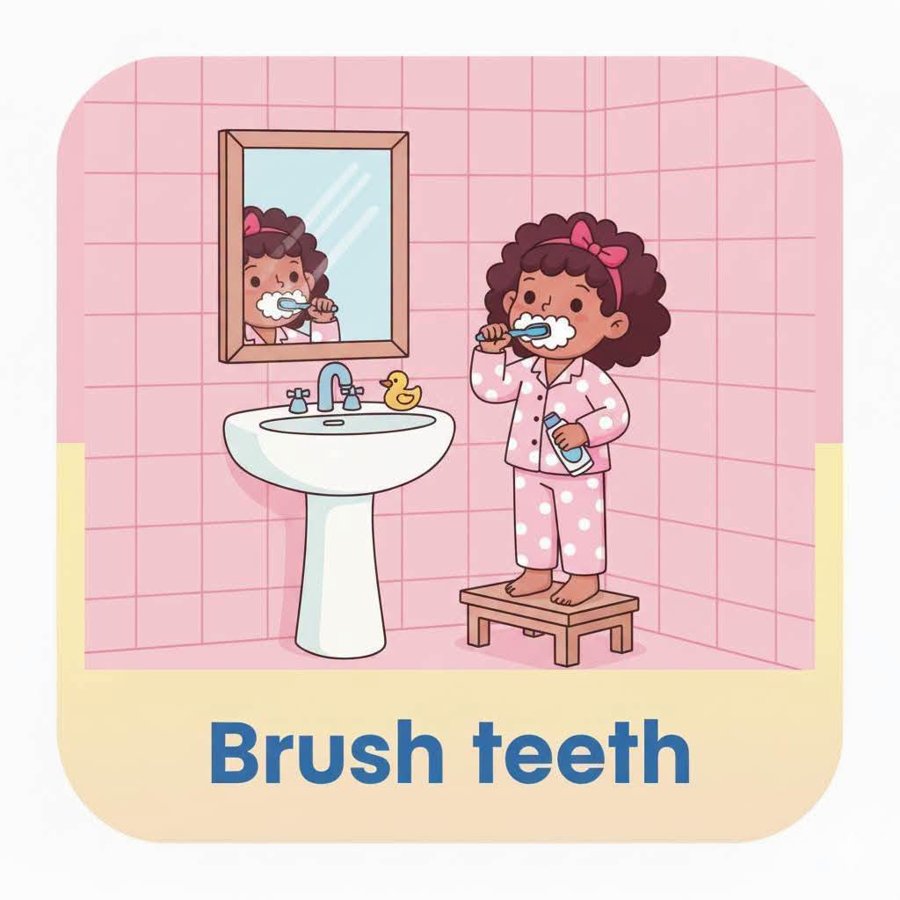 →
→
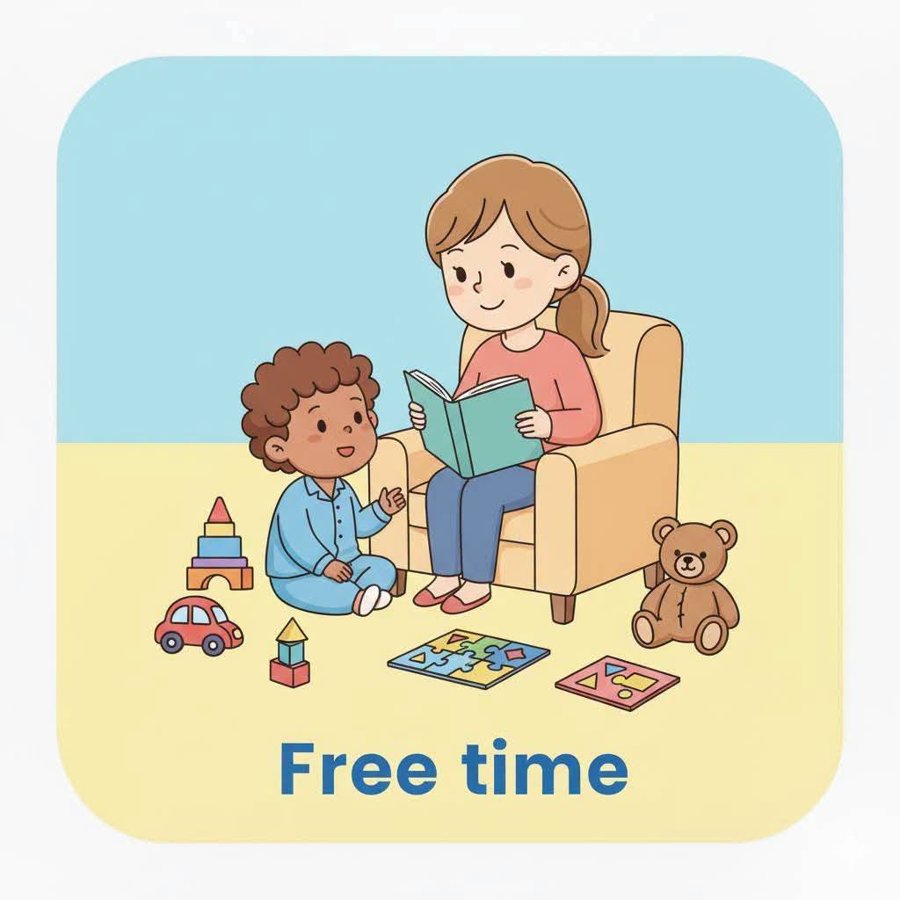
We have a free printable set of 13 illustrated cards like these, covering the full day — download the free Visual Schedule Cards and mix-and-match your own First-Then pairs.
Introducing It for the First Time
Start with an easy, low-stakes pairing — not the hardest task of the day. A good first use might be "First put shoes away, then 2 minutes of favourite song," rather than starting with the most resisted task in your routine. This lets your child experience the board working reliably before it's asked to do more difficult work.
Show, don't just tell
Point to each picture as you say it: "First [point], then [point]." Physically pointing reinforces the visual-verbal connection.
Follow through immediately
The moment the "first" task is done, deliver the "then" item right away — delayed follow-through weakens trust in the system fast.
Keep initial sessions short
Early practice sessions should be brief and end on success, building confidence before tackling harder tasks.
Stay calm if there's resistance
If your child protests the "first" task, hold the boundary calmly and repeat the visual — avoid negotiating a different "then" mid-task.
Choosing Effective "First" and "Then" Items
The "first" side should be a single, clear, completable task — "brush teeth," not "get ready for school" (too broad and multi-step for this tool). The "then" side should be something genuinely motivating but modest — a short activity or small preferred item works better than something elaborate, since the goal is a quick, reliable exchange, not a major reward.
| Good "First" tasks | Good "Then" rewards |
|---|---|
| Brush teeth | 2 minutes of a favourite song or video clip |
| Put toys away | A small preferred snack |
| Finish 5 worksheet questions | 5 minutes of a preferred toy |
| Get dressed | Choosing the next activity |
Common Mistakes to Avoid
- Making the "first" task too big or vague — break large tasks into smaller, single-action steps instead
- Not following through on the "then" reward — even once — which undermines trust in the tool going forward
- Changing the reward after the task starts — this feels like a broken promise to the child, even if well-intentioned
- Using the same reward every single time until it loses motivating value — rotate a small pool of preferred items
- Introducing it only during difficult moments rather than practising it during calm, low-stakes situations first
Moving Beyond the First-Then Board
Once your child reliably follows the two-step First-Then sequence across different tasks and settings, you can gradually expand it into a fuller visual schedule with three, four, or more steps — the same core principle (visible, predictable sequence) simply scales up. This transition often overlaps naturally with building a broader communication and behaviour support plan as your child's skills grow.
Frequently Asked Questions
At what age can a First-Then board be introduced?
What if my child ignores the board and does the task anyway without it?
Can I use a First-Then board for a completely non-preferred task with no good reward available?
My child gets upset even seeing the board. What should I do?
How is a First-Then board different from just verbally promising a reward?
Should the "then" reward ever be skipped as a consequence for bad behaviour?
Want tools matched to your child's specific needs?
Our free tool builds a quick sensory and behaviour profile to help you choose the right visual supports for your child.
Free Sensory Profile & Support Tool for Parents →Sources: DSM-5, WHO ICD-11, NIMHANS, Action for Autism India.