
Washing Face Visual Schedule for Autistic Children
A washing-face visual schedule shows the 10 steps of washing your face as simple pictures, helping children with face-touching sensitivities build the routine gradually and predictably.
At a Glance
- What it is: A free, 10-step printable visual schedule for independent face-washing.
- Who it's for: Autistic children who need predictable, picture-based routines.
- Format: One-page PDF, boy and girl versions, print or laminate.
- Best for ages: Roughly 3+, adjusted to your child's current skill level.
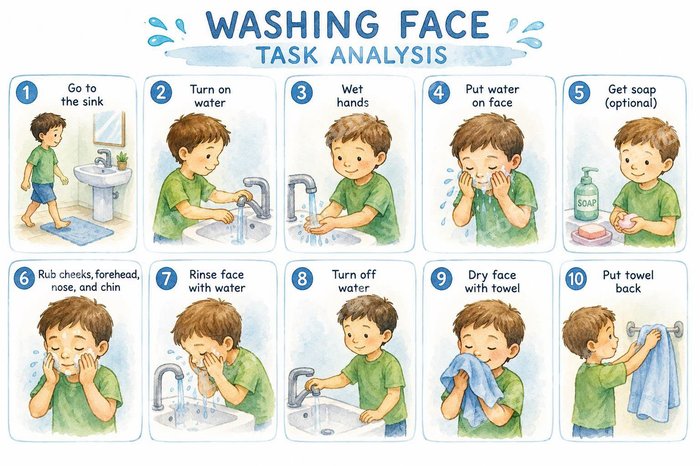
Preview of the printable chart — download the full-resolution, watermark-free PDF below.
What's in this guide
- Why a visual schedule helps
- What you'll get in the free PDF
- How to use it
- If Your Child Dislikes Water on Their Face
- Frequently asked questions
Why a Visual Schedule Helps
Face-washing combines water sensitivity with a multi-step sequence, which can overwhelm children who process sensory input differently. A visible, repeatable chart removes the guesswork about what comes next.
What You'll Get in the Free PDF
A single-page, 10-step visual task analysis:
- Go to sink
- Turn on water
- Wet hands
- Water on face
- Soap (optional)
- Rub cheeks/forehead
- Rinse face
- Turn off water
- Dry face
- Put towel back
Get the Free Washing Face Visual Schedule PDF
Enter your details below and we'll email the printable PDF to you instantly.
How to Use It
Start with just steps 1-3 (going to the sink and wetting hands) and build tolerance gradually before introducing water-on-face. Keep sessions short and consistent, ideally at the same time each morning and evening.
If Your Child Dislikes Water on Their Face
A washcloth often feels less overwhelming than direct splashing. Let your child control the pace, use lukewarm water, and consider making step 5 (soap) optional until the rest of the sequence feels comfortable.
Frequently Asked Questions
My child dislikes water on their face — any tips?
Start with just steps 1-3 (going to the sink and wetting hands) and build tolerance gradually before introducing water-on-face; a washcloth can also feel less overwhelming than direct splashing.
How often should this routine happen?
Most families use it once or twice daily as part of morning and bedtime routines — keep it consistent so the sequence becomes automatic.
Is soap necessary every time?
No — step 5 is marked optional; many children build the habit with just water first, then soap is introduced once the rest of the sequence is comfortable.