
Toothbrushing Visual Schedule for Autistic Children
A toothbrushing visual schedule is a 7-step illustrated routine card that breaks brushing teeth into small, predictable picture steps so your child can follow the same sequence every time without needing constant verbal prompts.
At a Glance
- What it is: A free, 7-step printable visual schedule for independent toothbrushing.
- Who it's for: Autistic children who need predictable, picture-based routines.
- Format: One-page PDF, print or laminate.
- Best for ages: Roughly 3+, adjusted to your child's current skill level.
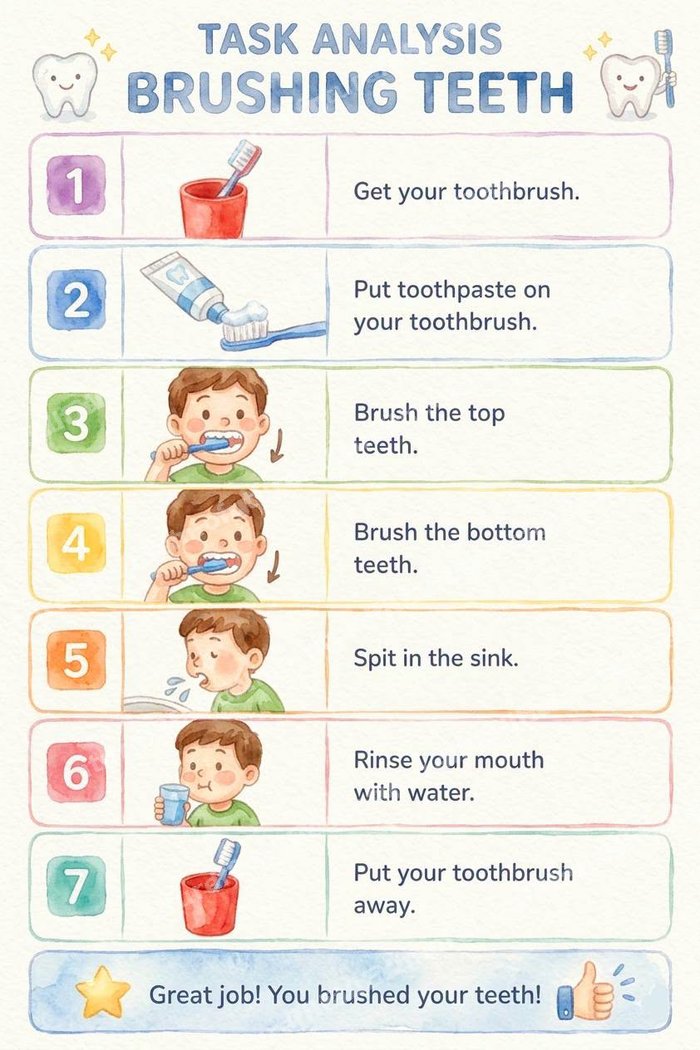
Preview of the printable chart — download the full-resolution, watermark-free PDF below.
What's in this guide
- Why a visual schedule helps
- What you'll get in the free PDF
- How to use it
- If Your Child Resists Toothbrushing
- Frequently asked questions
Why a Visual Schedule Helps
Visual schedules reduce the processing load of verbal instructions and give a consistent, predictable reference your child can return to independently, which is especially helpful for routines involving several steps like toothbrushing.
What You'll Get in the Free PDF
A single-page, 7-step visual task analysis:
- Get toothbrush
- Add toothpaste
- Brush top teeth
- Brush bottom teeth
- Spit
- Rinse mouth
- Put toothbrush away
Get the Free Toothbrushing Visual Schedule PDF
Enter your details below and we'll email the printable PDF to you instantly.
How to Use It
Laminate the chart and tape it above the bathroom sink at your child's eye level. Walk through it together a few times, pointing to each picture, before expecting independent use. Pairing an electric toothbrush with a 2-minute timer song can help if brushing duration is also a challenge.
If Your Child Resists Toothbrushing
Resistance is often about taste, texture, or the sensation of brushing rather than the routine itself. Try an unflavoured or mild-flavoured toothpaste, let your child hold and explore the toothbrush first, or start with just 1-2 steps before building up to the full sequence.
Frequently Asked Questions
Why use a visual schedule instead of just telling my child what to do?
Visual schedules reduce the processing load of verbal instructions and give a consistent, predictable reference your child can return to independently.
At what age can I start using this?
Most parents start introducing simple visual schedules from age 3-4, adjusting the number of steps shown based on your child's current ability.
Can I use this alongside an electric toothbrush?
Yes — just swap the toothbrush picture for your own photo if it helps your child recognize their actual toothbrush.
Once brushing itself is going well, spitting out the toothpaste is often the next sticking point — it's a separate skill from brushing, not something that just follows automatically. Our free Spitting Toothpaste Visual Schedule breaks it into 7 picture steps, with troubleshooting for swallowing, not knowing how to spit, or disliking the taste.