
Drinking from an Open Cup Visual Schedule
Moving from a sippy cup or bottle to an open cup is a big motor-planning step — it asks a child to control tilt, pace, and timing all at once. This free visual schedule breaks it into 5 simple steps, in both boy and girl versions.
At a Glance
- What it is: A free, 5-step printable visual schedule for learning to drink from an open cup.
- Who it's for: Children transitioning off a sippy cup or bottle toward independent open-cup drinking.
- What you get: A full-resolution PDF chart, available in both boy and girl versions, emailed instantly.
- How to use it: Practice with a small amount of liquid in a small, lightweight cup to start.
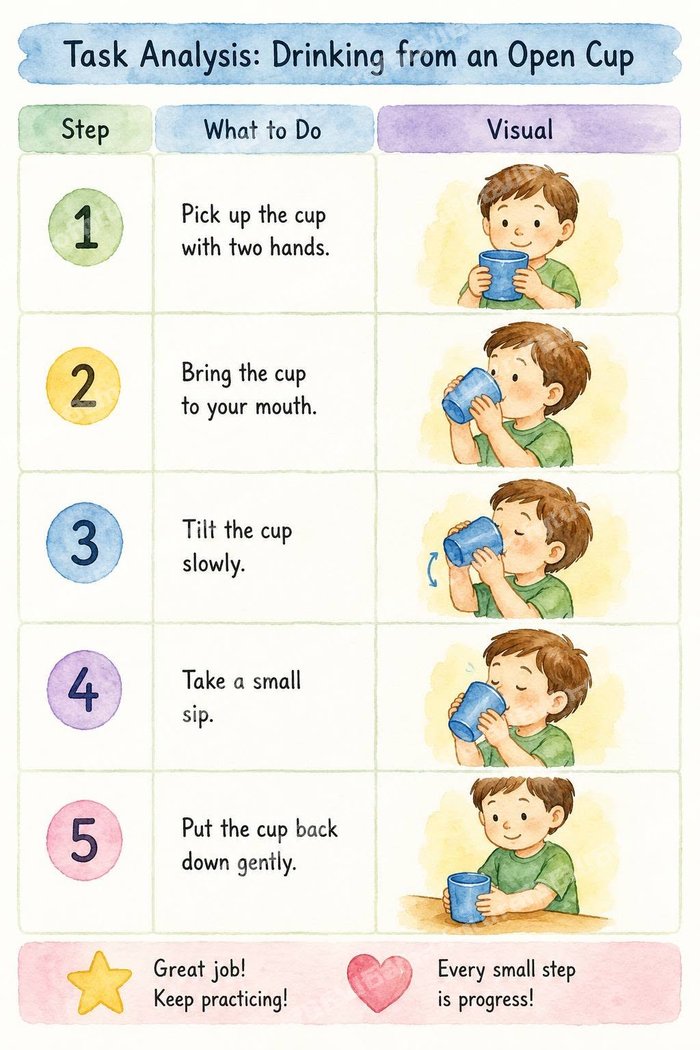
Boy version
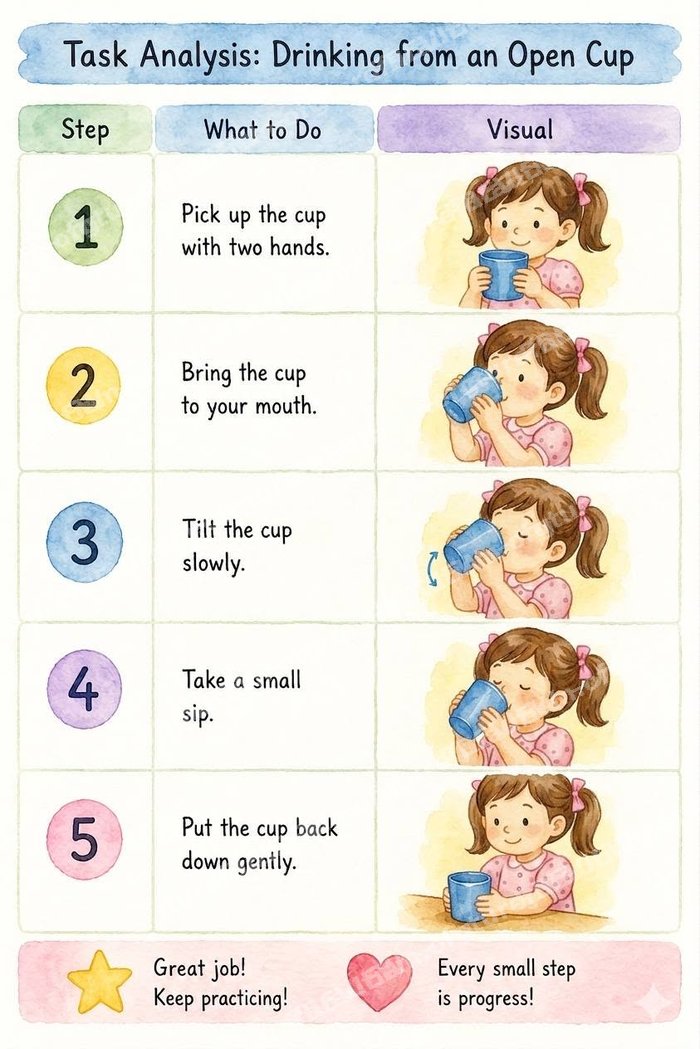
Girl version
Preview of the printable chart — comes in both versions, download the full-resolution, watermark-free PDFs below.
What's in this guide
- Why a visual schedule helps
- What you'll get in the free PDF
- How to use it
- What If My Child Spills Every Time?
- Frequently asked questions
Why a Visual Schedule Helps
An open cup gives no feedback or resistance the way a sippy cup's valve does, so a child has to learn to judge tilt and pace entirely by feel. Slowing the skill down into 5 distinct steps — pick up, bring to mouth, tilt slowly, small sip, put down gently — gives your child something concrete to practice rather than an all-or-nothing “just drink from the cup.”
What You'll Get in the Free PDF
A single-page, 5-step visual task analysis:
- Pick up the cup with two hands
- Bring the cup to your mouth
- Tilt the cup slowly
- Take a small sip
- Put the cup back down gently
Get the Free Drinking from an Open Cup Visual Schedule PDF
Enter your details below and we'll email the printable PDF to you instantly.
How to Use It
Start with a very small amount of liquid — just enough for one or two sips — in a small, lightweight, two-handed cup, so spills are minimal even while the tilt-and-sip motion is still developing. Praise every attempt, including an imperfect sip, and gradually increase the amount of liquid as the motion becomes more controlled.
What If My Child Spills Every Time?
Spilling is an expected, normal part of learning this skill, not a sign it isn't working. Using a very small amount of liquid keeps spills small and low-stakes while the tilt motion is being learned, and a washable mat or tray underneath can take the stress out of practice sessions.
Frequently Asked Questions
What age should a child start practicing an open cup?
This depends on your child's individual motor development rather than a fixed age — if your child can already hold objects with two hands and bring them to their mouth, they're likely ready to start practicing.
Should I stop using a sippy cup while practicing this?
Many families practice the open cup alongside continued sippy cup use at other times, rather than switching all at once — do what feels manageable for your household.
Is there a reason to prefer an open cup over a sippy cup long-term?
An open cup supports a more typical oral-motor pattern and is a commonly targeted independence goal, but the right pace for your child is an individual decision — an occupational therapist can advise if you have specific concerns.