
Using Napkins Visual Schedule for Autistic Children
A using-napkins visual schedule breaks this mealtime self-care skill into 9 picture steps so your child can manage table manners independently.
At a Glance
- What it is: A free, 9-step printable visual schedule for using a napkin at the table.
- Who it's for: Autistic children learning mealtime self-care skills.
- Format: One-page PDF, print or laminate.
- Best for ages: Roughly 3+, adjusted to your child's current skill level.
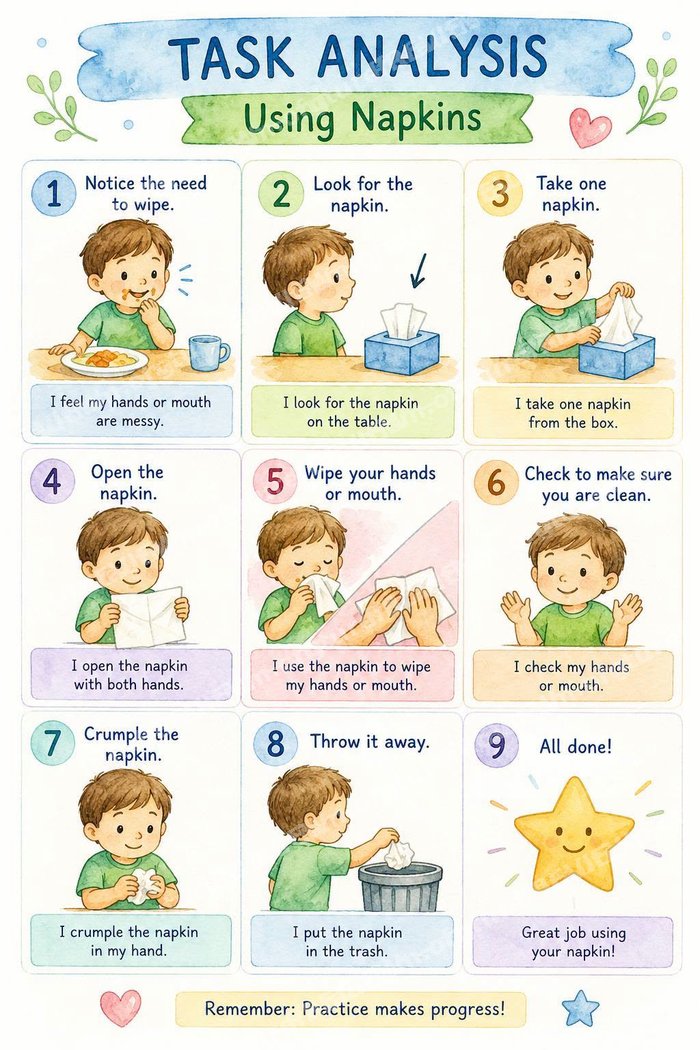
Preview of the printable chart — download the full-resolution, watermark-free PDF below.
What's in this guide
- Why a visual schedule helps
- What you'll get in the free PDF
- How to use it
- If Your Child Prefers Their Sleeve or Hand
- Frequently asked questions
Why a Visual Schedule Helps
Noticing a messy face or hands and connecting that to an action is its own skill, separate from physically using the napkin. Breaking both into visible steps supports children who don't yet self-monitor well.
What You'll Get in the Free PDF
A single-page, 9-step visual task analysis:
- Notice the need to wipe
- Look for the napkin
- Take one napkin
- Open the napkin
- Wipe hands or mouth
- Check you are clean
- Crumple the napkin
- Throw it away
- All done!
Get the Free Using Napkins Visual Schedule PDF
Enter your details below and we'll email the printable PDF to you instantly.
How to Use It
Prompt at natural checkpoints (after a bite, mid-meal) rather than waiting for your child to notice independently. Keep the napkin within easy reach and model the behavior yourself at the table.
If Your Child Prefers Their Sleeve or Hand
Pairing a preferred reward with napkin use can help the new habit take hold faster. Consistency across most meals (not just messy ones) turns it into an automatic habit rather than something only triggered by a mess.
Frequently Asked Questions
My child doesn't notice when their hands or mouth are messy — how do I start?
Start by prompting at natural checkpoints rather than waiting for your child to notice independently; noticing improves with repetition.
Should this be practiced at every meal?
Consistency helps — using the same napkin routine at most meals turns it into an automatic habit rather than something only triggered by a mess.
What if my child prefers using their sleeve or hand instead?
Keep the napkin within easy reach and model the behavior yourself at the table; pairing it with a preferred reward can help the new habit take hold faster.