
Doctor Visit Visual Schedule
Waiting rooms and check-ups can be genuinely hard for an autistic child — the unfamiliar sounds, the waiting, the not knowing what happens next. This free visual schedule breaks a doctor visit into 9 small, predictable steps your child can follow from check-in to the exam itself.
At a Glance
- What it is: A free, 9-step printable visual schedule for waiting for and going through a doctor visit.
- Who it's for: Autistic children who find waiting rooms and medical check-ups overwhelming or unpredictable.
- What you get: A full-resolution PDF chart, available in both boy and girl versions, emailed instantly.
- How to use it: Print it, review it with your child before you leave home, and bring it along to the visit.
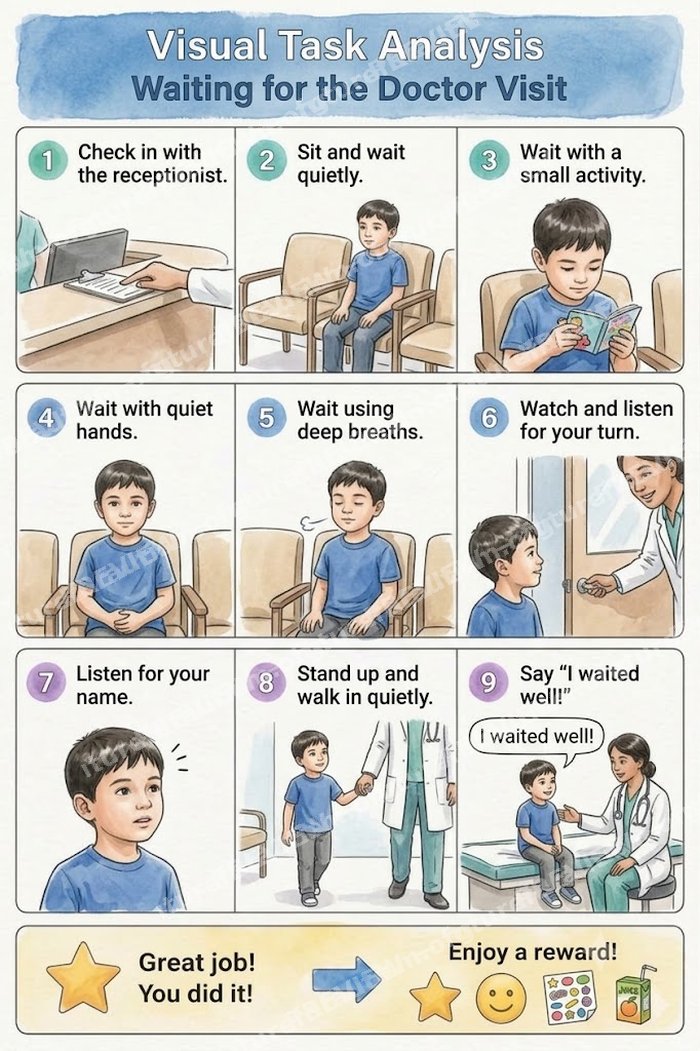
Boy version
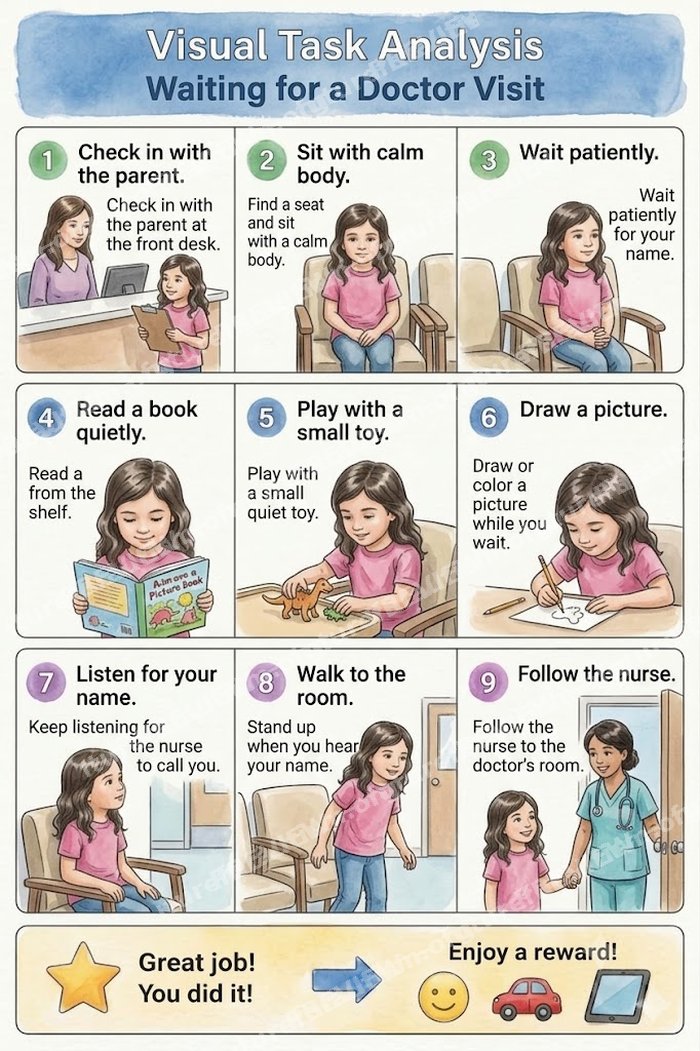
Girl version
Preview of the printable chart — comes in both versions, download the full-resolution, watermark-free PDFs below.
What's in this guide
- Why a visual schedule helps
- What you'll get in the free PDF
- How to use it
- What If the Waiting Room Is Too Loud or Too Long?
- Frequently asked questions
Why a Visual Schedule Helps
A doctor visit has a lot of unknowns packed into one short appointment — a new room, a new person, physical touch, and an unclear amount of waiting. A visual schedule turns that uncertainty into a sequence your child can see and predict. Knowing what's coming next, and that waiting has a clear end, is often what makes the difference between a calm visit and a distressing one.
What You'll Get in the Free PDF
A single-page, 9-step visual task analysis:
- Check in with the receptionist
- Sit and wait quietly
- Wait with a small activity
- Wait with quiet hands
- Wait using deep breaths
- Watch and listen for your turn
- Listen for your name
- Stand up and walk in quietly
- Say “I waited well!”
Get the Free Doctor Visit Visual Schedule PDF
Enter your details below and we'll email the printable PDF to you instantly.
How to Use It
Go through the chart with your child at home before the appointment, step by step, so the sequence feels familiar before you walk in. Bring a printed copy (or a laminated one) and a small quiet activity for the waiting steps. Point to each step as you move through it, and let your child check it off or move a clip down the list as they complete it — the physical act of marking progress helps make the wait feel finite.
What If the Waiting Room Is Too Loud or Too Long?
If the clinic is noisy, ask the receptionist whether you can wait outside or in the car until closer to your turn, and use the chart to explain that plan too (“wait outside, then wait inside, then our turn”). If the wait runs long, it's fine to pause and revisit the chart a few times rather than expecting your child to sit through steps 2–6 in one stretch. Bringing noise-reducing headphones alongside the chart often helps more than the chart alone.
Frequently Asked Questions
Will this work for a child who doesn't read yet?
Yes. The chart is picture-led with short captions, so a parent or sibling can talk through each picture rather than relying on the child reading the words.
Can I use this for dentist or vaccination visits too?
This particular chart is built around a general check-up and waiting-room sequence. For a dentist visit specifically, we have a separate Dentist Visit Visual Schedule with steps matched to that setting.
Is there a reward step at the end?
Yes — the chart ends with a small reward prompt, which you can swap for whatever motivates your child (a sticker, a favorite snack, five minutes of a preferred activity).