
Free Printable Visual Schedule Cards for Autistic Children
Visual schedule cards are illustrated picture cards that show each step of a child's day in order — from getting dressed to bedtime. They help autistic and neurodivergent children understand "what's next" without relying on verbal instructions, which reduces anxiety and meltdowns around transitions. Below is a free, printable set of 17 cards covering a full day, from waking up to bedtime.
What's in this guide
Why Visual Schedule Cards Help
Many autistic children process visual information more reliably than spoken instructions, which fade the moment they're said. A picture card stays visible for as long as it's needed, can be checked back on, and doesn't require an adult to repeat themselves. Over time, a consistent set of cards builds predictability into the day — and predictability is one of the most effective tools for reducing anxiety and meltdowns around transitions.
These cards also work well alongside a First-Then board, as building blocks for a full daily routine, or as a morning-specific sequence — see our step-by-step morning routine guide.
The Full 17-Card Set
Each card shows one activity with a simple, friendly illustration and a bold text label underneath, so the card works for children who are just starting to recognise pictures as well as early readers.







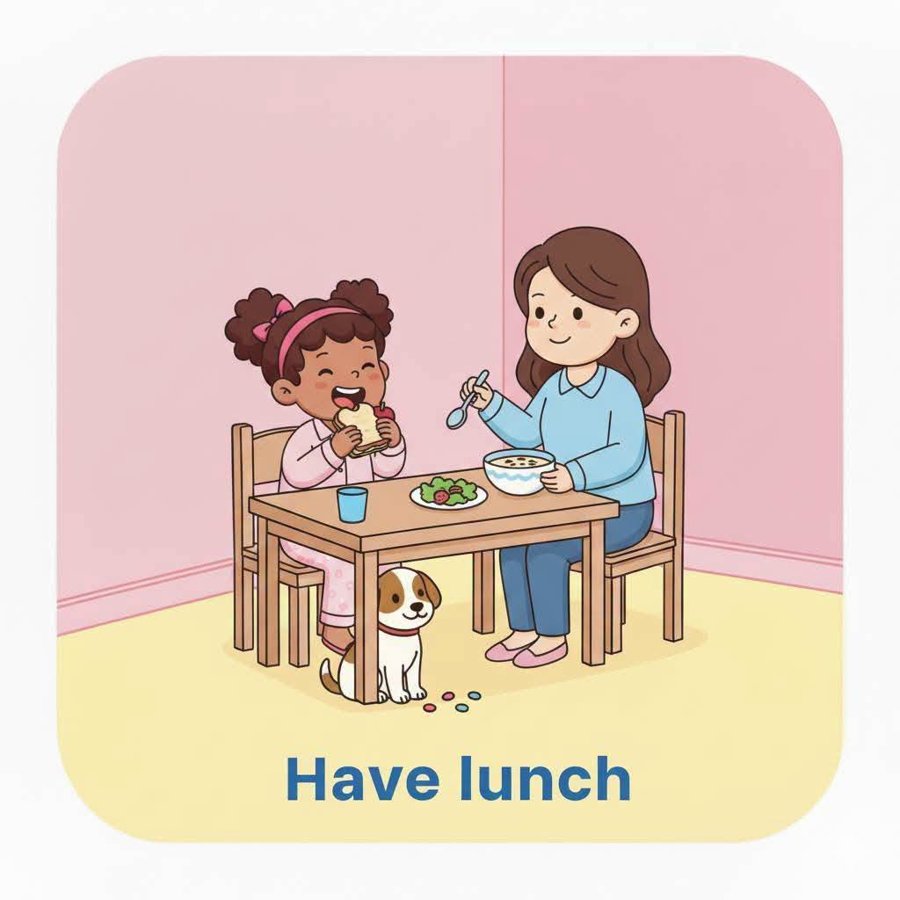
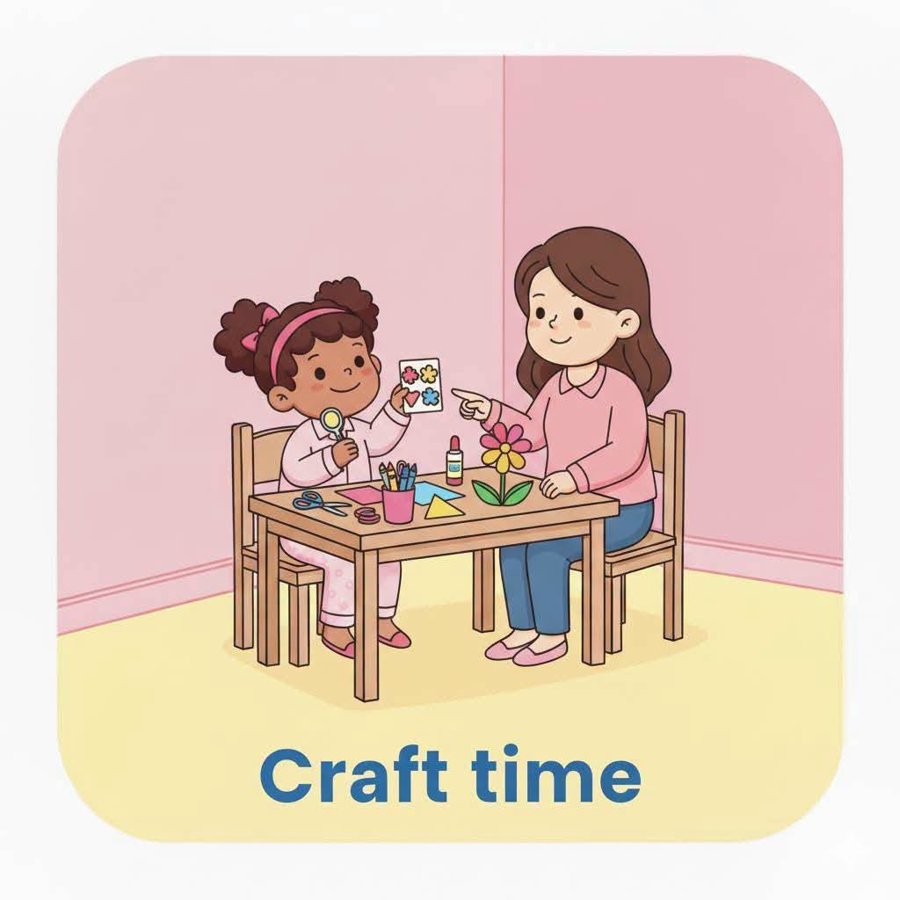
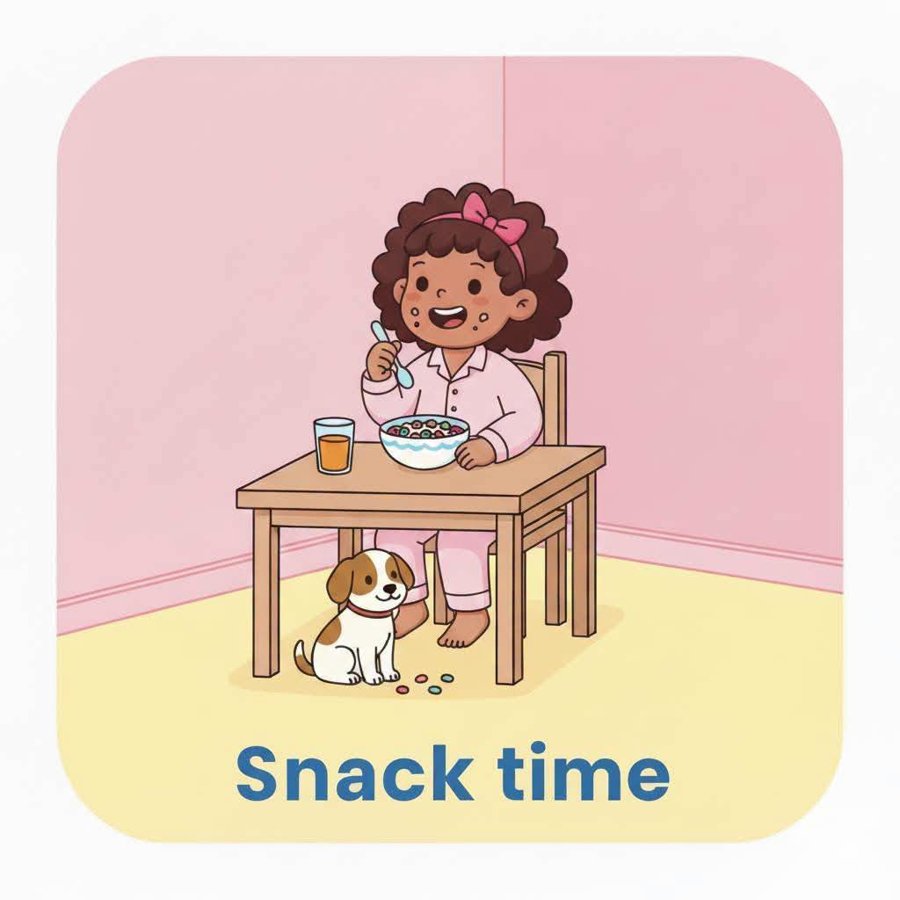

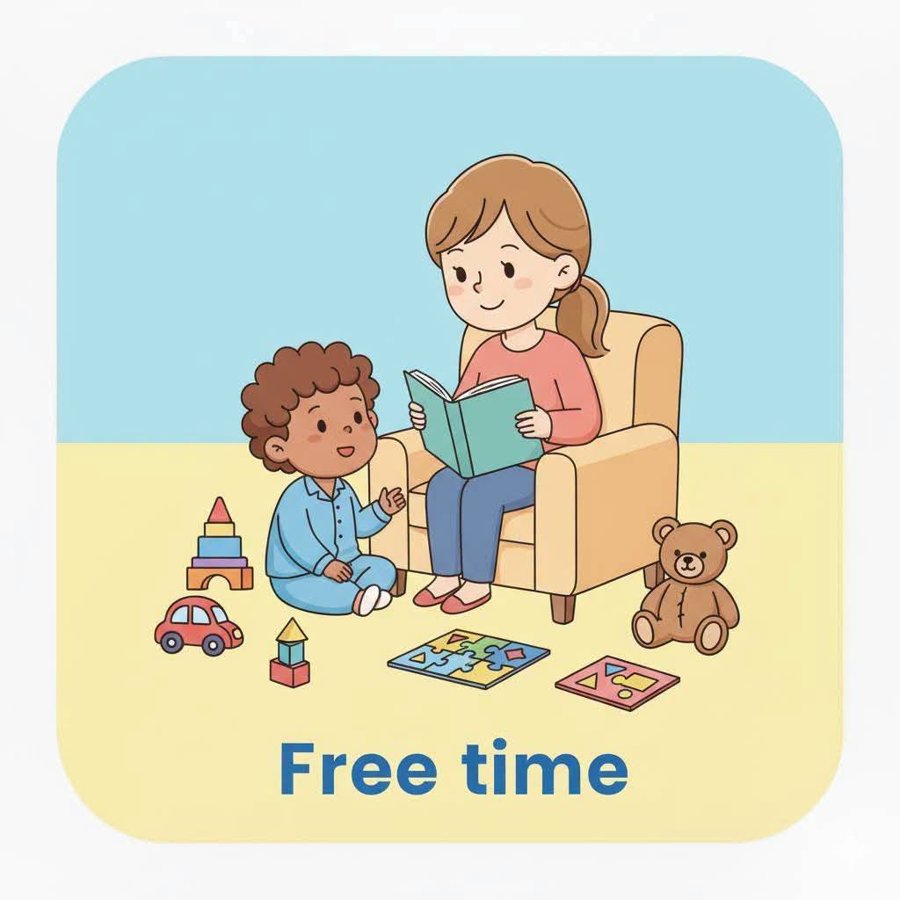
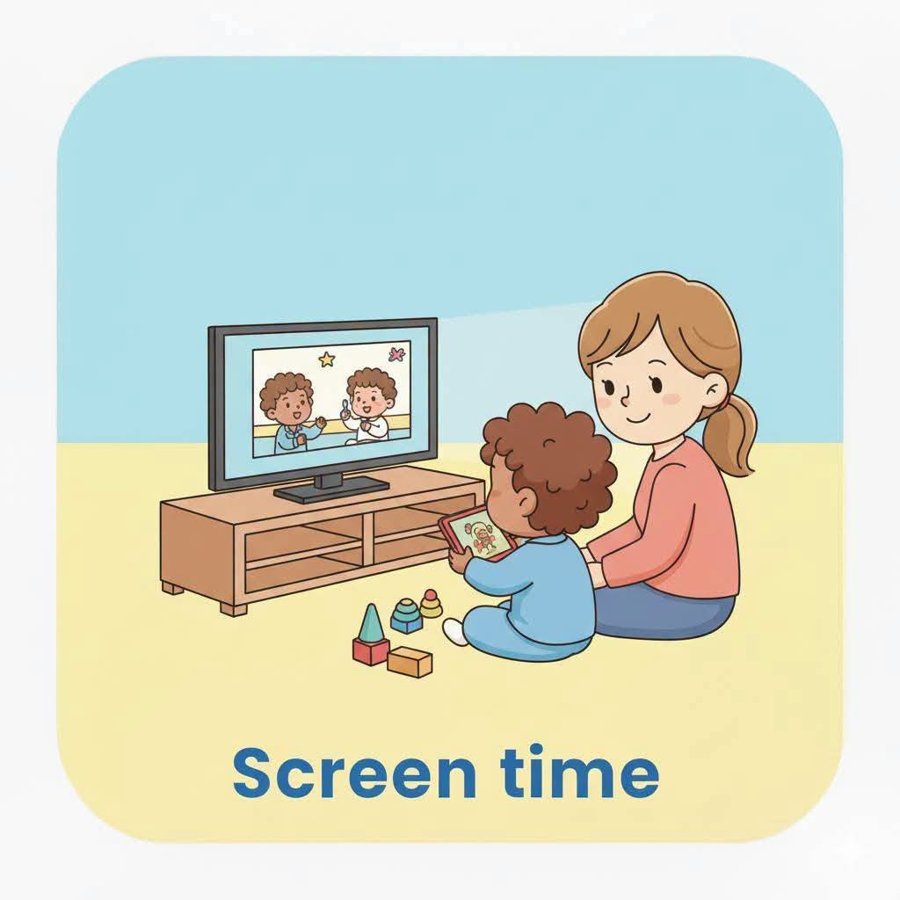



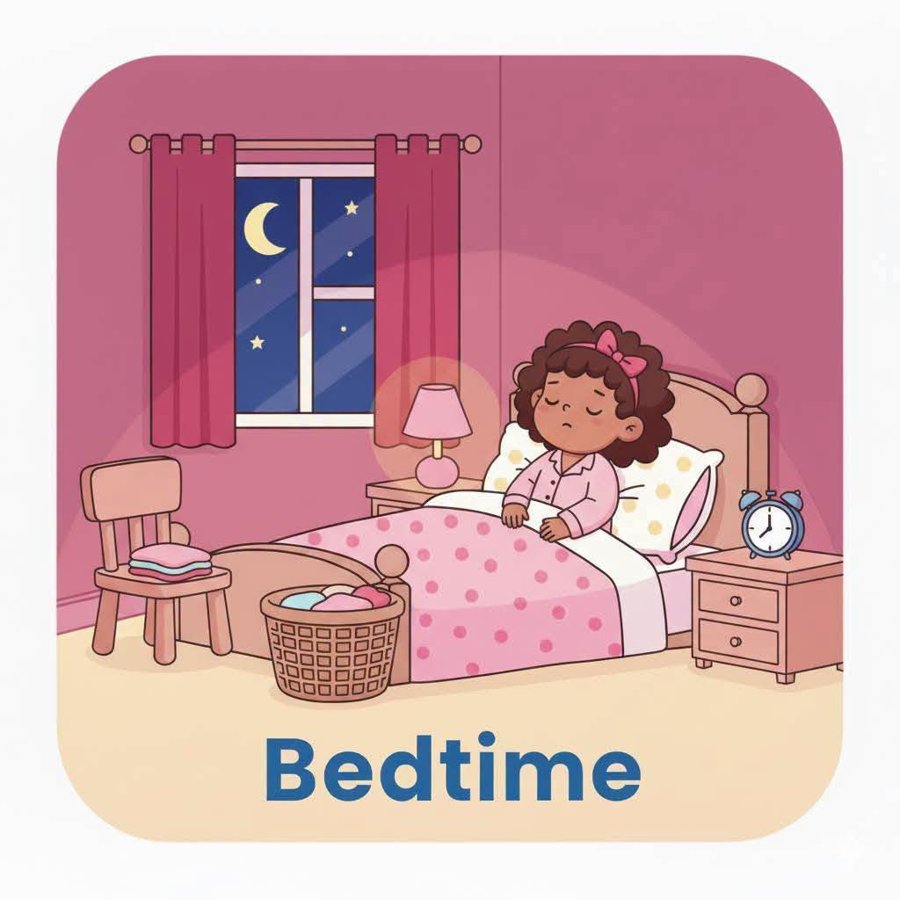
Get All 17 Cards as a Free Printable PDF
Print on card stock or laminate for daily reuse — arrange them in whatever order matches your child's actual day.
Download the Free Visual Schedule Cards →How to Use the Cards
- Print and cut out the cards you want to use — you don't need all 17 to start; pick the 5-6 steps that matter most right now.
- Arrange them in order on a wall strip, a ring, a Velcro board, or simply taped to a door at your child's eye level.
- Introduce one transition at a time rather than the whole day at once — for example, just the after-school sequence first.
- Let your child interact with the cards — flipping, removing, or moving a card to a "done" pile makes progress visible and satisfying.
- Keep the sequence consistent day to day; predictability is what makes the system work.
Tips for Introducing Them
- Start small. Two or three cards for a single tricky transition (like bath time → bedtime) often works better than the full day at once.
- Model it yourself first. Walk through the cards with your child a few times before expecting independent use.
- Pair with a First-Then board for especially resisted tasks — see our First-Then board guide for exact wording and setup.
- Reorder as needed. The cards are meant to be rearranged to match your child's actual routine, not a fixed "correct" order.
- Laminate for reuse if your child benefits from a daily physical routine, so the same set lasts for months.
Printing and Materials
- Paper: Regular printer paper works, but card stock (160-200gsm) holds up much better to daily handling.
- Lamination: A basic home laminator or laminating pouches from a stationery shop protect the cards for months of reuse and allow wipe-clean marks.
- Attachment: Velcro dots let you rearrange cards on a board; a binder ring through a hole-punched corner works well for a portable flip set.
- Size: Print 2 cards per A4 page for a wall strip, or 4-6 per page for a smaller portable ring.
Frequently Asked Questions
What age are these visual schedule cards suitable for?
Do I need to use all 17 cards?
Can I make my own additional cards to match these?
How is this different from a First-Then board?
Should I laminate the cards?
Is this free resource ongoing or a one-time download?
Sources: Action for Autism India, NIMHANS, parent-reported best practices.