
Dressing Independently Visual Schedule for Autistic Children
A dressing visual schedule breaks getting dressed into 12 small picture steps — from finding the shirt's front to putting on shoes — using the same forward-chaining approach therapists use to build independent dressing skills.
At a Glance
- What it is: A free, 12-step printable visual schedule for independent dressing.
- Who it's for: Autistic children who need predictable, picture-based routines.
- Format: One-page PDF, boy and girl versions, print or laminate.
- Best for ages: Roughly 3+, adjusted to your child's current skill level.
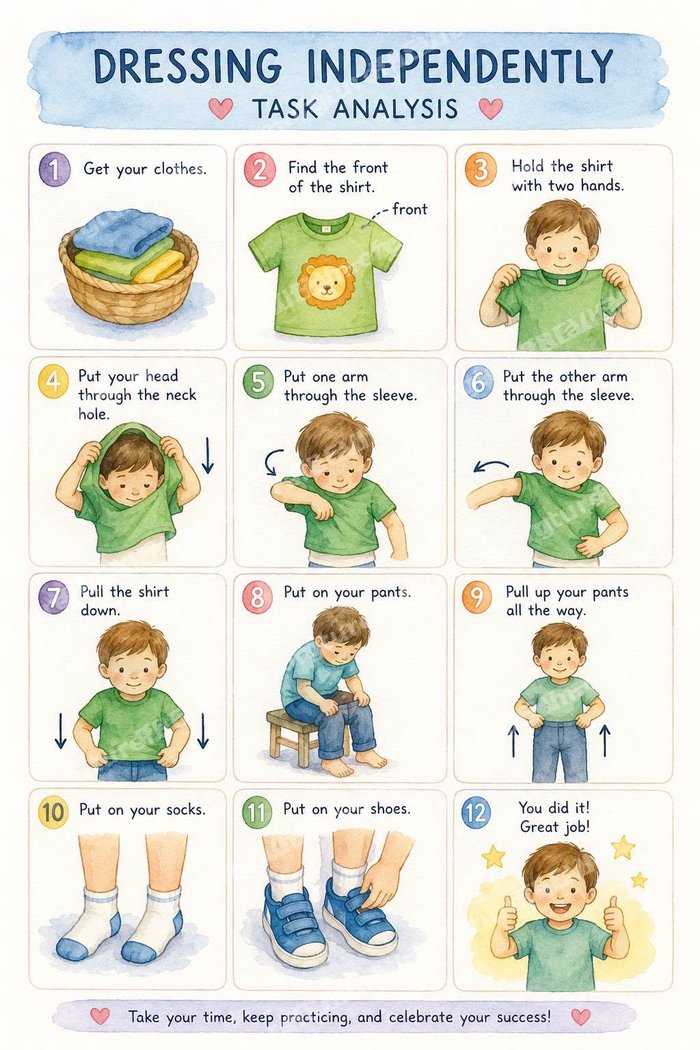
Preview of the printable chart — download the full-resolution, watermark-free PDF below.
What's in this guide
- Why a visual schedule helps
- What you'll get in the free PDF
- How to use it
- If Your Child Resists Getting Dressed
- Frequently asked questions
Why a Visual Schedule Helps
A predictable visual sequence often reduces morning resistance because your child can see exactly how many steps are left and anticipate 'all done,' which many kids find calming compared to an open-ended task.
What You'll Get in the Free PDF
A single-page, 12-step visual task analysis:
- Get clothes
- Find shirt front
- Hold shirt
- Head through
- Arm 1
- Arm 2
- Pull shirt down
- Put on pants
- Pull pants up
- Socks
- Shoes
- All done!
Get the Free Dressing Independently Visual Schedule PDF
Enter your details below and we'll email the printable PDF to you instantly.
How to Use It
Lay clothes out in order the night before and keep the chart taped to the closet or wardrobe door. Start by teaching just the last 2-3 steps first (backward chaining) so your child experiences 'finishing' the task, then gradually add earlier steps.
If Your Child Resists Getting Dressed
Clothing texture, tags, or seams are common sensory triggers. Try tagless or seamless clothing, let your child choose between two outfit options to build a sense of control, and keep the morning routine as unhurried as possible.
Frequently Asked Questions
My child resists getting dressed every morning — will this help?
A predictable visual sequence often reduces morning resistance because your child can see exactly how many steps are left and anticipate 'all done'.
Should I use this for boys and girls differently?
The steps are identical regardless of clothing style — we include both a boy and girl version in the PDF so your child can see themselves represented.
What if my child can only manage 2-3 steps right now?
Start by teaching just the last 2-3 steps first (backward chaining) so they experience 'finishing' the task, then gradually add earlier steps.