
Toilet Training Visual Schedule for Autistic Children
A toilet training visual schedule shows the 6 core steps of an independent bathroom routine as simple pictures, giving your child a consistent reference to follow every time.
At a Glance
- What it is: A free, 6-step printable visual schedule for independent toileting.
- Who it's for: Autistic children in the toilet training process.
- Format: One-page PDF, print or laminate.
- Best for ages: No fixed age — use when your child shows readiness signs.
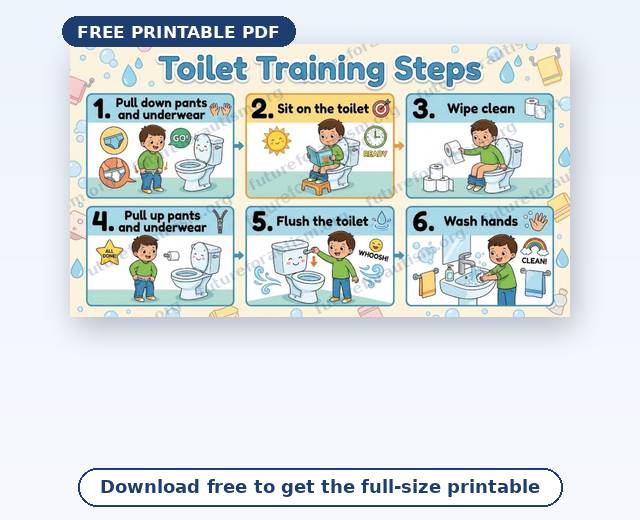
Preview of the printable chart — download the full-resolution, watermark-free PDF below.
What's in this guide
- Why a visual schedule helps
- What you'll get in the free PDF
- How to use it
- Handling Accidents and Setbacks
- Frequently asked questions
Why a Visual Schedule Helps
There's no single 'right age' for autistic children to toilet train — many start later than neurotypical peers, and a consistent visual routine removes the pressure of remembering spoken instructions in the moment.
What You'll Get in the Free PDF
A single-page, 6-step visual task analysis:
- Go to the bathroom
- Pull down pants
- Sit on the toilet
- Go potty
- Wipe
- Flush and wash hands
Get the Free Toilet Training Visual Schedule PDF
Enter your details below and we'll email the printable PDF to you instantly.
How to Use It
Introduce the chart whenever your child shows readiness signs (staying dry for longer stretches, interest, or being able to follow a short routine), regardless of age. Walk through it together before expecting independent use.
Handling Accidents and Setbacks
Accidents are a normal, expected part of toilet training, not a sign something is going wrong. Stay calm, clean up together, change clothes, and try again later — consistency matters more than any single accident.
Frequently Asked Questions
What age is this suitable for?
There's no single 'right age' for autistic children — many start later than neurotypical peers, and that's normal. Use it whenever your child shows readiness signs.
My child is non-verbal. Will this still work?
Yes — a visual, point-and-show routine works well for non-verbal and minimally verbal children since it doesn't rely on speech.
What if my child has frequent accidents?
Accidents are a normal part of the process, not a setback to worry about — keep your own reaction calm and consistent.