
Free Potty Training Visual Pack for Autistic Children
A potty training visual pack is a set of illustrated picture supports — a step-by-step routine card, a reward chart, communication cards, and more — that make potty training more predictable for autistic and neurodivergent children. Below is a free, printable 10-page pack covering the full routine, from first attempts to tracking progress.
What's in this guide
Why Visual Supports Help With Potty Training
Potty training asks a lot of a young child: recognising a new bodily sensation, connecting it to an action, and following a multi-step routine, often under time pressure. For autistic and neurodivergent children, verbal instructions in the moment can be hard to process, especially if a child is already anxious or overstimulated. A visual routine card, a reward chart, or a simple communication card removes that pressure — the steps are always visible, always the same, and don't depend on remembering what was said.
These supports work well alongside other visual routines in the day — see our guides on building a daily routine and free printable visual schedule cards for the rest of the day.
What's in the 10-Page Pack
Each page targets a different part of the potty training journey, from the first attempt to tracking long-term progress.
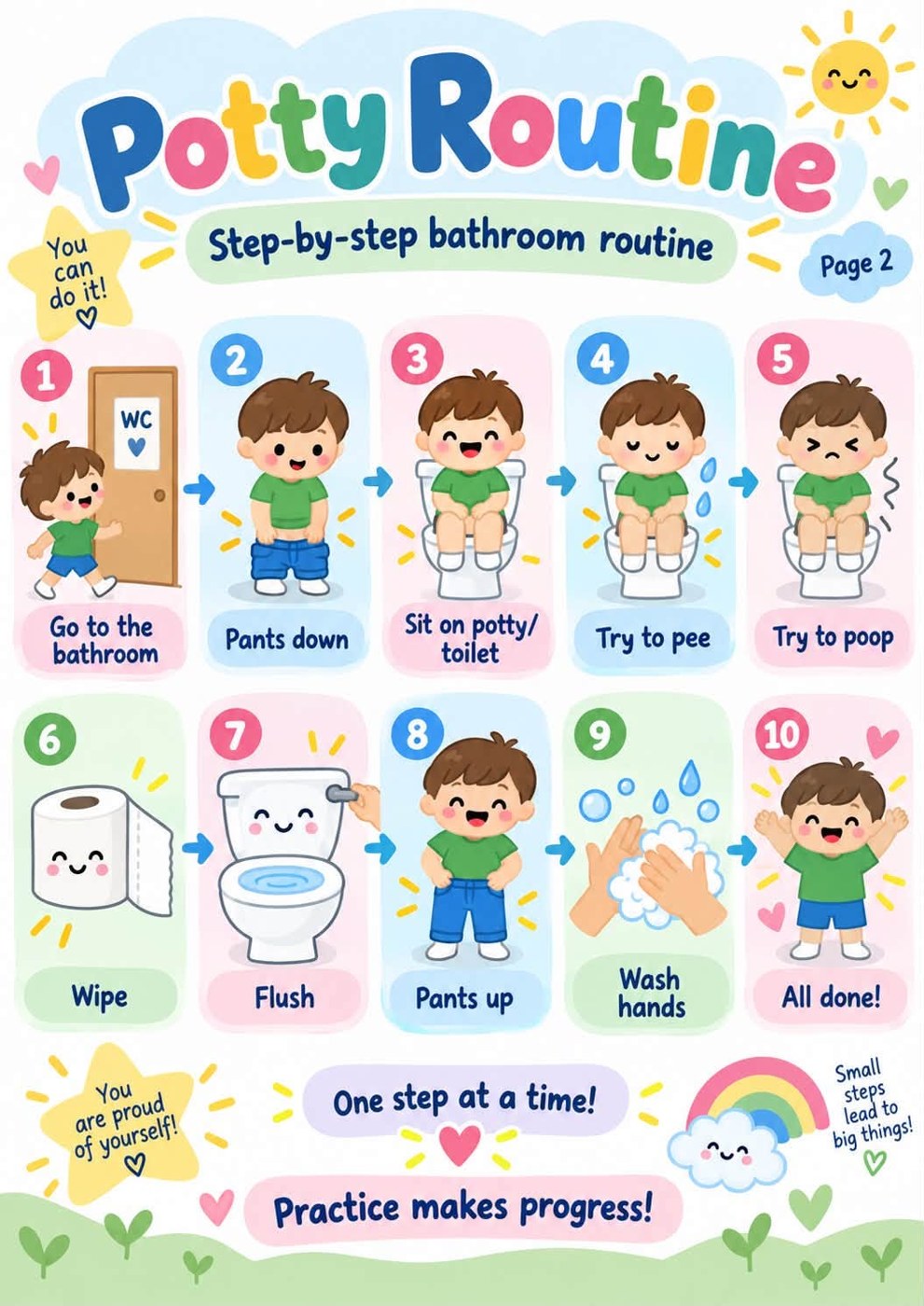
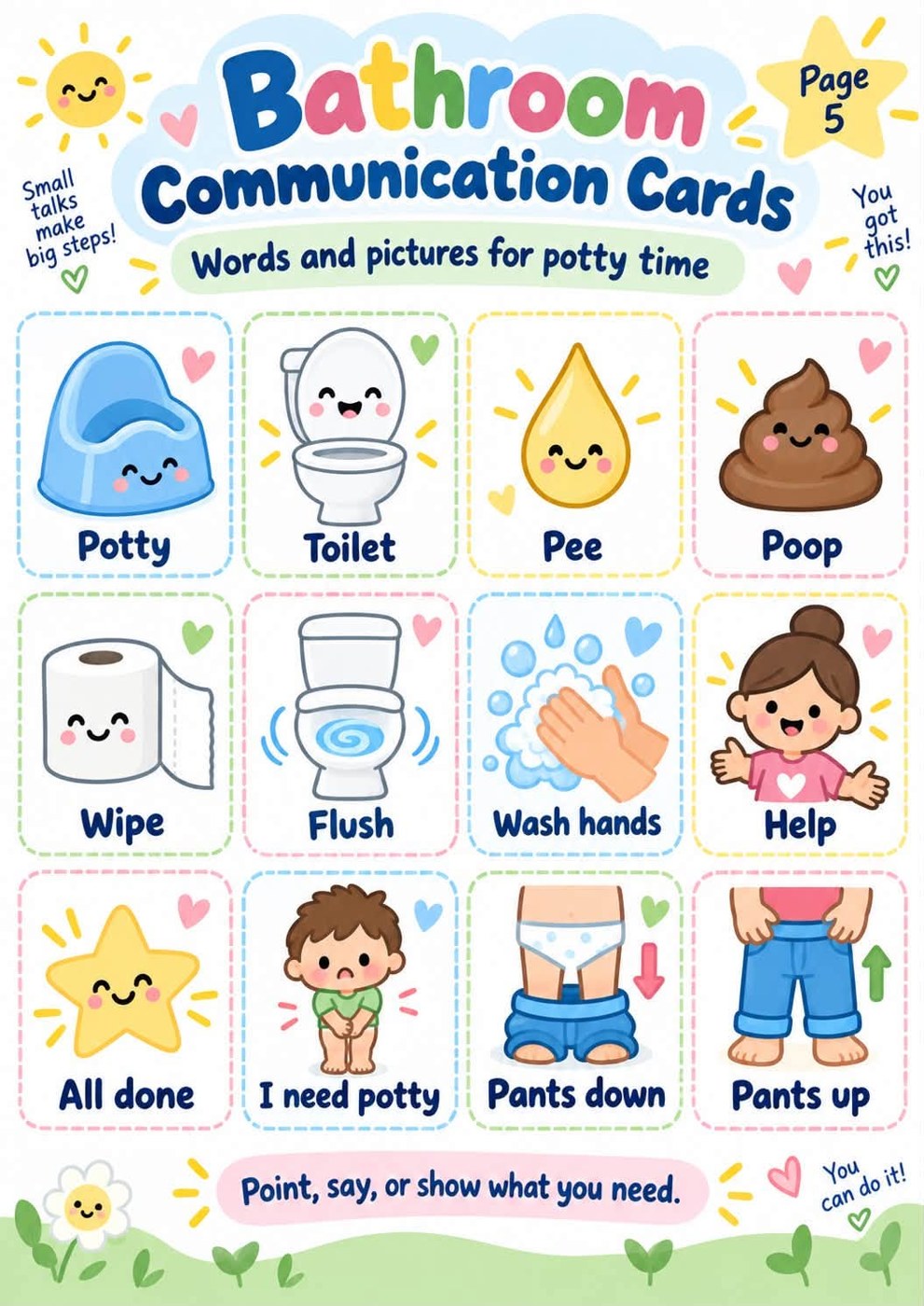
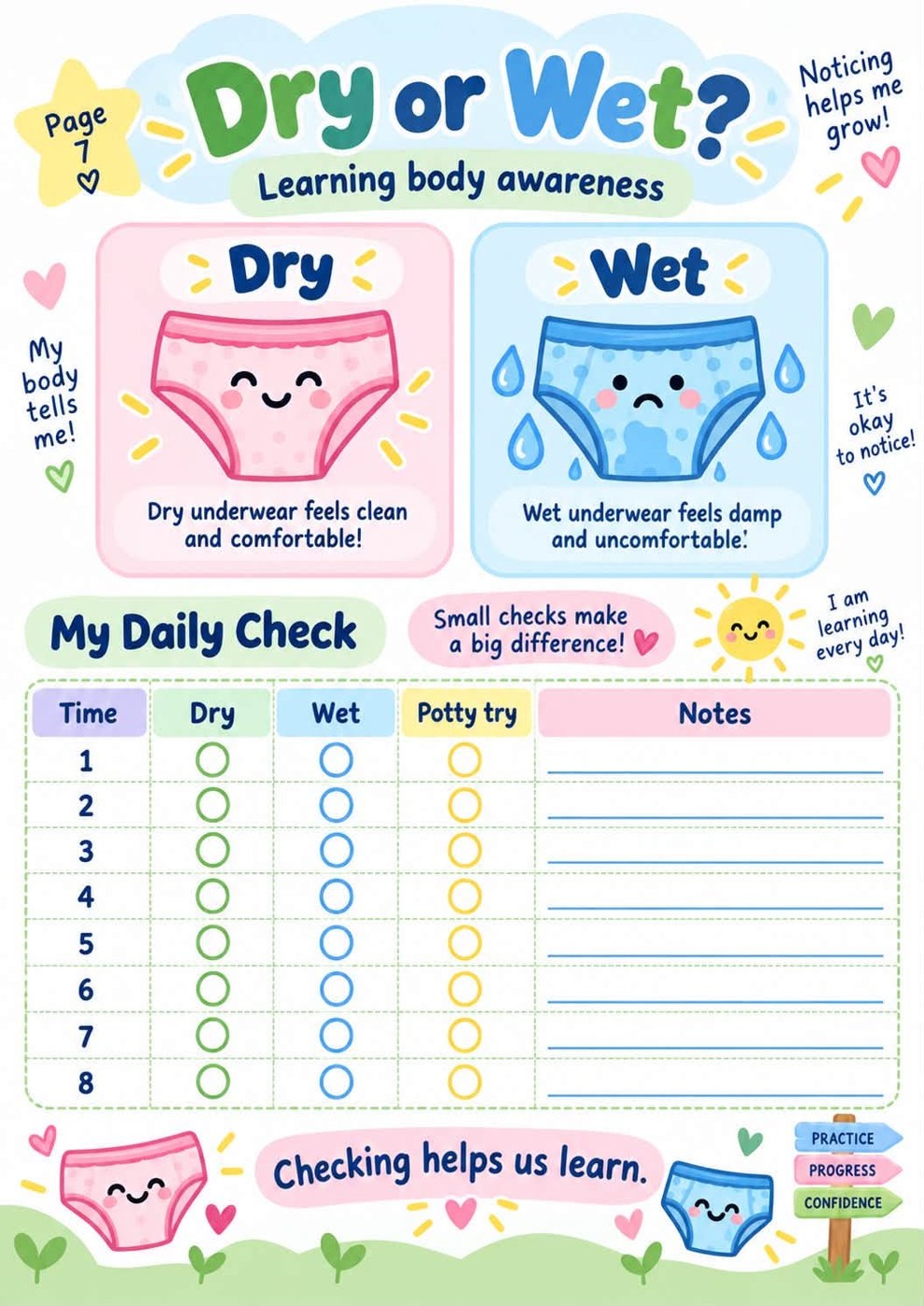
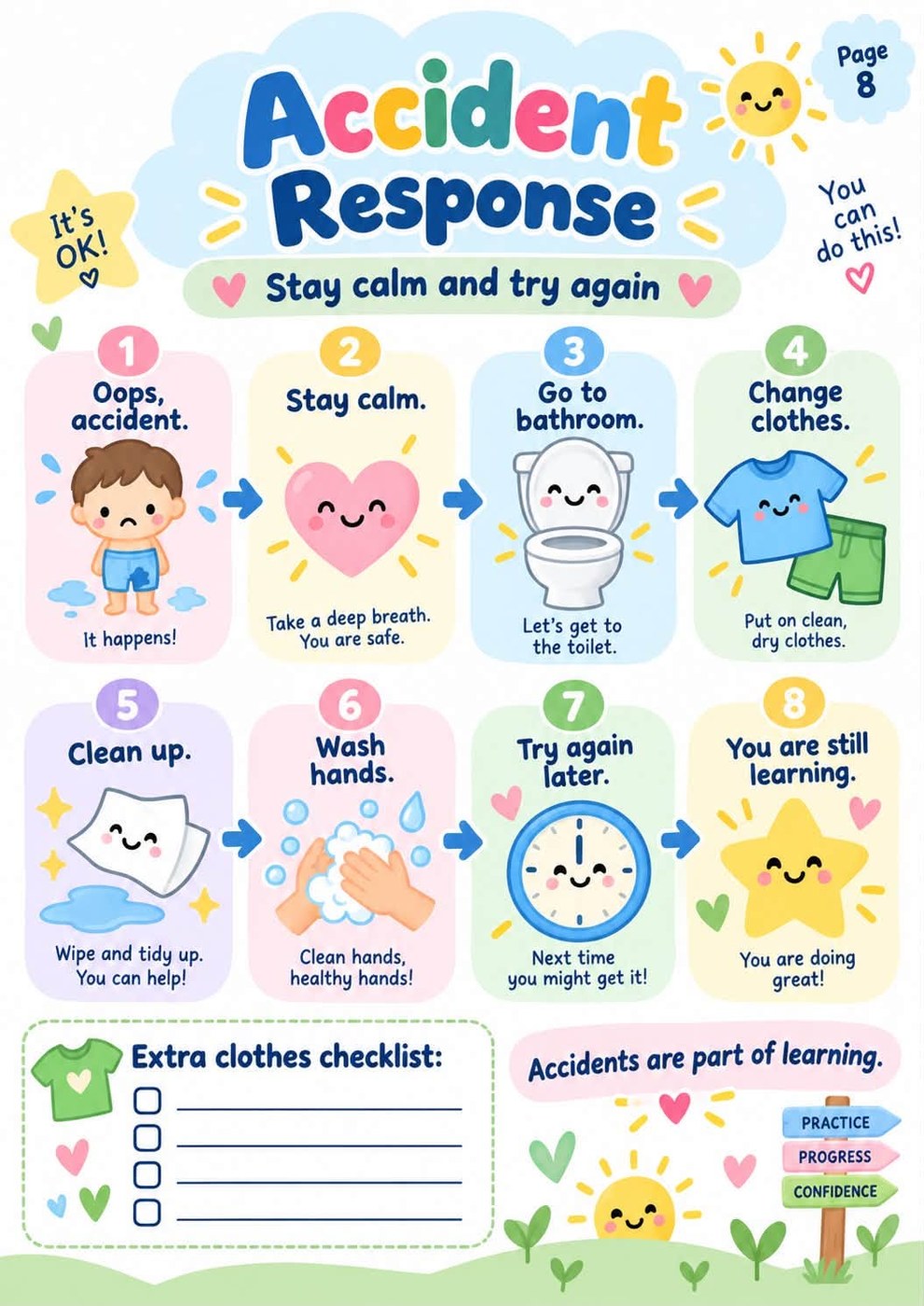
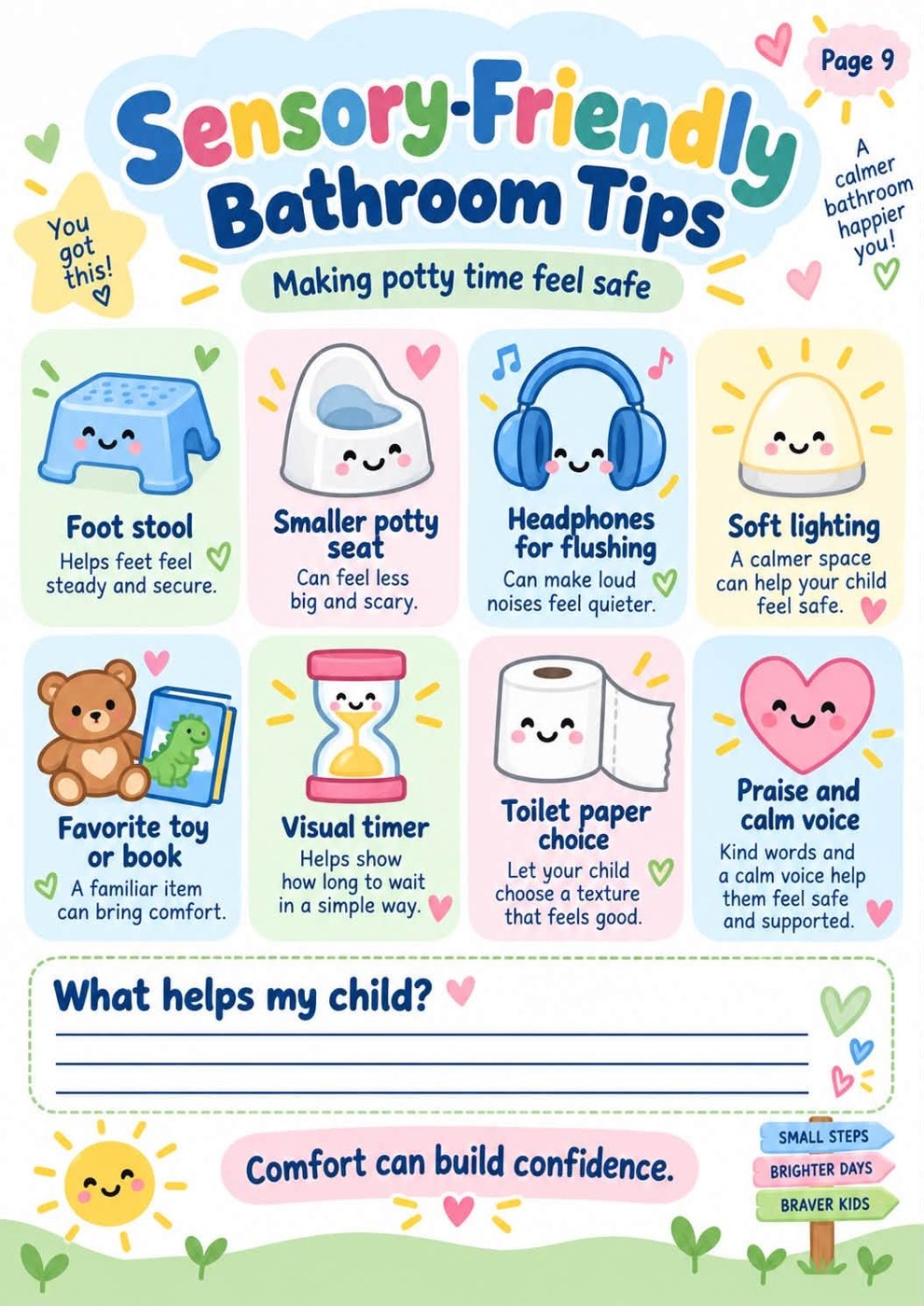
- Potty Routine — A 10-step visual sequence from walking into the bathroom to washing hands, so your child always knows what comes next.
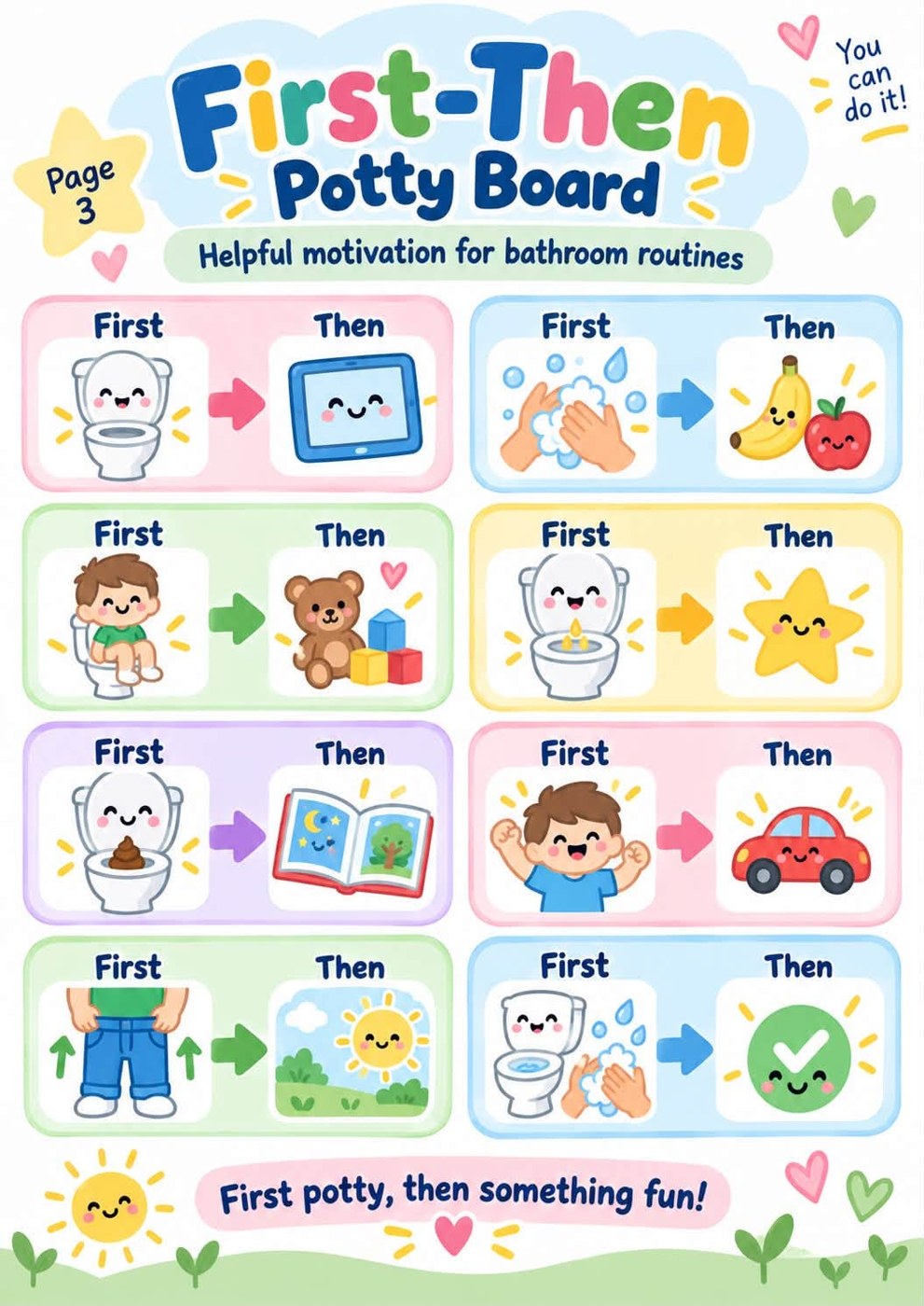
- First-Then Potty Board — Eight ready-made "first potty, then reward" pairings to build motivation without pressure.
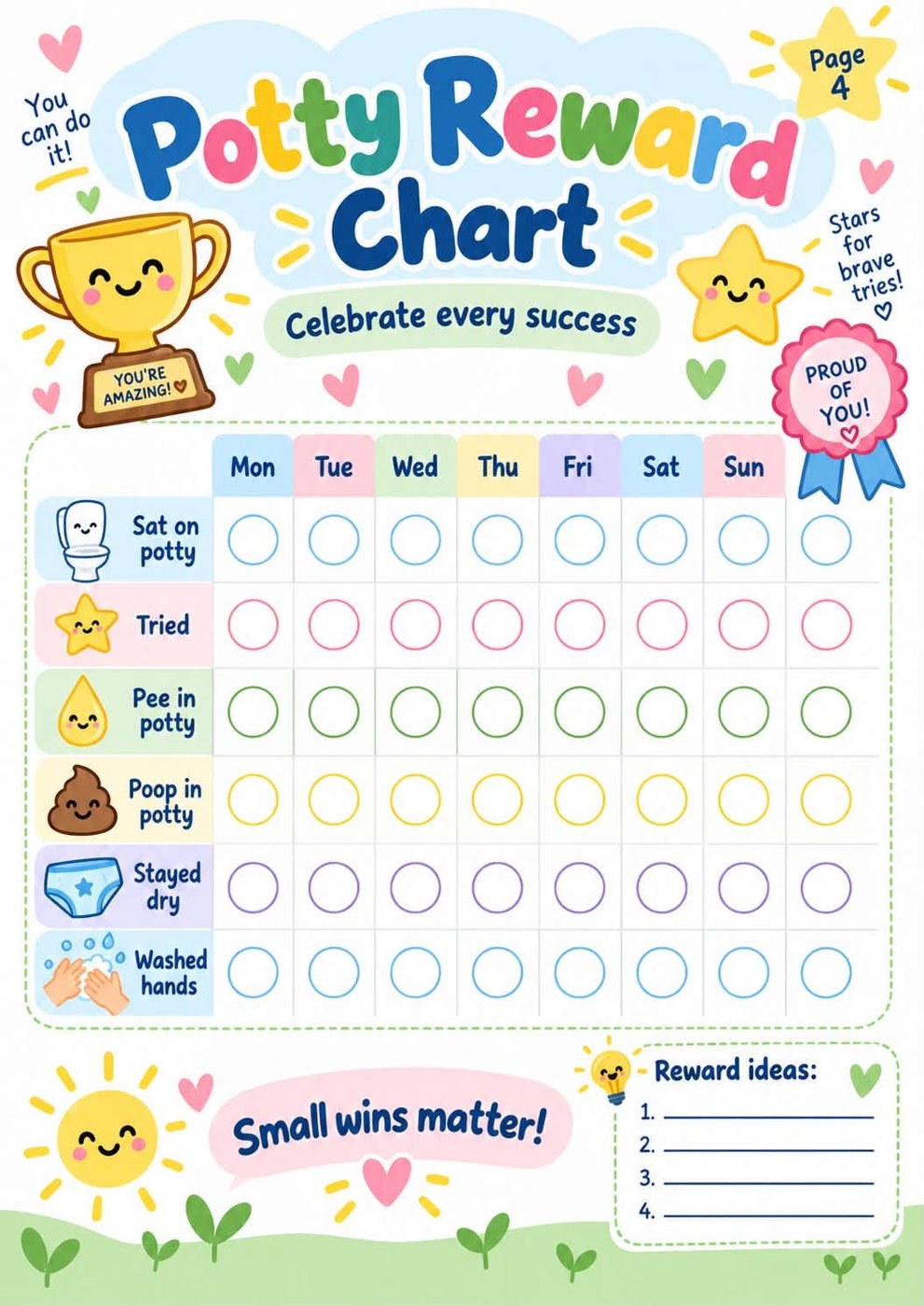
- Potty Reward Chart — A weekly chart to track and celebrate every small win, from sitting on the potty to staying dry.
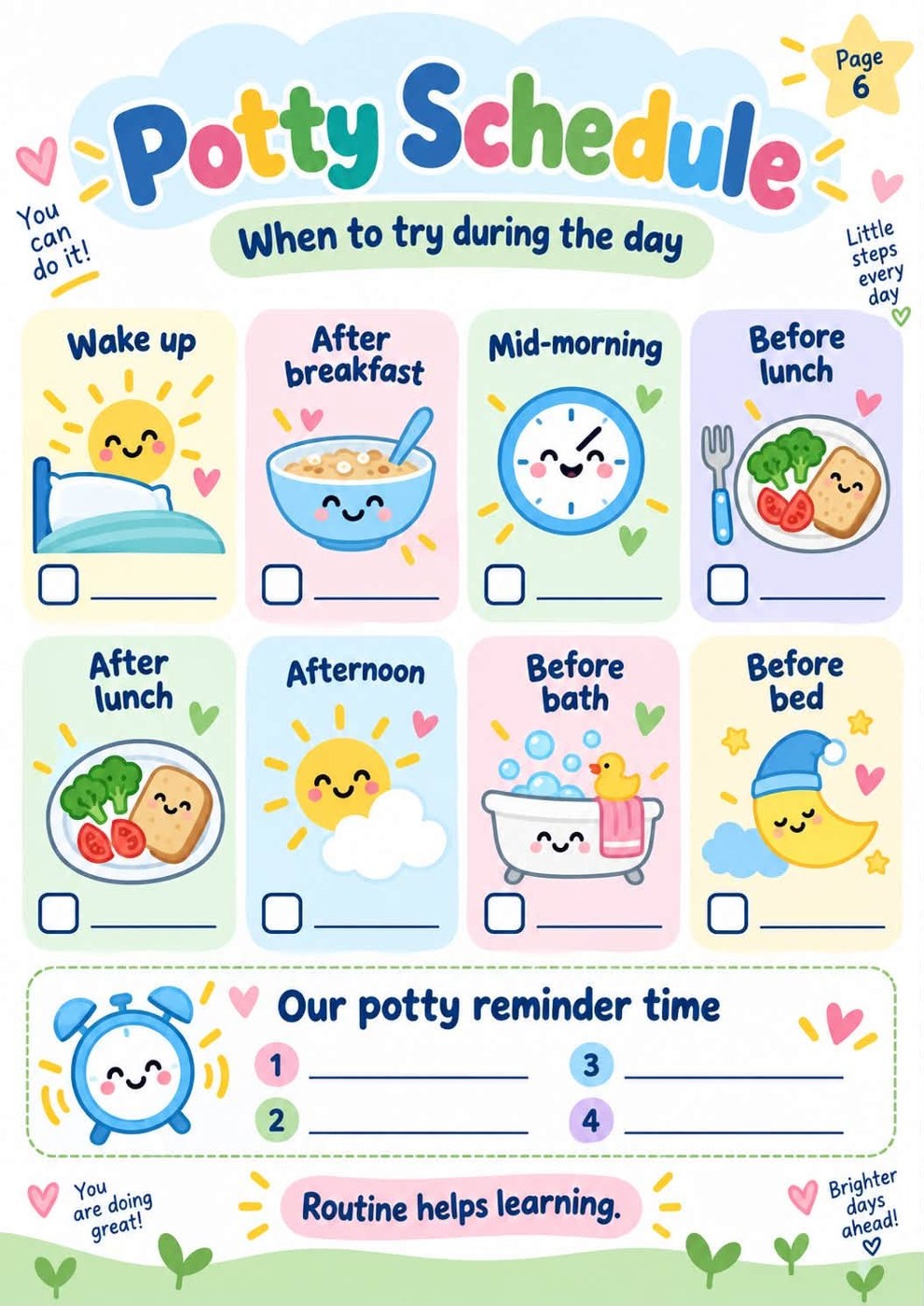
- Potty Schedule — Suggested check-in times across the day — wake up, after breakfast, mid-morning, and more — to build a routine.
- Bathroom Communication Cards — Picture cards for children who are non-verbal or minimally verbal, so they can point, show, or hand over a card to communicate a need.
- Dry or Wet? — A simple body-awareness tracker that helps your child notice and name the difference between dry and wet.
- Accident Response — A calm, judgment-free 4-step guide for responding to accidents — stay calm, clean up, try again.
- Sensory-Friendly Bathroom Tips — Practical adjustments — foot stools, softer lighting, favourite toys — that make the bathroom feel safer.
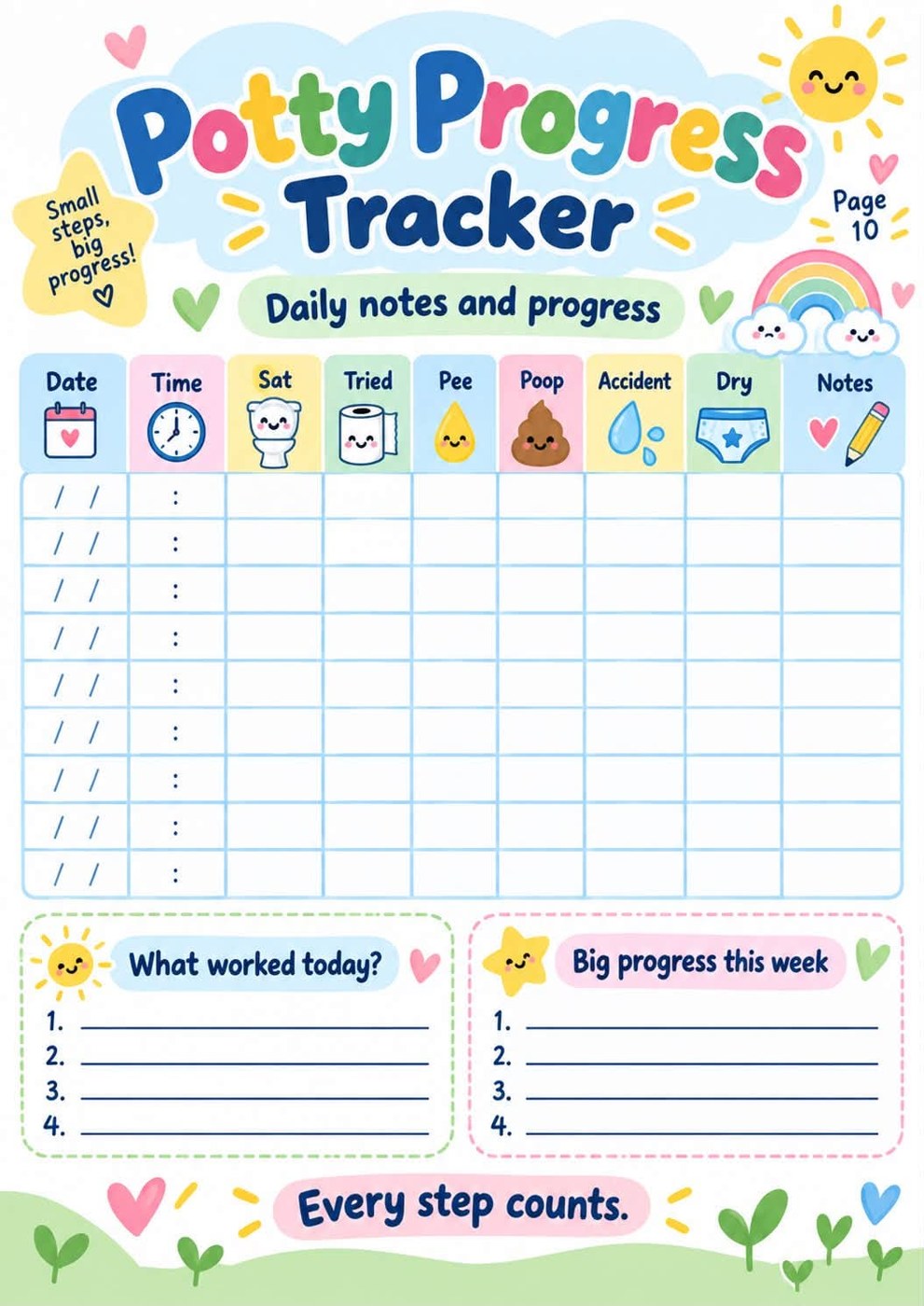
- Potty Progress Tracker — A daily log to note what worked and celebrate progress week over week.
Get the Full 10-Page Pack as a Free PDF
Print the pages you need, or the full set — laminate for daily reuse with a dry-erase marker.
Download the Free Potty Training Visual Pack →How to Use the Pack
- Start with the Potty Routine card to introduce the sequence before expecting independent use — walk through it together a few times.
- Add the First-Then board once the routine is familiar, pairing "first potty" with a small, motivating reward.
- Use the Communication Cards if your child is non-verbal or minimally verbal, so they have a reliable way to signal "I need potty."
- Track wins on the Reward Chart — celebrate sitting on the potty and trying, not just successful results.
- Check in using the Potty Schedule at consistent times across the day, rather than waiting for signs of urgency.
Handling Accidents and Setbacks
Accidents are a normal, expected part of potty training — not a sign that something is going wrong. The pack's Accident Response page walks through a calm, judgment-free 4-step response: stay calm, clean up together, change clothes, and try again later. Pair this with the Dry-or-Wet tracker to help your child build body awareness over time, and the Sensory-Friendly Bathroom Tips page if sensory sensitivities (cold seats, flushing sounds, harsh lighting) are part of what makes the bathroom stressful.
Printing Tips
- Paper: Card stock (160-200gsm) holds up better than regular paper to repeated daily use.
- Lamination: Laminate the Reward Chart, Potty Schedule, and Progress Tracker so you can wipe them clean and reuse them weekly.
- Placement: Post the Potty Routine card and First-Then board at your child's eye level, right in the bathroom.
- Size: Print each page at full A4/Letter size for the clearest, easiest-to-read visuals.
Frequently Asked Questions
What age is this potty training pack suitable for?
My child is non-verbal. Will this still work?
What if my child has frequent accidents?
Do I need to use all 10 pages at once?
How is this different from the Visual Schedule Cards?
Is this free resource ongoing or a one-time download?
Sources: Action for Autism India, NIMHANS, parent-reported best practices.