
Bath Time Visual Schedule for Autistic Children
A bath time visual schedule shows all 13 steps of showering so your child can follow a predictable routine without needing step-by-step verbal prompting.
At a Glance
- What it is: A free, 13-step printable visual schedule for an independent bath/shower routine.
- Who it's for: Autistic children who need predictable, picture-based routines.
- Format: One-page PDF, print or laminate.
- Best for ages: Roughly 4+, adjusted to your child's current skill level.
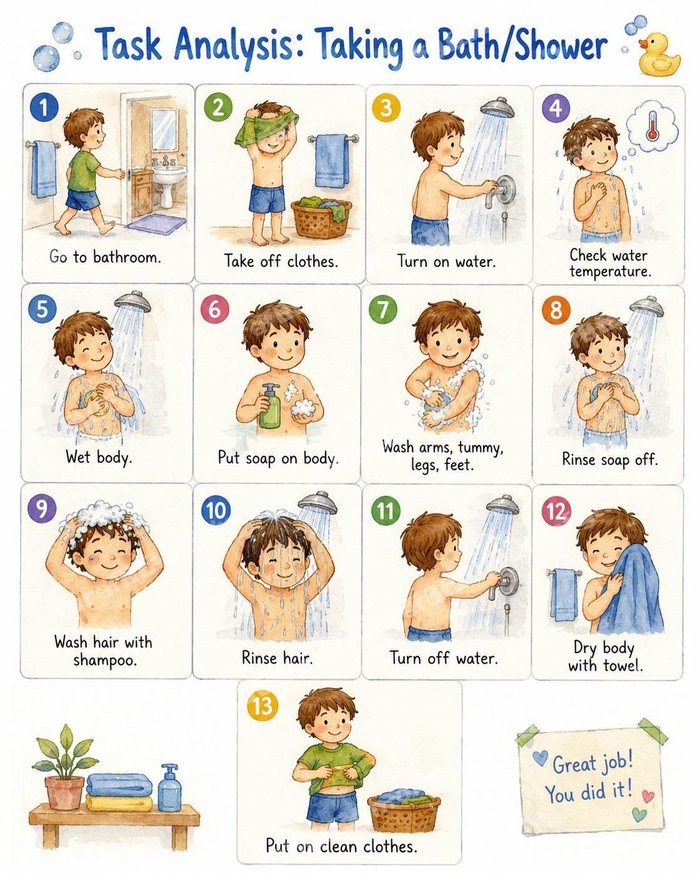
Preview of the printable chart — download the full-resolution, watermark-free PDF below.
What's in this guide
- Why a visual schedule helps
- What you'll get in the free PDF
- How to use it
- If Your Child Is Scared of the Shower
- Frequently asked questions
Why a Visual Schedule Helps
Predictability often reduces anxiety around bathing, but if water itself is the trigger, pair this schedule with gradual exposure (starting with just standing near a running tap) before expecting full showers.
What You'll Get in the Free PDF
A single-page, 13-step visual task analysis:
- Go to bathroom
- Take off clothes
- Turn on water
- Check temperature
- Wet body
- Soap on body
- Wash body
- Rinse soap off
- Shampoo hair
- Rinse hair
- Turn off water
- Dry body
- Clean clothes
Get the Free Bath Time Visual Schedule PDF
Enter your details below and we'll email the printable PDF to you instantly.
How to Use It
Let your child touch-test the water with their hand before stepping in each time — this builds a consistent self-check habit rather than relying on you to test it for them. The same sequence adapts to a bath by swapping the water steps for filling the tub.
If Your Child Is Scared of the Shower
Start with short, low-pressure exposure — standing near the running water fully clothed, then gradually working up to stepping in. Keep water pressure and temperature consistent session to session.
Frequently Asked Questions
My child is scared of the shower — will a visual schedule help?
Predictability often reduces anxiety, but if water itself is the trigger, pair this schedule with gradual exposure before expecting full showers.
How do I handle the water temperature check step?
Let your child touch-test the water with their hand before stepping in each time — this builds a consistent self-check habit.
Can this be adapted for a bath instead of a shower?
Yes — swap the 'turn on water'/'rinse' steps for filling the tub and using a cup to rinse; the overall sequence stays the same.