
Changing Sanitary Pads Visual Schedule for Autistic Girls
A sanitary pad visual schedule breaks this period self-care task into 10 clear, private steps to support independence during menstruation.
At a Glance
- What it is: A free, 10-step printable visual schedule for independent pad changing.
- Who it's for: Autistic girls and tweens approaching or managing their period.
- Format: One-page PDF, print or laminate.
- Best for ages: Roughly 9-12+, adjusted to individual development.
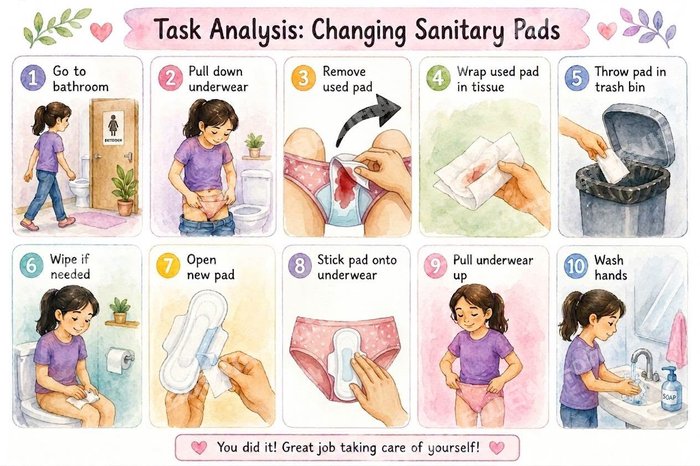
Preview of the printable chart — download the full-resolution, watermark-free PDF below.
What's in this guide
- Why a visual schedule helps
- What you'll get in the free PDF
- How to use it
- Keeping This Private
- Frequently asked questions
Why a Visual Schedule Helps
Introducing this routine before the first period begins means it's already familiar when it's actually needed, reducing stress at a moment that can already feel overwhelming.
What You'll Get in the Free PDF
A single-page, 10-step visual task analysis:
- Go to bathroom
- Pull down underwear
- Remove used pad
- Wrap in tissue
- Throw in trash bin
- Wipe if needed
- Open new pad
- Stick pad onto underwear
- Pull underwear up
- Wash hands
Get the Free Changing Sanitary Pads Visual Schedule PDF
Enter your details below and we'll email the printable PDF to you instantly.
How to Use It
Practice the sequence with a pad on clean underwear (no blood) first, in a calm moment, so your daughter learns the mechanics without the added stress of managing it during an actual period.
Keeping This Private
Many families keep a laminated copy discreetly inside a bathroom cabinet or period-supply pouch rather than on open display, for privacy.
Frequently Asked Questions
At what age should I introduce this?
Most families start preparing a visual schedule like this before the first period begins, so the routine is already familiar when it's actually needed — typically ages 9-12.
How do I introduce this sensitively?
Practice the sequence with a pad on clean underwear (no blood) first, in a calm moment, so your daughter learns the mechanics without added stress.
Is this appropriate to keep visible in the bathroom?
Many families keep a laminated copy discreetly inside a bathroom cabinet or period-supply pouch rather than on open display, for privacy.