
Using Spoon & Fork Visual Schedule for Autistic Children
A spoon-and-fork visual schedule shows the 7 steps of self-feeding with utensils to help your child build independent mealtime skills at their own pace.
At a Glance
- What it is: A free, 7-step printable visual schedule for independent utensil use.
- Who it's for: Autistic children building self-feeding skills.
- Format: One-page PDF, print or laminate.
- Best for ages: Roughly 2-4+, adjusted to your child's current skill level.
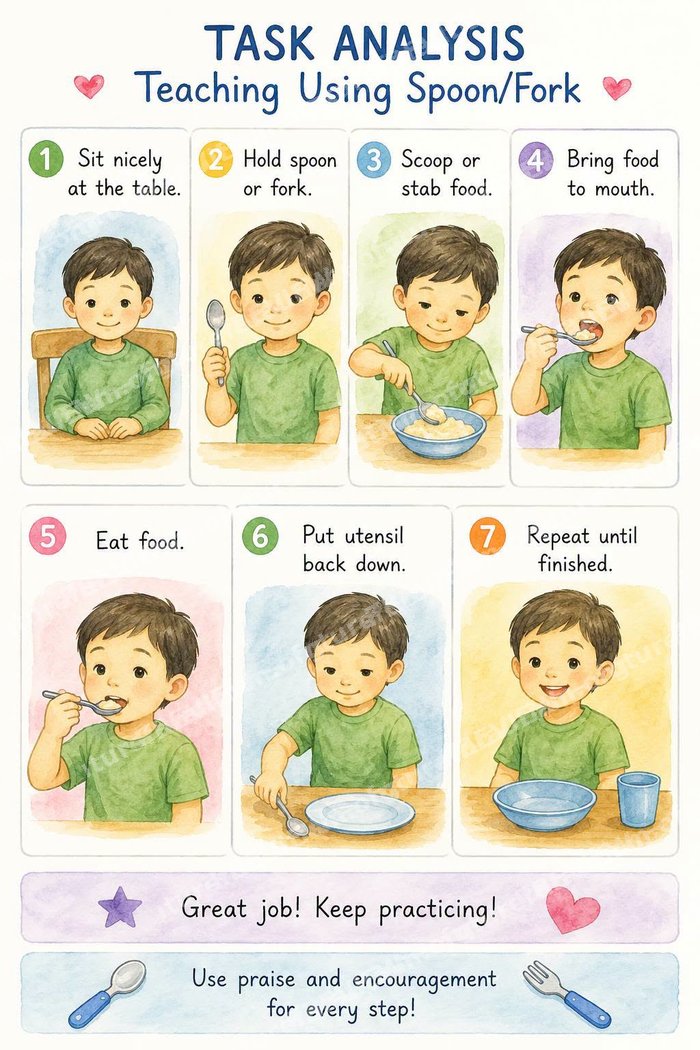
Preview of the printable chart — download the full-resolution, watermark-free PDF below.
What's in this guide
- Why a visual schedule helps
- What you'll get in the free PDF
- How to use it
- If Your Child Still Prefers Fingers
- Frequently asked questions
Why a Visual Schedule Helps
Utensil use combines fine-motor coordination with a repeating sequence, which benefits from the same predictable, visible structure as any other multi-step self-care skill.
What You'll Get in the Free PDF
A single-page, 7-step visual task analysis:
- Sit at table
- Hold spoon/fork
- Scoop or stab food
- Bring food to mouth
- Eat food
- Put utensil down
- Repeat until finished
Get the Free Using Spoon & Fork Visual Schedule PDF
Enter your details below and we'll email the printable PDF to you instantly.
How to Use It
Use the visual schedule during a few bites per meal and let your child eat the rest however is comfortable, gradually increasing utensil-only bites over time. A chunky-handled or weighted utensil can make each step easier if grip or motor planning is a challenge.
If Your Child Still Prefers Fingers
That's a normal part of the developmental process. Keep mealtimes low-pressure, model utensil use yourself, and celebrate small wins rather than expecting a full switch right away.
Frequently Asked Questions
My child still prefers fingers — is that okay?
Yes — utensil use develops gradually. Use the visual schedule during a few bites per meal and let your child eat the rest however is comfortable.
Should I use a weighted or adapted utensil?
If your child has grip or motor-planning difficulty, a chunky-handled or weighted utensil paired with this visual schedule can make each step easier to complete.
How long does it typically take to build this skill?
It varies widely, but consistent practice with a visual schedule at 1-2 meals a day often shows progress within a few weeks.