
Using a Calendar Visual Schedule
A calendar is one of the most useful tools you can give a child who relies on predictability — it turns “what's happening this week” into something visible and concrete. This free visual schedule breaks learning to use a calendar into 7 steps: finding today's date, naming the day and month, marking events, and checking what's coming up.
At a Glance
- What it is: A free, 7-step printable visual schedule for learning to read and use a calendar.
- Who it's for: Children who benefit from predictability and want to know what's happening today, tomorrow, or this week.
- What you get: A full-resolution PDF chart, emailed instantly.
- How to use it: Practice it as part of a daily morning routine, using a real calendar alongside the chart.
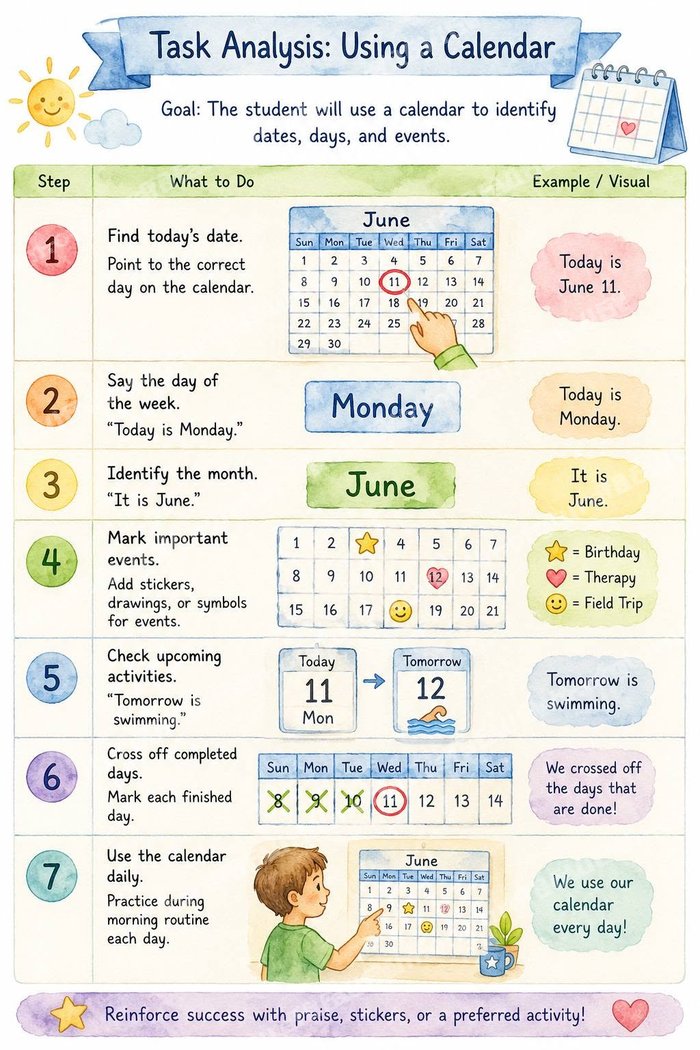
Preview of the printable chart — download the full-resolution, watermark-free PDF below.
What's in this guide
- Why a visual schedule helps
- What you'll get in the free PDF
- How to use it
- What If My Child Gets Upset About an Upcoming Event?
- Frequently asked questions
Why a Visual Schedule Helps
Knowing what day it is, what's marked for today, and what's coming tomorrow gives a child a concrete answer to the anxiety-producing question “what's going to happen?” A calendar also builds genuinely useful lifelong skills — reading dates, tracking a schedule — on top of its calming, predictability benefit.
What You'll Get in the Free PDF
A single-page, 7-step visual task analysis:
- Find today's date
- Say the day of the week
- Identify the month
- Mark important events
- Check upcoming activities
- Cross off completed days
- Use the calendar daily
Get the Free Using a Calendar Visual Schedule PDF
Enter your details below and we'll email the printable PDF to you instantly.
How to Use It
Make checking the calendar part of your morning routine — right after waking up or at breakfast is a natural fit. Use simple symbols (a star for a birthday, a heart for therapy, a smiley for a field trip) to mark events your child cares about, and let them cross off each day as it finishes so time passing feels visible and concrete, not abstract.
What If My Child Gets Upset About an Upcoming Event?
If marking an event on the calendar causes anxiety rather than reassurance, try marking it a shorter time in advance (a few days rather than weeks) until your child builds comfort with the tool. Pairing an uncertain event with a reassuring symbol, or a brief note about what to expect, can also help.
Frequently Asked Questions
What kind of calendar works best for this?
A simple monthly grid calendar that your child can physically mark or cross off tends to work best, since the chart's steps (marking events, crossing off days) rely on a physical calendar rather than a digital one.
Can this replace a daily visual schedule?
A calendar and a daily visual schedule serve different purposes — the calendar shows the bigger picture across days and weeks, while a daily schedule breaks down a single day's routine. Many families use both.
How do I introduce the idea of 'tomorrow' if my child doesn't understand it yet?
Step 5 specifically practices this with simple language (“tomorrow is swimming”) — keep repeating the same simple phrasing daily so the concept builds gradually.